How to check if you already own a book before buying it
Check your shelf by title, edition and copy before buying a second book. Use a pocket inventory, a loan note and a worked example for uncertain matches.
By Creasy Spines · · Sources and method below
The short answer
Search your list by author and title, then check which edition you own and where your copy is. Include books you have lent out or boxed up. If the copy in your hand would serve the same purpose as one you already own, leave it. If it offers something you want, such as larger type or a missing volume, record that difference before buying.
Give each copy a line in a pocket inventory
Start with the shelf you buy from most often. A phone note is enough. Give each physical book its own line, even when two covers look identical. The Library of Congress distinguishes the work, its published form and the individual item in its BIBFRAME model. You can borrow that distinction for a much smaller household list.
Record the title and author first. Next add a detail that would affect your decision in a shop, such as the translator, volume, type size or binding. Finish with the location. “Lent to Jo” or “box by the stairs” answers a question that a catalogue match alone cannot answer.
- Copy this line into your notes: Title | Author | Edition detail I care about | Copy or distinguishing mark | Location | Last checked.
- Give a lent book a location in the same list as books at home. Change that field when it comes back.
- Mark an uncertain match “check at home” so it stays visible the next time you search.
Sources: 1
Check these three details while the book is in your hand
First, search the author’s surname and a distinctive word from the title. Try the volume title as well as the series name. A list entry for the first volume does little to help you decide about the second unless you wrote down which one you own.
Second, compare the detail that matters for this purchase. The International ISBN Agency requires different ISBNs for separately available formats such as paperback and hardback. An unchanged reprint from the same publisher can keep its ISBN. A matching number helps identify the publication, but it cannot distinguish two physical copies or tell you which one you lent out.
Third, check location and purpose together. If you want something to read tonight and your copy is in the hallway, you have your answer. If you need larger type, open both editions or check your note about the one at home. A different cover by itself tells you very little about the pages inside.
Worked example with two copies and one empty space
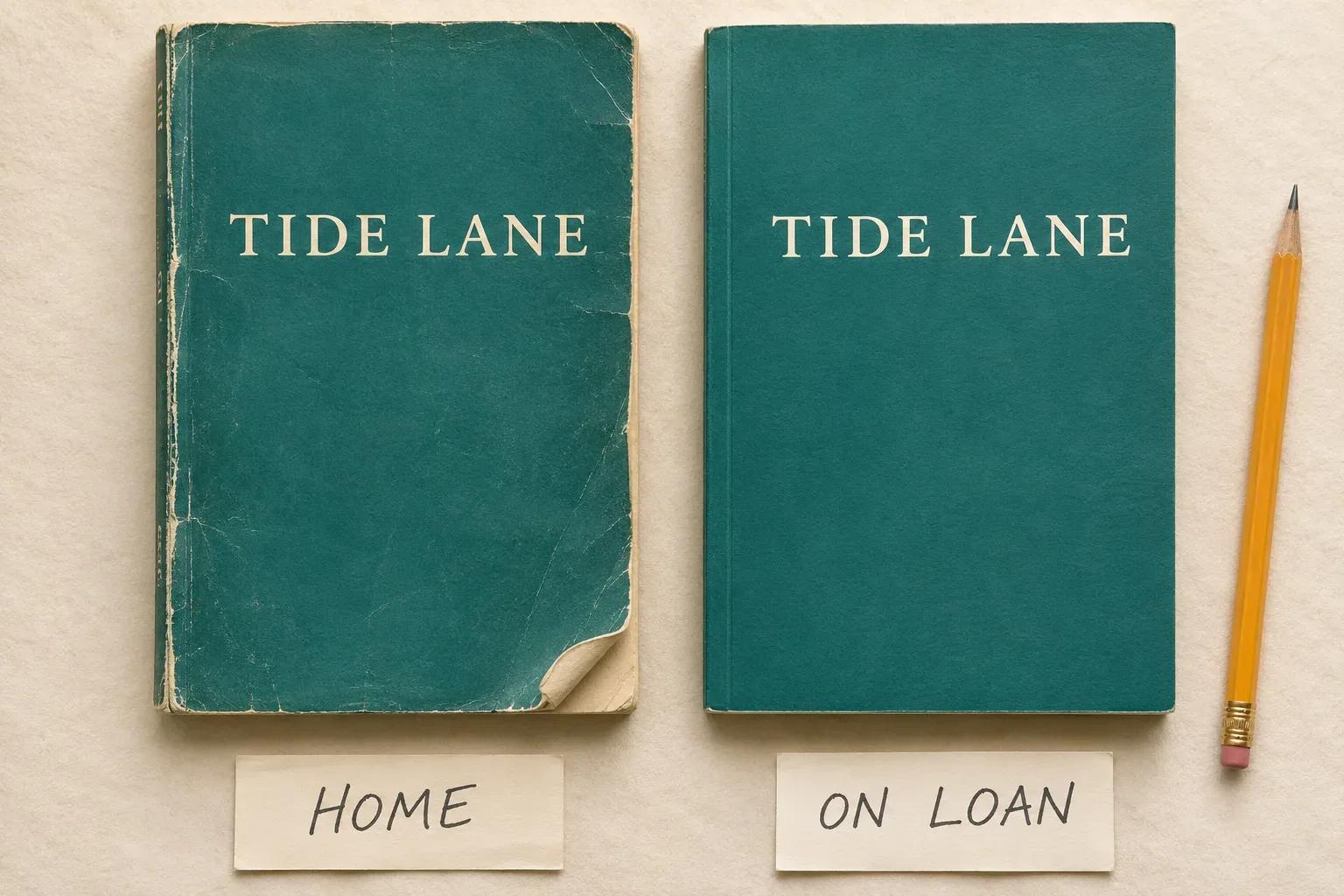
Imagine you find a paperback called Tide Lane. Your list contains two lines for this fictional title, both for the same paperback edition. Copy A has a bent corner and belongs on the hall shelf. Copy B is on loan. The empty space where B usually sits is easy to mistake for a gap in the collection.
For an ordinary reading copy, leave the shop copy and look for A. If A has gone missing too, change its location to “unconfirmed” before deciding whether you want a replacement. If the shop copy is a large-print edition you need, check a page of the type and record “large print” as the reason to own another. That note will still make sense on your next bookshop visit.
Use Shelf Scan to start the list, then keep it current
Shelf Scan reads visible spines and suggests title matches. Use those matches as a first pass for one shelf. Compare each result with the books in front of you and add the copy details to your own note. Check stacked books, loans and boxes separately. An absent scan result leaves the ownership question open.
Make the update part of unpacking a purchase. Add a line for the new book, give it a location and record what happened to the previous copy if this was a replacement. When you lend or give away a book, change its line then. A small list you consult in a shop earns its keep more readily than an ambitious inventory you never open.
Sources & checking notes
These sources support the factual explanations. Practical examples and suggested methods are editorial guidance; they are not a claim of a personal visit, appraisal or independently tested result.
- Library of Congress: works, instances and individual itemsSource checked 2026-11-05
- International ISBN Agency: formats and unchanged reprintsSource checked 2026-11-05
- Creasy Spines: what Shelf Scan can identify from a photographSource checked 2026-11-05
A few more useful answers
- Can I use the ISBN as my only duplicate check?
Use it to compare publications. Two physical copies of the same paperback can share an ISBN, and an unchanged reprint can retain it. Give each copy a separate line and a location.
- How do I check an older book with no ISBN?
Compare the title page, author, publisher, volume and any translator or edition statement. Add a distinguishing mark and location to your note. If an edition detail is still uncertain, leave it open.
- What if Shelf Scan misses a book or shows the wrong title?
Compare the suggested match with the shelf and correct your own list from the book in hand. A book on loan, behind another book or in a box may never appear in the photograph.
- When is buying another copy a sensible choice?
Name the job the extra copy will do. An accessible format, an edition used by your reading group or a replacement for a damaged copy can justify a second purchase. Record that reason with its location.