How to photograph a bookshelf for a useful book list
Get clearer book matches from shelf photos, catch edition mix-ups and turn a scan into a practical list for sorting, selling or keeping your books.
By Creasy Spines · · Sources and method below
The short answer
Photograph a small, well-lit section square-on, with every spine readable. Review the detected titles against the physical shelf before relying on the list. A spine can suggest a title and author, but the copyright page and ISBN are better evidence for the exact edition.
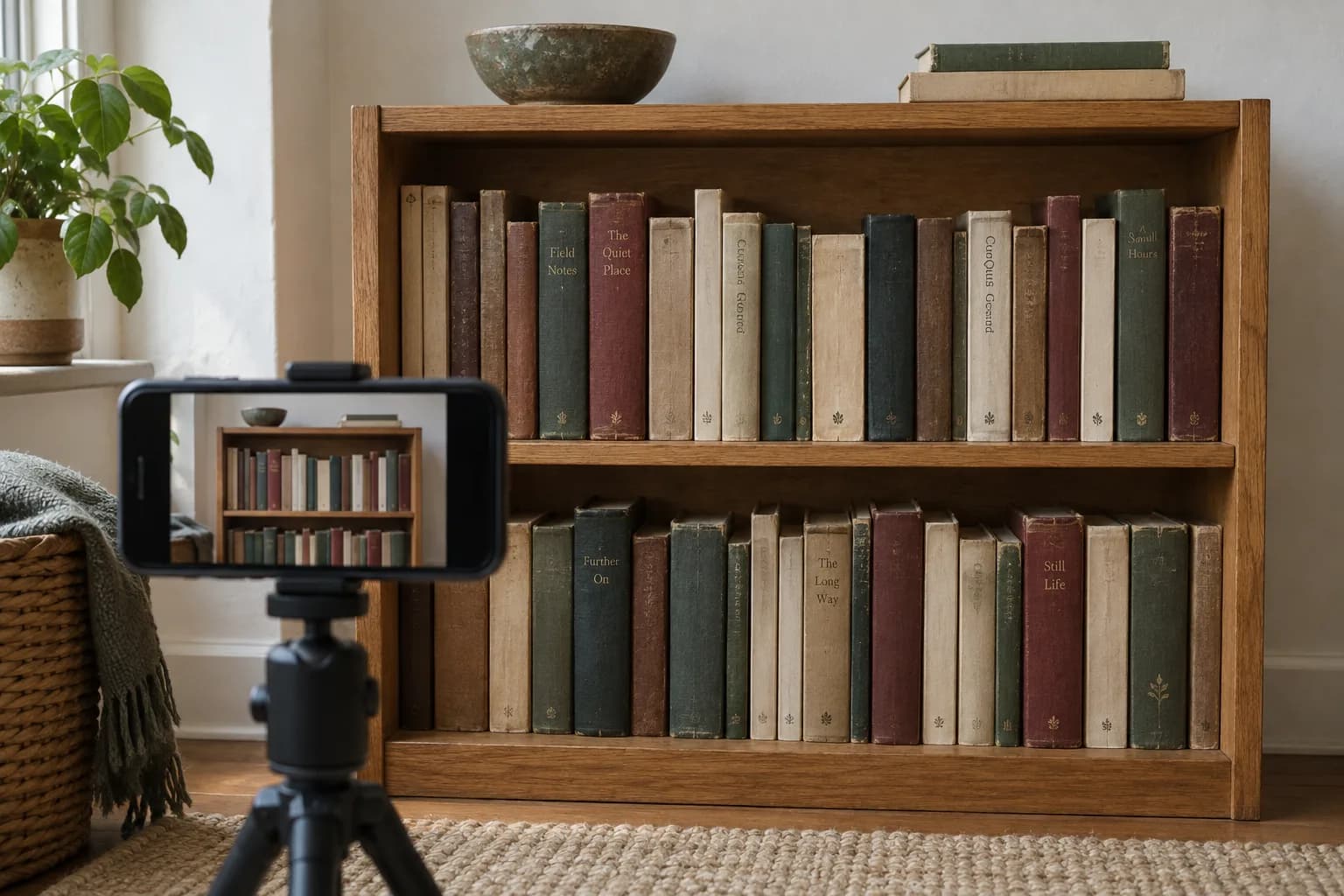
Start with the decision you want to make
Before moving a single book, choose what the list is for. A reading inventory needs reliable titles and authors. A sale list also needs the edition, condition and whether the jacket is present. A duplicate check needs enough detail to distinguish a paperback from a hardback or a different translation. These are different jobs, so do not treat one set of scan results as a finished answer to all three.
Shelf Scan reads visible spines, attempts catalogue matches and shows secondhand price estimates. The useful first result is a set of candidates to inspect. If you are preparing to sell, keep a separate note of copy-specific details that the photograph cannot reveal.
Sources: 1
A five-step photograph checklist
Work one shelf section at a time. Stand directly in front of it and check that small lettering is readable when you zoom into the photograph. Soft, even light is easier to review than a bright reflection across a shiny jacket. Straighten leaning books enough to expose their titles, without forcing fragile volumes flat.
- Remove personal documents and anything you do not want in the image.
- Keep the whole height of each spine inside the frame.
- Photograph crowded or reflective sections separately.
- Use a small overlap between adjacent photos, then check for duplicates.
- Keep a note of books with blank, worn or obscured spines.
Sources: 1
Worked example: check one shelf before scanning the room
Imagine a shelf with twelve visible books: nine clear titles, two faded spines and a boxed set. This is an illustrative checking exercise, not a measured accuracy claim. First compare the nine clear titles with the scan. Then open the two faded books and record their title pages yourself. Finally check whether the boxed set was recognised as a set, one volume or nothing at all.
For each candidate, compare the title, author and language. If a match looks plausible but the cover differs, inspect the ISBN and publisher before deciding it is wrong: covers can change between editions. Count physical volumes separately from catalogue works. One work may occupy several volumes, and two copies of a work may be intentional.
Sources: 1
Turn the list into a useful next action
Put the books into three temporary groups: keep, investigate and consider passing on. Leave doubtful matches in investigate. Review the condition and edition of any book whose estimated price surprises you. Current listings are asking prices; they do not establish a sale price or guarantee a buyer. A signed or unusual copy deserves a closer look than a spine photograph can provide.
Do a final shelf-to-list check while the books are still in place. Recording a location such as “living room, upper left” in your own notes makes an inventory useful later. Repeat the process on the next section only after you know what information you want to preserve. This avoids creating a long, impressive-looking list that cannot help you find a particular copy.
Sources: 1
Sources & checking notes
These sources support the factual explanations. Practical examples and suggested methods are editorial guidance; they are not a claim of a personal visit, appraisal or independently tested result.
- Creasy Spines: Shelf Scan features and limitsSource checked 2026-10-02
- Creasy Spines: Edition Detective and publisher checksSource checked 2026-10-02
A few more useful answers
- Can a bookshelf photo identify a first edition?
A spine photograph alone usually cannot establish the printing. Check the complete copyright page, publisher conventions and any title-specific points before describing a copy as a first printing.
- What should I do with an unreadable spine?
Open the book and record the title and author from the title page. Photograph the copyright page if the edition matters. An omitted book is better left unresolved than silently matched to a guess.
- Are scanned price estimates the amount I will receive?
No. They are estimates informed by current secondhand listings. Condition, edition, postage, seller fees and buyer demand affect an actual transaction.