How to tell two translations of the same book apart
Check translator credits, edition notes and ISBNs before choosing a translated classic. Use a copyable checklist and a verified Anna Karenina example.
By Creasy Spines · · Sources and method below
The short answer
Start with the translator credit, not the cover. Record the translator’s full name, any revision or abridgment statement, publisher, format and ISBN for each copy. Different ISBNs can reflect different formats or publishers, so they do not by themselves establish different translations. If you cannot find the credit, leave the translation unidentified until you can check the book or its publisher’s record.
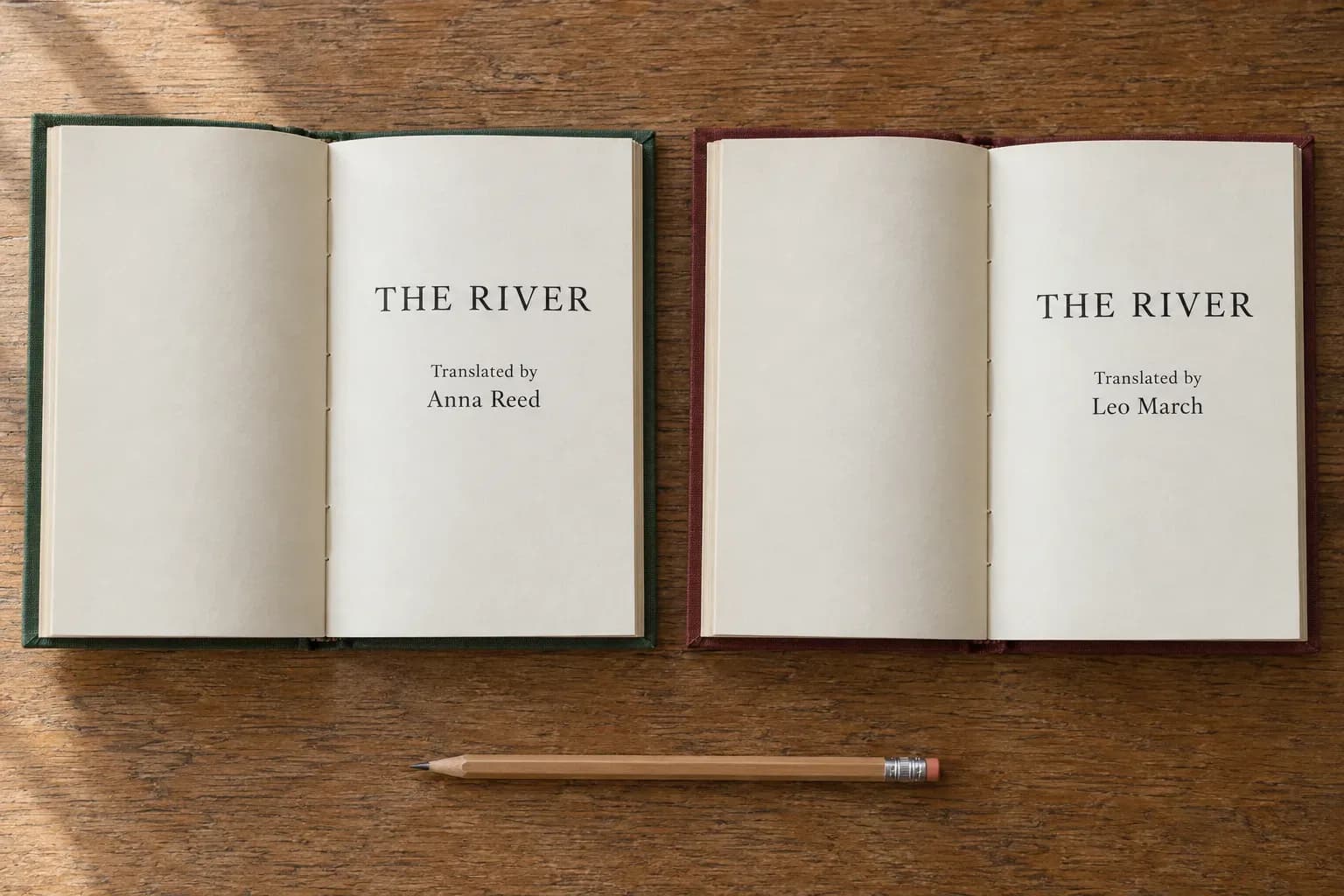
Start with the translator credit
Open the title page and look for a credit such as “translated by”. If it is absent there, check the copyright page, introductory notes and publisher’s description. Write the name exactly as credited, including every member of a translating partnership. Do not substitute the name of an editor, introducer or author of the notes: those roles may appear beside the title without identifying who translated the text.
For an online text, open its source or bibliographic record rather than relying on the cover thumbnail. Project Gutenberg’s record for Anna Karenina, ebook 1399, explicitly names Constance Garnett as translator. That is a usable identifying detail. A listing that says only “Anna Karenina by Leo Tolstoy” leaves this question unanswered.
Copy this comparison checklist for two editions
Make two notes headed Copy A and Copy B. Fill in the same fields for each, and write “not confirmed” where evidence is missing. Keeping the uncertainty visible is more useful than guessing from a familiar cover. If you are buying secondhand, ask for a clear photograph of the relevant page of the actual copy when the listing does not show it.
- Work and language: title, original author and the language you intend to read.
- Translation: the full translator credit, with the page or source URL where you found it.
- Text version: any statement that it is revised, abridged, adapted or a selection; record the wording rather than interpreting a cover slogan.
- Publication: publisher or imprint, edition statement, publication date and format. Keep the original work’s date separate from this edition’s details.
- Identifier: the ISBN for the format you are checking, or a stable source record such as a Gutenberg ebook number if no ISBN is supplied.
- Reading extras: introduction, explanatory notes, illustrations or parallel original-language text that matter to your purpose.
Use the ISBN to narrow the edition, not to judge the translation
The International ISBN Agency requires separate ISBNs for different formats and for a change of publisher, as well as for substantial textual revisions. A paperback and a hardback can therefore have different ISBNs without that difference proving a new translation. Conversely, a new-looking cover is not enough evidence that the wording has changed: marketing changes alone do not justify a new ISBN.
Look for the ISBN on the copyright page and check which format it describes. Record it alongside the translator credit, not instead of it. If the names match, still inspect revision and abridgment statements before assuming the texts are identical. Matching the translation also does not establish that two copies have the same introduction, notes or page layout.
Worked example: identify the Reading Room’s Anna Karenina
Open Anna Karenina in the Reading Room, then follow “Source text on Project Gutenberg”. The linked record is ebook 1399 and its translator field names Constance Garnett. A useful note is therefore: “Anna Karenina — Leo Tolstoy — English translation by Constance Garnett — Project Gutenberg ebook 1399.” This identifies the supplied text more precisely than the title alone.
Now compare that note with a printed copy’s actual translator credit. A different named translator is a reason to expect different wording, not proof that either version is better. A matching name is a starting point; check for a revised or shortened text before treating the copies as interchangeable. The online source record does not identify the publisher, binding or condition of your physical book.
Choose a sample and a shared reference before you commit
Once you know which texts you are comparing, read the same short scene or opening passage in each available sample. Note one concrete reaction: whether you follow the sentences comfortably, how names are presented, and whether the notes answer questions you actually have. This is a reading-preference exercise; ease of reading alone cannot establish accuracy against the original language.
For a book club, share the translator and any revision details before everyone buys a copy. If you agree to use different translations, refer to a part, chapter or recognisable scene when discussing a passage, and identify your translation when quoting. Do not assume page numbers will align. Keep the comparison note with your reading list so that a later paperback, ebook or borrowed copy can be checked without starting over.
Sources & checking notes
These sources support the factual explanations. Practical examples and suggested methods are editorial guidance; they are not a claim of a personal visit, appraisal or independently tested result.
- International ISBN Agency: when to assign or retain an ISBNSource checked 2026-10-03
- International ISBN Agency: scope, assignment and ISBN placementSource checked 2026-10-03
- Project Gutenberg: Anna Karenina, ebook 1399, translator recordSource checked 2026-10-03
- Creasy Spines Reading Room: Anna Karenina and its source linkSource checked 2026-10-03
A few more useful answers
- Do different ISBNs always mean different translations?
No. Separate ISBNs can identify different formats or publishers, even when the translation is the same. Check the translator credit and any revision statement alongside the ISBN.
- What if a secondhand listing does not name the translator?
Ask for a photograph of the title page and relevant copyright or credit page from the actual copy. Cross-check the publisher’s record if available. Keep the translation unconfirmed if the evidence remains incomplete.
- Is the same translator name enough to prove two texts are identical?
No. Check for revision, abridgment or adaptation statements as well. Introductions, notes and layout can also differ between editions, even when the credited translation matches.
- Can I use the Reading Room with a different printed translation?
You can read them alongside each other, but expect wording and page references to differ. Check the Reading Room’s linked source record, identify your printed translator and use a chapter or scene to locate the passage you want to compare.