How to read a book number line without overclaiming
Learn what a printing number line can tell you, how to compare it with an edition statement, and when a publisher-specific check is essential.
By Creasy Spines · · Sources and method below
The short answer
A number line often identifies a printing through its lowest remaining number. It does not, by itself, prove that a copy is the first edition of a work or that it has a high value. Read the entire copyright page and check the publisher’s convention for that period.
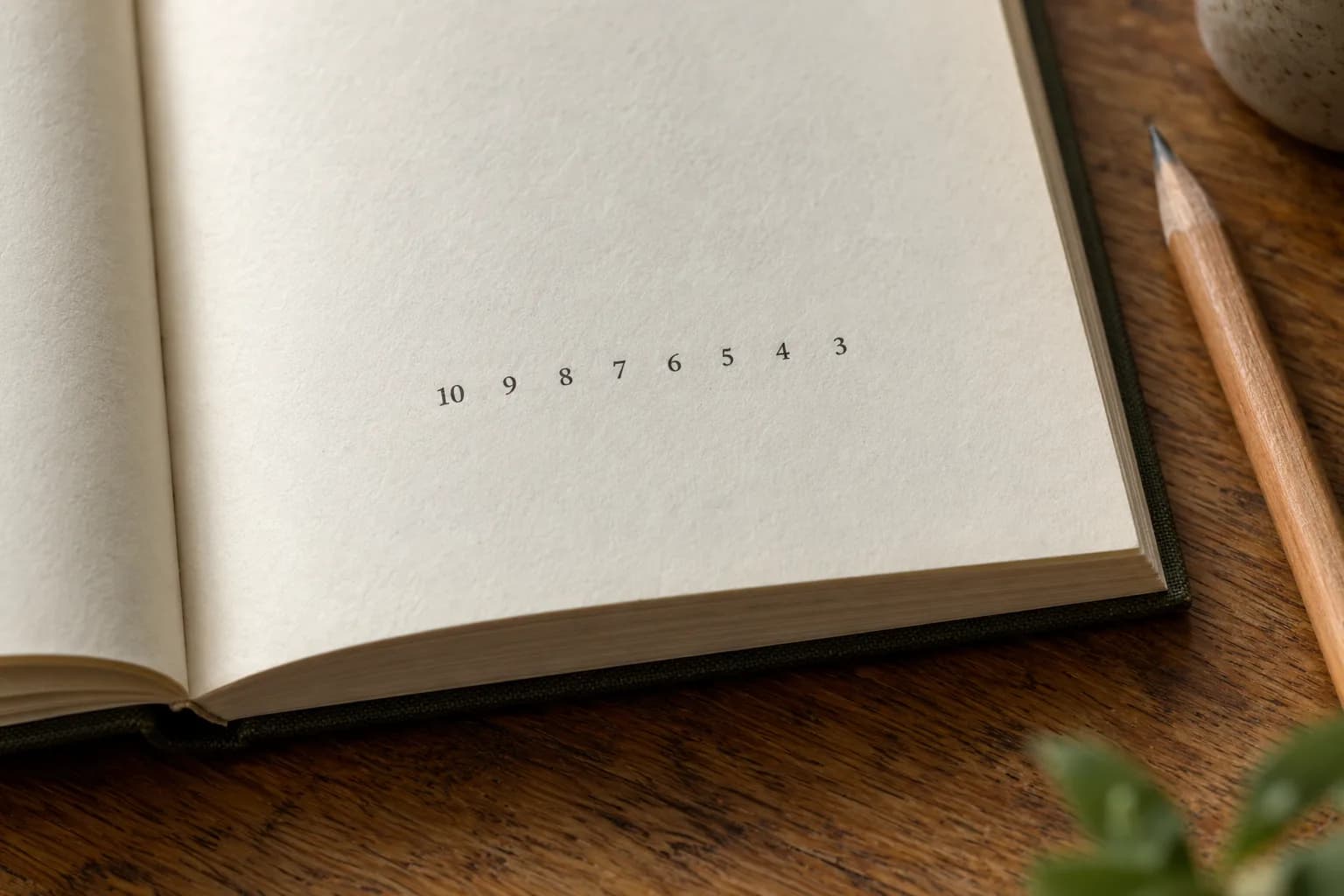
Find the whole line before interpreting it
A printing key may appear as a run of numbers near the publishing information. Read all of it, not just the first number your eye lands on. Some arrangements ascend, others descend, and some split the sequence into odd and even numbers. The arrangement is less important than the convention the publisher used.
Keep edition and printing separate in your notes. An edition describes a version of a work; a printing is a production run. A later printing can retain a first-edition statement. Conversely, a new publisher or format may have its own first printing without being the first appearance of the work.
Sources: 1
Three illustrative lines to compare
Under the common lowest-number convention, “10 9 8 7 6 5 4 3 2 1” suggests a first printing, while “10 9 8 7 6 5 4 3” suggests a third. A line such as “1 3 5 7 9 10 8 6 4 2” can also suggest a first printing. These examples explain the convention; they are not evidence about a particular book.
Do not discard the rest of the page once you spot a 1. An explicit reprint notice, book-club information or a facsimile statement can change the interpretation. Some publishers used conventions that differ from the common rule, and practices changed over time. The useful question is what this publisher meant on this edition, in this period.
Sources: 1
A step-by-step checking method
Photograph the full copyright page, then record the publisher or imprint, place of publication, dates, edition statement and complete number line. Compare those details with a publisher guide. If the guide describes several periods, make sure your copy belongs to the period you are using.
For an unfamiliar or potentially valuable book, look for a title-specific bibliography or a specialist bookseller’s detailed description. Match several features rather than one phrase. A jacket can be from another printing; a date on the title page and a copyright date do different jobs. If the available evidence conflicts, keep the description provisional.
- Transcribe the numbers exactly, including any letters.
- Record an explicit printing statement before drawing a conclusion.
- Check for book-club, facsimile or later-format notices.
- Keep photographs with the notes so the conclusion can be reviewed.
Sources: 1
Describe what you can support
A careful description might say: “Number line ends in 3; appears to be a third printing under this publisher’s usual convention.” That is more informative than attaching “rare first edition” to a copy after seeing a familiar date. If you have confirmed the convention and the relevant bibliographic points, explain what established the identification.
Edition Detective can help organise copyright-page clues and point you toward publisher guides. Treat its output as a starting point for inspection. Authentication, signatures, provenance and physical condition require evidence beyond a photograph of one page. The goal is a description another reader or bookseller can check, not the most exciting label.
Sources: 1
Sources & checking notes
These sources support the factual explanations. Practical examples and suggested methods are editorial guidance; they are not a claim of a personal visit, appraisal or independently tested result.
- Creasy Spines: Edition Detective and publisher checksSource checked 2026-11-01
A few more useful answers
- Does a 1 in the number line always mean first edition?
No. It often indicates a first printing under a common convention, but the edition, publisher, period and other notices still matter. Check the exact context before making a claim.
- What if there is no number line?
Many books use other evidence, including printing statements, publisher marks or title-specific bibliographic points. A missing number line is not proof that a copy is either early or late.
- Does an early printing automatically make a book valuable?
No. Condition, reader demand, scarcity and the correct jacket can matter greatly. Identifying a printing and estimating its market value are separate tasks.