A practical condition checklist for secondhand books
Inspect a used book’s pages, binding and jacket, understand condition labels and ask a seller specific questions before choosing a copy.
By Creasy Spines · · Sources and method below
The short answer
Read the full condition description, then inspect the pages, binding and jacket as separate parts. Check that the text is complete and the book suits your intended use. Labels such as “good” or “very good” need context; they are not a substitute for a description of the actual defects.
Choose your standard before comparing copies
A copy for a train journey, a gift and a collection can have very different requirements. For reading, you may accept a creased cover but need a secure binding and clean, legible text. For a gift, writing inside or a damaged jacket may matter more. For collecting, the edition and the correct jacket can be central to the decision.
AbeBooks describes a range of condition grades and notes that usage can vary between sellers and regions. Read the defect notes even when the headline grade sounds reassuring. A lower-priced reading copy with an honest description may suit your purpose better than a loosely labelled copy whose problems are not explained.
Sources: 1
Inspect the copy in a consistent order
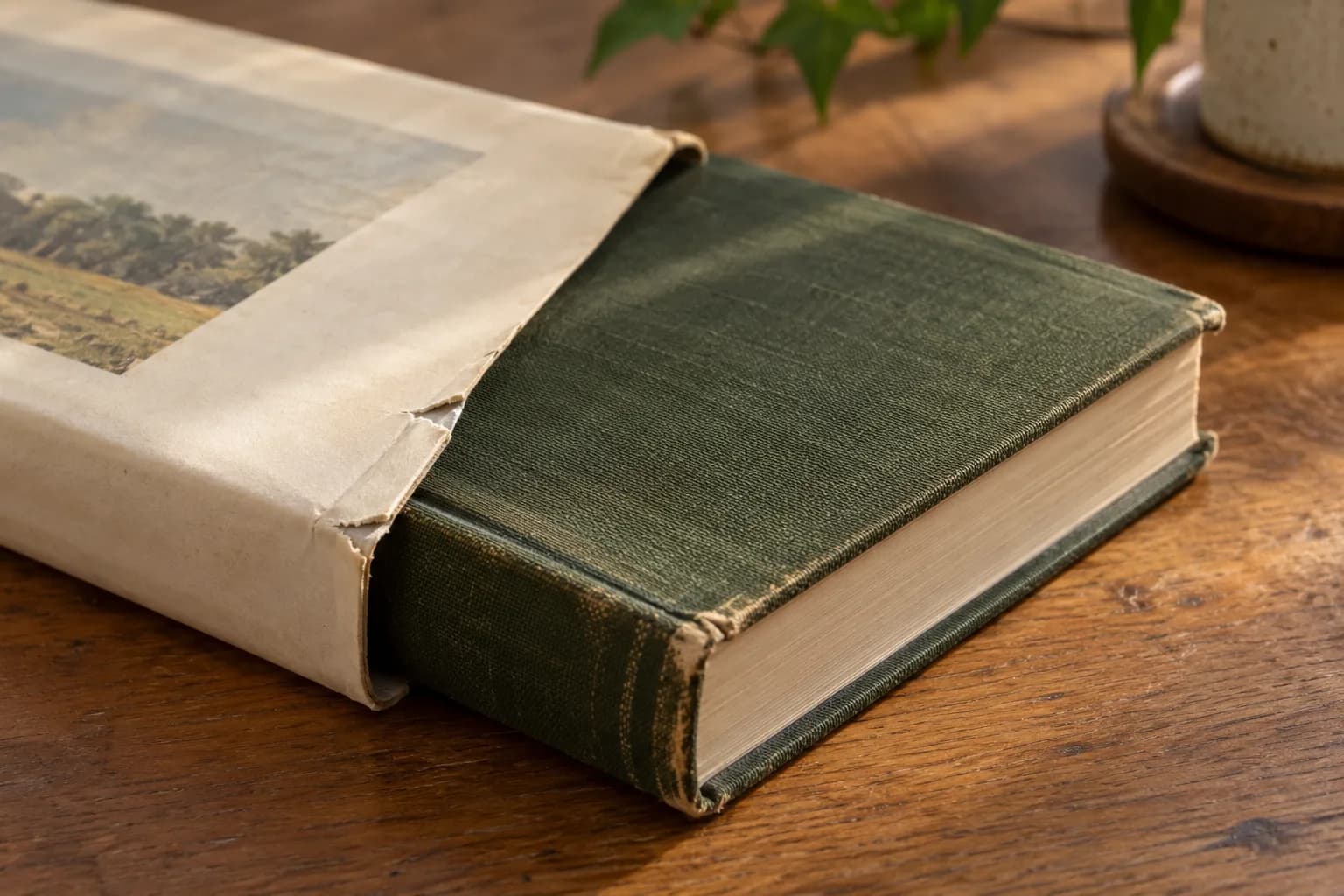
Start with the cover and jacket, then examine the binding and page edges. Open the book gently at several points and look for loose leaves, writing, stains or missing material. Do not force a fragile binding open. For an illustrated work, check maps and plates against the contents or illustration list when one is available.
Treat the book and dust jacket as separate condition questions. A tidy jacket can conceal wear to the book, and a sound book may have a damaged jacket. Ask whether the description covers both. A library stamp, price-clipped jacket or previous owner’s inscription is information to weigh against your purpose, not something to discover after delivery.
- Is the text complete, readable and securely held?
- Are there notes, highlighting, stamps or ownership marks?
- Are any maps, plates or advertised supplements missing?
- Is the jacket present, and are its tears or clipping described?
- Does the exact edition match the copy you wanted?
Sources: 1
Compare two copies with a simple example
Imagine two copies of the same ordinary paperback offered at the same total price. One has a creased cover and no writing; the other looks cleaner outside but has heavy highlighting through the chapter you want to study. For leisure reading, either may be acceptable. For annotating a course text, the first may be more useful. This is a decision example, not a valuation rule.
Now change the goal to collecting a particular hardback in its jacket. The same trade-off no longer settles the decision: you must check the printing, jacket and relevant bibliographic details. Write down the two or three features that matter before browsing more listings. It makes comparison clearer and reduces the temptation to buy solely because a grade or price looks attractive.
Sources: 1
Ask questions that can receive a factual answer
Instead of asking whether a book is “in nice condition,” ask whether all plates are present, whether the binding has loose pages, or whether there is highlighting in the text. Request a photograph of a specific area when a listing is unclear. A seller can answer a concrete question more precisely than a request for reassurance.
For remote purchases, read the return terms and include delivery costs in the comparison. Save the listing description for your records. If a defect affects whether you want the copy at all, resolve it before ordering rather than assuming the condition grade covers it. For a potentially valuable or fragile volume, seek specialist advice about inspection and handling.
Sources: 1
Sources & checking notes
These sources support the factual explanations. Practical examples and suggested methods are editorial guidance; they are not a claim of a personal visit, appraisal or independently tested result.
- AbeBooks: a guide to used book conditionsSource checked 2026-11-01
- Creasy Spines: Edition Detective and publisher checksSource checked 2026-11-01
A few more useful answers
- Does “good” mean that a used book has no defects?
No. Condition labels describe ranges of wear, and their application can vary. Read the complete description of pages, binding and jacket, and ask about anything important that is not addressed.
- Is an ex-library book always unsuitable?
No. It may be a useful reading copy, but stamps, labels, protective coverings and wear can matter for your purpose. Confirm the actual condition and whether the text is complete.
- Should I choose the cheapest copy of the same title?
Compare total cost, edition and condition first. A low price is less useful if the copy is the wrong translation, lacks material you need or has defects you would not accept.