How to plan a bookshop walk that leaves time to browse
Choose a workable cluster of bookshops, check the practical details and build a flexible walking itinerary with room for unexpected discoveries.
By Creasy Spines · · Sources and method below
The short answer
Start with two or three nearby bookshops, check their current opening hours and give yourself more browsing time than travel time. Use a directory and map to shortlist stops, then verify the actual walking route. A suggested order is not a promise that every path is walkable.
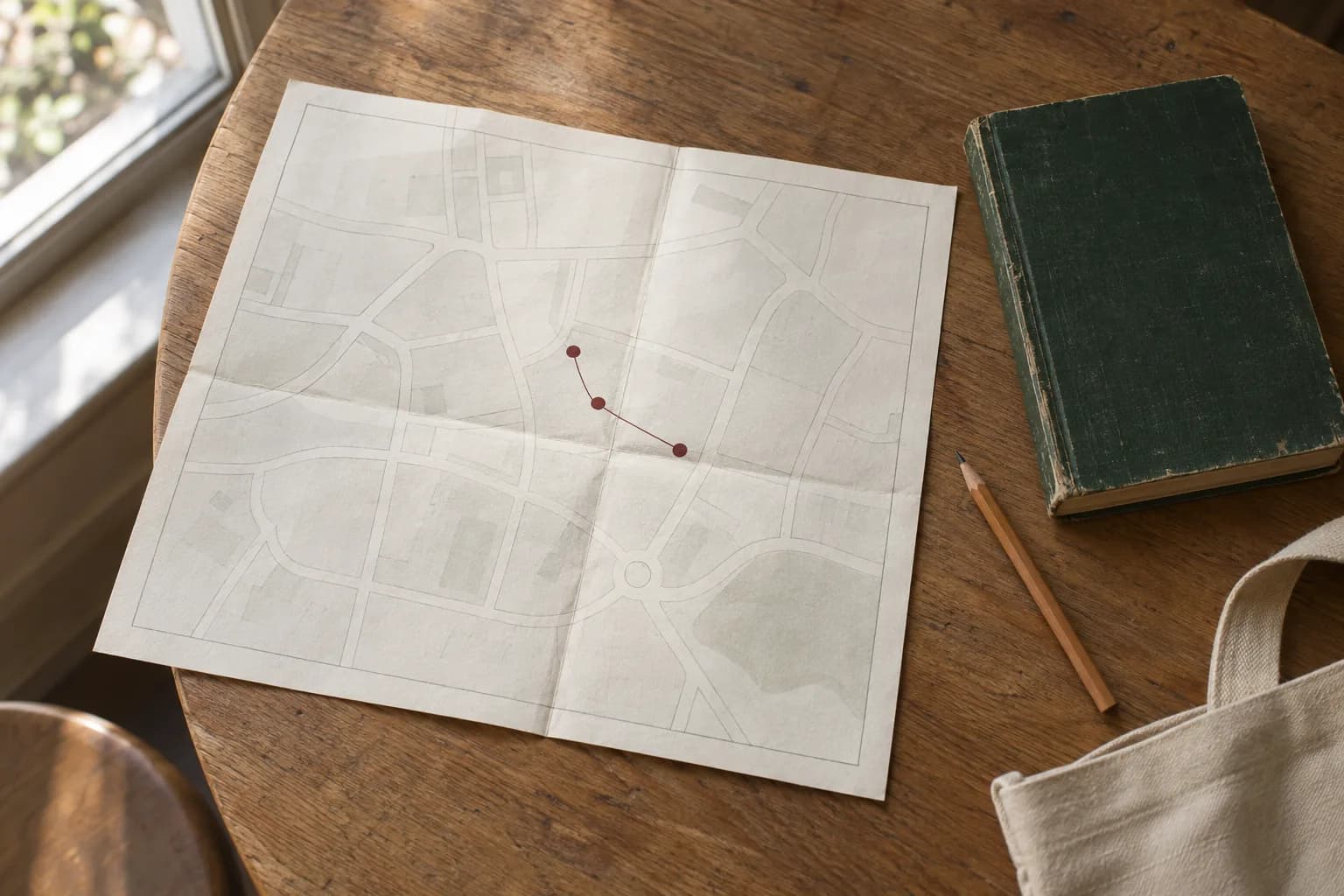
Choose an anchor shop and a small cluster
Begin with the shop you would most regret missing. It might specialise in the subject you collect, have a useful secondhand section or simply be near your transport stop. Open its listing and look for its own website or contact details. Directory categories describe a business; they do not tell you whether a particular title is in stock today.
Next, add two nearby alternatives. Three thoughtful stops can make a better afternoon than a long list that forces you to hurry. If the shops are spread across a city, decide whether you want a walking outing or a public-transport trip before trying to connect them. Leave a shop outside the cluster for another day.
Sources: 1
Check these details before leaving
Confirm hours for the date of your visit, especially around holidays or special events. If a listing has no hours, that means the information is missing. It does not mean the shop is closed. Ask directly about any access requirement, rather than treating a general accessibility label as a description of entrances, aisles and facilities.
Check the walking directions in a route service you trust. The Atlas crawl planner helps arrange selected stops and provides an itinerary, but its distance estimates do not account for every crossing, barrier, hill or temporary closure. Save shop addresses in case a mobile connection fails.
- Opening and closing time for each stop on your chosen day.
- A realistic route from arrival point to first shop and home again.
- Step-free entrances, levels and facilities if they matter to your visit.
- A backup stop or a shorter version if time or weather changes.
Sources: 1
Worked example: a two-hour afternoon
Here is an illustrative schedule, not a recommended route through a real town. Allow twenty minutes to reach the first shop, thirty minutes inside, fifteen minutes between stops, thirty minutes in the second shop and twenty-five minutes for a break and the return journey. That already fills two hours. A third stop needs more time or a shorter browse.
The exercise reveals where a plan becomes rushed. If one shop closes early, make it the anchor. If a stop is mainly for collecting a reserved book, its visit can be shorter. Leave a little unassigned time for a conversation, an unexpected section or a slower walk. You do not need to complete every pin on a map for the outing to work.
Sources: 1
Make the visit useful after the walk
Keep a short wanted list with author, title and any essential edition details. If the shop does not have the book, a clear description gives the bookseller something useful to work with. Ask before photographing interiors or stock, and keep your notes about a shop specific: what you found, what you would return for and what practical detail needs checking.
If you notice an incorrect address or a changed opening time in the Atlas, submit a correction with a reliable source. A dated factual correction helps future visitors more than a sweeping claim about the best shop in town. For your next outing, reuse the successful parts of the itinerary and leave space for one unfamiliar stop.
Sources: 1
Sources & checking notes
These sources support the factual explanations. Practical examples and suggested methods are editorial guidance; they are not a claim of a personal visit, appraisal or independently tested result.
- Creasy Spines: the bookshop crawl plannerSource checked 2026-11-01
A few more useful answers
- Can I rely on the planner’s distance as a walking route?
Use it as an estimate for ordering and comparing stops. Verify the actual walking path separately, including crossings, access restrictions and conditions that affect your visit.
- Should I call ahead for a particular secondhand book?
Yes, if that title is the reason for the trip. Secondhand stock changes, and a shop category or old review cannot confirm that a particular copy is available.
- How many shops should I include?
For a first outing, two or three close stops make a manageable starting plan. Adjust that suggestion to your available time, pace and how long you like to browse.