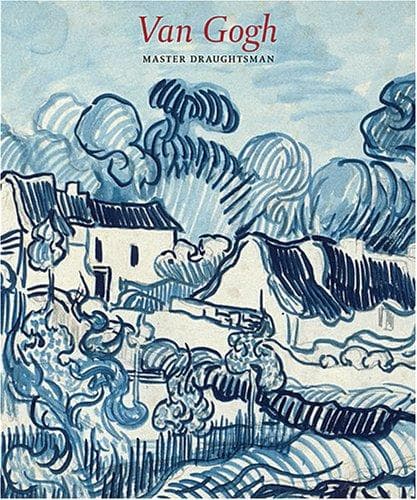
Van Gogh
In 1878, at age 25, Vincent van Gogh (1853-1890) arrived in the area of Belgium known as the Borinage to work as a Protestant evangelist in rural coal mining communities. He failed in that vocation, and after months of soul-searching, in August 1880, he decided to become an artist. This fascinating publication is the first to examine Van Gogh's time in the Borinage and his artistic development in the following years, when he created his first original works. Vivid essays tell the story of Van Gogh's life in the mining towns, and the effect this environment had on his way of thinking and seeing the world. Augmenting the text are excerpts from letters Van Gogh wrote to his brother Theo from…
Read the full description
In 1878, at age 25, Vincent van Gogh (1853-1890) arrived in the area of Belgium known as the Borinage to work as a Protestant evangelist in rural coal mining communities. He failed in that vocation, and after months of soul-searching, in August 1880, he decided to become an artist. This fascinating publication is the first to examine Van Gogh's time in the Borinage and his artistic development in the following years, when he created his first original works. Vivid essays tell the story of Van Gogh's life in the mining towns, and the effect this environment had on his way of thinking and seeing the world. Augmenting the text are excerpts from letters Van Gogh wrote to his brother Theo from…
In 1878, at age 25, Vincent van Gogh (1853-1890) arrived in the area of Belgium known as the Borinage to work as a Protestant evangelist in rural coal mining communities. He failed in that vocation, and after months of soul-searching, in August 1880, he decided to become an artist. This fascinating publication is the first to examine Van Gogh's time in the Borinage and his artistic development in the following years, when he created his first original works. Vivid essays tell the story of Van Gogh's life in the mining towns, and the effect this environment had on his way of thinking and seeing the world. Augmenting the text are excerpts from letters Van Gogh wrote to his brother Theo from the Borinage, in which he describes his desire to sketch, and prints that he modeled after masterworks by artists such as Jean-Francois Millet. Other essays trace Van Gogh's development as an artist in subsequent years, including his move to Brussels to fully pursue life as an artist.0Thought-provoking examinations of works that Van Gogh completed after leaving the Borinage demonstrate how motifs that he developed there-rustic dwellings, laborers, agriculture, nature-became themes that spanned his entire oeuvre. 0Exhibition: Fondation Mons, Mons, Belgium (23.01-17.05.2015).
Your rating & review
Rate this book
Unrated
Ratings & reviews
No ratings here yet. Read it? Leave your mark in the margin.
Editions
Gathering editions from Open Library…
Something tucked inside your copy?
A pressed flower, a ticket stub, an inscription on the flyleaf. Photograph it for Found in Books.
Send your copy travelling
Print a numbered bookplate, pass the book on, and follow where it goes next.
- Who wrote Van Gogh?
Van Gogh is by Sjraar van Heugten. The catalogue records its first publication in 2005. A later edition may have a different publication date on its copyright page.
- How long is Van Gogh?
The catalogue records 191 pages for a representative edition. Pagination varies with the publisher, format, type size and translation, so check the edition you intend to read.
