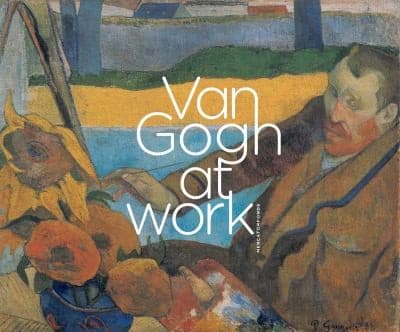
Van Gogh At Work
"Vincent van Gogh (1853-1890) is often considered to be a genius in a class of his own, an exceptional self-taught artist who paid little attention to the art world around him. In reality, Van Gogh learned extensively from others, exchanged ideas with his contemporaries, and often made use of prevailing methods and techniques to hone his skills. This book explores the workmanship behind his artistry. The reader follows Van Gogh's quest to perfect his skills and the way he adopted various drawing and painting techniques; acquired information about materials; learned about the physical characteristics of canvasses, paint, paper, chalk, and other materials; how he approached working on paper…
Read the full description
"Vincent van Gogh (1853-1890) is often considered to be a genius in a class of his own, an exceptional self-taught artist who paid little attention to the art world around him. In reality, Van Gogh learned extensively from others, exchanged ideas with his contemporaries, and often made use of prevailing methods and techniques to hone his skills. This book explores the workmanship behind his artistry. The reader follows Van Gogh's quest to perfect his skills and the way he adopted various drawing and painting techniques; acquired information about materials; learned about the physical characteristics of canvasses, paint, paper, chalk, and other materials; how he approached working on paper…
"Vincent van Gogh (1853-1890) is often considered to be a genius in a class of his own, an exceptional self-taught artist who paid little attention to the art world around him. In reality, Van Gogh learned extensively from others, exchanged ideas with his contemporaries, and often made use of prevailing methods and techniques to hone his skills. This book explores the workmanship behind his artistry. The reader follows Van Gogh's quest to perfect his skills and the way he adopted various drawing and painting techniques; acquired information about materials; learned about the physical characteristics of canvasses, paint, paper, chalk, and other materials; how he approached working on paper and canvas and which factors influenced his working practice. Showing his work alongside that of other artists demonstrates the degree to which he followed examples set by his contemporaries. Van Gogh's working methods are explored along with his most famous works, addressing topics as the use of a perspective frame, color theory, the influence of contemporaries and the famous repetitions of a theme as in the Sunflowers and the Bedroom series"—Dust jacket.
Your rating & review
Rate this book
Unrated
Ratings & reviews
No ratings here yet. Read it? Leave your mark in the margin.
Editions
Gathering editions from Open Library…
Something tucked inside your copy?
A pressed flower, a ticket stub, an inscription on the flyleaf. Photograph it for Found in Books.
Send your copy travelling
Print a numbered bookplate, pass the book on, and follow where it goes next.
About Van Gogh At Work
A few practical answers before choosing a copy.
Bibliographic source: Open Library- Who wrote Van Gogh At Work?
Van Gogh At Work is by Marije Vellekoop. The catalogue records its first publication in 2013. A later edition may have a different publication date on its copyright page.
- How long is Van Gogh At Work?
The catalogue records 304 pages for a representative edition. Pagination varies with the publisher, format, type size and translation, so check the edition you intend to read.

