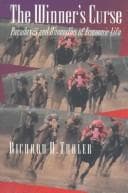
The Winner's Curse
Open Library readers: 4.00 / 5 from 3 ratings. Separate from ratings here.Catalogue checked 2026-11-16.
Richard Thaler challenges the received economic wisdom by revealing many of the paradoxes that abound even in the most painstakingly constructed transactions.
He presents literate, challenging, and often funny examples of such anomalies as why the winners at auctions are often the real losers - they pay too much and suffer the "winner's curse" - why gamblers bet on long shots at the end of a losing day, why shoppers will save on one appliance only to pass up the identical savings on another, and why sports fans who wouldn't pay more than $200 for a Super Bowl ticket wouldn't sell one they own for less than $400. He also demonstrates that markets do not always operate with the traplike…
Read the full description
Richard Thaler challenges the received economic wisdom by revealing many of the paradoxes that abound even in the most painstakingly constructed transactions.
He presents literate, challenging, and often funny examples of such anomalies as why the winners at auctions are often the real losers - they pay too much and suffer the "winner's curse" - why gamblers bet on long shots at the end of a losing day, why shoppers will save on one appliance only to pass up the identical savings on another, and why sports fans who wouldn't pay more than $200 for a Super Bowl ticket wouldn't sell one they own for less than $400. He also demonstrates that markets do not always operate with the traplike…
Richard Thaler challenges the received economic wisdom by revealing many of the paradoxes that abound even in the most painstakingly constructed transactions.
He presents literate, challenging, and often funny examples of such anomalies as why the winners at auctions are often the real losers - they pay too much and suffer the "winner's curse" - why gamblers bet on long shots at the end of a losing day, why shoppers will save on one appliance only to pass up the identical savings on another, and why sports fans who wouldn't pay more than $200 for a Super Bowl ticket wouldn't sell one they own for less than $400. He also demonstrates that markets do not always operate with the traplike efficiency we impute to them.
Thaler argues that recognizing these sometimes topsy-turvy facts of economic behavior will compel economists, as well as those of us who live by their lights in our jobs and organizations, to adopt a more balanced view of human nature, one reflected in Adam Smith's professed belief that, despite our selfishness, there is something in our nature that prompts us to enjoy, even promote, the happiness of others.
Your rating & review
Rate this book
Unrated
Ratings & reviews
No ratings here yet. Read it? Leave your mark in the margin.
Editions
Gathering editions from Open Library…
Something tucked inside your copy?
A pressed flower, a ticket stub, an inscription on the flyleaf. Photograph it for Found in Books.
Send your copy travelling
Print a numbered bookplate, pass the book on, and follow where it goes next.
About The Winner's Curse
A few practical answers before choosing a copy.
Bibliographic source: Open Library- Who wrote The Winner's Curse?
The Winner's Curse is by Richard Thaler. The catalogue records its first publication in 1992. A later edition may have a different publication date on its copyright page.
- How long is The Winner's Curse?
The catalogue records 230 pages for a representative edition. Pagination varies with the publisher, format, type size and translation, so check the edition you intend to read.

