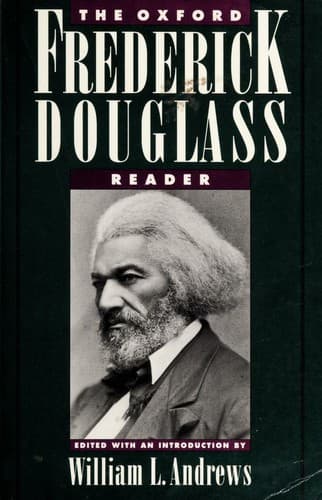
The Oxford Frederick Douglass reader
The Oxford Frederick Douglass Reader collects in one volume the most outstanding and representative work of Frederick Douglass's fifty-year writing career, including all the major genres in which he worked: autobiography, journalism, oratory, and fiction.
The Reader contains the following classic texts in their entirety: the landmark fugitive slave narrative Narrative of the Life of Frederick Douglass, An American Slave (1845); the consummate antislavery oration "What To The Slave Is The Fourth of July?" (1852); the pioneering novella The Heroic Slave (1853); and the magisterial analysis of lynching The Lessons of the Hour (1894). Generous selections from Douglass's second autobiography…
Read the full description
The Oxford Frederick Douglass Reader collects in one volume the most outstanding and representative work of Frederick Douglass's fifty-year writing career, including all the major genres in which he worked: autobiography, journalism, oratory, and fiction.
The Reader contains the following classic texts in their entirety: the landmark fugitive slave narrative Narrative of the Life of Frederick Douglass, An American Slave (1845); the consummate antislavery oration "What To The Slave Is The Fourth of July?" (1852); the pioneering novella The Heroic Slave (1853); and the magisterial analysis of lynching The Lessons of the Hour (1894). Generous selections from Douglass's second autobiography…
The Oxford Frederick Douglass Reader collects in one volume the most outstanding and representative work of Frederick Douglass's fifty-year writing career, including all the major genres in which he worked: autobiography, journalism, oratory, and fiction.
The Reader contains the following classic texts in their entirety: the landmark fugitive slave narrative Narrative of the Life of Frederick Douglass, An American Slave (1845); the consummate antislavery oration "What To The Slave Is The Fourth of July?" (1852); the pioneering novella The Heroic Slave (1853); and the magisterial analysis of lynching The Lessons of the Hour (1894). Generous selections from Douglass's second autobiography, My Bondage and My Freedom (1855), illustrate his boldly revisionist personal and political agenda, while major chapters from both the 1881 and the 1892 editions of the final autobiography, Life and Times of Frederick Douglass, reveal the author's perspective on his own successes and his estimate of the nation's progress on the racial front in the post-war era.
Also included are notable examples of Douglass's journalism, in which he advocated women's rights and black enlistment in the Civil War. In addition, the private as well as the public Douglass finds a voice in the Reader, as he responds to criticism of his decision to choose a white woman as his second wife and also discloses his carefully guarded views of religion through a little-known 1886 letter.
. Editor William L. Andrews has provided an introduction and headnotes that give basic, accessible information regarding Douglass's life, writing purposes, and the reception of his texts, offering a thoughtful review of the crucial developments in Douglass's multiple careers as autobiographer, journalist, lecturer, and racial spokesman.
Your rating & review
Rate this book
Unrated
Ratings & reviews
No ratings here yet. Read it? Leave your mark in the margin.
Editions
Gathering editions from Open Library…
Something tucked inside your copy?
A pressed flower, a ticket stub, an inscription on the flyleaf. Photograph it for Found in Books.
Send your copy travelling
Print a numbered bookplate, pass the book on, and follow where it goes next.
About The Oxford Frederick Douglass reader
A few practical answers before choosing a copy.
Bibliographic source: Open Library- Who wrote The Oxford Frederick Douglass reader?
The Oxford Frederick Douglass reader is by Frederick Douglass. A later edition may have a different publication date on its copyright page.
- How long is The Oxford Frederick Douglass reader?
