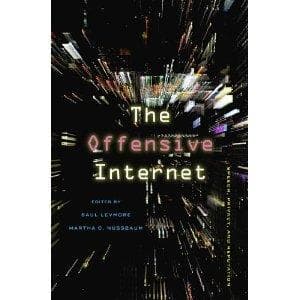
The offensive Internet
by Saul X. Levmore, Karen M. Bradshaw, Anupam Chander and Danielle Keats Citron
Not yet rated here — be generous, be honestFirst published 2010
The Internet has been romanticized as a zone of freedom. The alluring combination of sophisticated technology with low barriers to entry and instantaneous outreach to millions of users has mesmerized libertarians and communitarians alike. Lawmakers have joined the celebration, passing the Communications Decency Act, which enables Internet Service Providers to allow unregulated discourse without danger of liability, all in the name of enhancing freedom of speech. But an unregulated Internet is a breeding ground for offensive conduct.
At last we have a book that begins to focus on abuses made possible by anonymity, freedom from liability, and lack of oversight. The distinguished scholars…
Read the full description
The Internet has been romanticized as a zone of freedom. The alluring combination of sophisticated technology with low barriers to entry and instantaneous outreach to millions of users has mesmerized libertarians and communitarians alike. Lawmakers have joined the celebration, passing the Communications Decency Act, which enables Internet Service Providers to allow unregulated discourse without danger of liability, all in the name of enhancing freedom of speech. But an unregulated Internet is a breeding ground for offensive conduct.
At last we have a book that begins to focus on abuses made possible by anonymity, freedom from liability, and lack of oversight. The distinguished scholars…
The Internet has been romanticized as a zone of freedom. The alluring combination of sophisticated technology with low barriers to entry and instantaneous outreach to millions of users has mesmerized libertarians and communitarians alike. Lawmakers have joined the celebration, passing the Communications Decency Act, which enables Internet Service Providers to allow unregulated discourse without danger of liability, all in the name of enhancing freedom of speech. But an unregulated Internet is a breeding ground for offensive conduct.
At last we have a book that begins to focus on abuses made possible by anonymity, freedom from liability, and lack of oversight. The distinguished scholars assembled in this volume, drawn from law and philosophy, connect the absence of legal oversight with harassment and discrimination. Questioning the simplistic notion that abusive speech and mobocracy are the inevitable outcomes of new technology, they argue that current misuse is the outgrowth of social, technological, and legal choices. Seeing this clearly will help us to be better informed about our options.
In a field still dominated by a frontier perspective, this book has the potential to be a real game changer. Armed with example after example of harassment in Internet chat rooms and forums, the authors detail some of the vile and hateful speech that the current combination of law and technology has bred. The facts are then treated to analysis and policy prescriptions. Read this book and you will never again see the Internet through rose-colored glasses.
Your rating & review
Rate this book
Unrated
Ratings & reviews
No ratings here yet. Read it? Leave your mark in the margin.
Editions
Gathering editions from Open Library…
Something tucked inside your copy?
A pressed flower, a ticket stub, an inscription on the flyleaf. Photograph it for Found in Books.
Send your copy travelling
Print a numbered bookplate, pass the book on, and follow where it goes next.
About The offensive Internet
A few practical answers before choosing a copy.
Bibliographic source: Open Library- Who wrote The offensive Internet?
The offensive Internet is by Saul X. Levmore, Karen M. Bradshaw, Anupam Chander, Danielle Keats Citron. The catalogue records its first publication in 2010. A later edition may have a different publication date on its copyright page.
- How do I choose an edition of The offensive Internet?
Compare the publisher, publication date, language, format and ISBN in the editions section. If you need a particular translation or a matching book-club copy, confirm those details with the seller. A work-level page brings different editions together; its first-publication year does not identify your individual copy.
