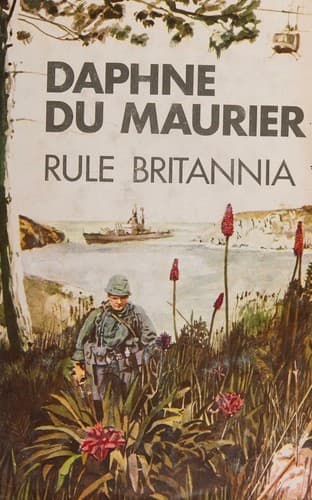
Rule Brittania
Emma, who lives in Cornwall with her grandmother, a famous retired actress, wakes one morning to find that the world has apparently gone mad: no post, no telephone, no radio, a warship in the bay and American soldiers advancing across the field towards the house. The time is a few years in the future. England has withdrawn from the Common Market and, on the brink of bankruptcy, has decided that salvation lies in a union - political, military and economic - with the United States. Theoretically it is to be an equal partnership; but to some people it soon begins to look like a takeover bid. Daphne du Maurier is concerned not only with what would happen to this country under what is virtually…
Read the full description
Emma, who lives in Cornwall with her grandmother, a famous retired actress, wakes one morning to find that the world has apparently gone mad: no post, no telephone, no radio, a warship in the bay and American soldiers advancing across the field towards the house. The time is a few years in the future. England has withdrawn from the Common Market and, on the brink of bankruptcy, has decided that salvation lies in a union - political, military and economic - with the United States. Theoretically it is to be an equal partnership; but to some people it soon begins to look like a takeover bid. Daphne du Maurier is concerned not only with what would happen to this country under what is virtually…
Emma, who lives in Cornwall with her grandmother, a famous retired actress, wakes one morning to find that the world has apparently gone mad: no post, no telephone, no radio, a warship in the bay and American soldiers advancing across the field towards the house. The time is a few years in the future. England has withdrawn from the Common Market and, on the brink of bankruptcy, has decided that salvation lies in a union - political, military and economic - with the United States. Theoretically it is to be an equal partnership; but to some people it soon begins to look like a takeover bid. Daphne du Maurier is concerned not only with what would happen to this country under what is virtually occupation, but also with the effect on human relationships. In Emma, looking at it all with clear young eyes, Daphne du Maurier has drawn one of her most enchanting heroines; and this engrossing book shows once again what a versatile and perceptive writer she is.
Your rating & review
Rate this book
Unrated
Ratings & reviews
No ratings here yet. Read it? Leave your mark in the margin.
Editions
Gathering editions from Open Library…
Something tucked inside your copy?
A pressed flower, a ticket stub, an inscription on the flyleaf. Photograph it for Found in Books.
Send your copy travelling
Print a numbered bookplate, pass the book on, and follow where it goes next.
About Rule Brittania
A few practical answers before choosing a copy.
Bibliographic source: Open Library- Who wrote Rule Brittania?
Rule Brittania is by Daphne du Maurier. The catalogue records its first publication in 1972. A later edition may have a different publication date on its copyright page.
- How long is Rule Brittania?
The catalogue records 322 pages for a representative edition. Pagination varies with the publisher, format, type size and translation, so check the edition you intend to read.


