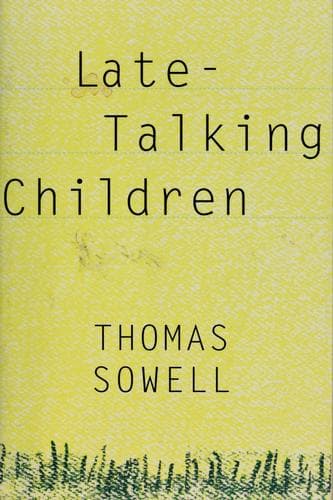
Late-talking Children
The painful and baffling mystery as to why some obviously bright children do not begin talking until long after the "normal" time is explored in this book through personal experiences and the findings of scientific research. The author's own experiences as the father of such a child led to the formation of a group of more than fifty sets of parents of similar children. The anguish and frustration of these parents as they try to cope with children who do not talk and institutions that do not understand them is a remarkable and moving human story. Fortunately, some of these children turn out to have not only normal intelligence but even outstanding abilities, especially in highly analytical…
Read the full description
The painful and baffling mystery as to why some obviously bright children do not begin talking until long after the "normal" time is explored in this book through personal experiences and the findings of scientific research. The author's own experiences as the father of such a child led to the formation of a group of more than fifty sets of parents of similar children. The anguish and frustration of these parents as they try to cope with children who do not talk and institutions that do not understand them is a remarkable and moving human story. Fortunately, some of these children turn out to have not only normal intelligence but even outstanding abilities, especially in highly analytical…
The painful and baffling mystery as to why some obviously bright children do not begin talking until long after the "normal" time is explored in this book through personal experiences and the findings of scientific research. The author's own experiences as the father of such a child led to the formation of a group of more than fifty sets of parents of similar children. The anguish and frustration of these parents as they try to cope with children who do not talk and institutions that do not understand them is a remarkable and moving human story. Fortunately, some of these children turn out to have not only normal intelligence but even outstanding abilities, especially in highly analytical fields such as mathematics and computers. Public figures who were late in talking include the distinguished mathematician Julia Robinson, Nobel Prize-winning physicist Richard Feynman and - the most famous of all - Albert Einstein.
Fascinating stories of late-talking children and the remarkable families from which they come are followed by explorations of recent scientific research that throws light on the unusual development patterns of such children.
Your rating & review
Rate this book
Unrated
Ratings & reviews
No ratings here yet. Read it? Leave your mark in the margin.
Editions
Gathering editions from Open Library…
Something tucked inside your copy?
A pressed flower, a ticket stub, an inscription on the flyleaf. Photograph it for Found in Books.
Send your copy travelling
Print a numbered bookplate, pass the book on, and follow where it goes next.
About Late-talking Children
A few practical answers before choosing a copy.
Bibliographic source: Open Library- Who wrote Late-talking Children?
Late-talking Children is by Thomas Sowell. The catalogue records its first publication in 1997. A later edition may have a different publication date on its copyright page.
- How long is Late-talking Children?
The catalogue records 202 pages for a representative edition. Pagination varies with the publisher, format, type size and translation, so check the edition you intend to read.

