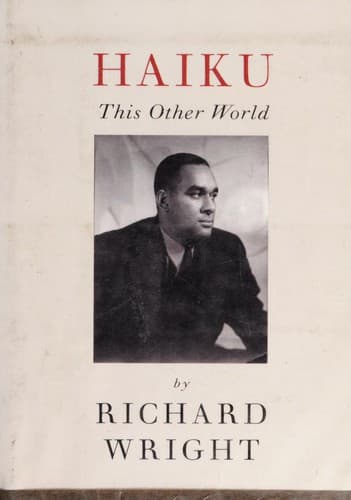
Haiku
this other world
by Richard Wright and Julia Wright
Richard Wright, one of the early forceful and eloquent spokesmen for black Americans, author of Native Son and Black Boy, was also, it turns out, a major poet. During the last eighteen months of his life, he discovered and became enamored of haiku, the strict seventeen-syllable Japanese form.
Wright became so excited about the discovery that he began writing his own haiku, in which he attempted to capture, through his sensibility as an African American, the same Zen discipline and beauty in depicting man's relationship, not to his fellow man as he had in his fiction, but to nature and the natural world.
In all, he wrote over 4,000 haiku, from which he chose, before he died, the 817 he…
Read the full description
Richard Wright, one of the early forceful and eloquent spokesmen for black Americans, author of Native Son and Black Boy, was also, it turns out, a major poet. During the last eighteen months of his life, he discovered and became enamored of haiku, the strict seventeen-syllable Japanese form.
Wright became so excited about the discovery that he began writing his own haiku, in which he attempted to capture, through his sensibility as an African American, the same Zen discipline and beauty in depicting man's relationship, not to his fellow man as he had in his fiction, but to nature and the natural world.
In all, he wrote over 4,000 haiku, from which he chose, before he died, the 817 he…
Richard Wright, one of the early forceful and eloquent spokesmen for black Americans, author of Native Son and Black Boy, was also, it turns out, a major poet. During the last eighteen months of his life, he discovered and became enamored of haiku, the strict seventeen-syllable Japanese form.
Wright became so excited about the discovery that he began writing his own haiku, in which he attempted to capture, through his sensibility as an African American, the same Zen discipline and beauty in depicting man's relationship, not to his fellow man as he had in his fiction, but to nature and the natural world.
In all, he wrote over 4,000 haiku, from which he chose, before he died, the 817 he preferred. Rather than a deviation from his self appointed role as spokesman for black Americans of his time, Richard Wright's haiku, disciplined and steeped in beauty, are a culmination: not only do they give added scope to his work but they bring to it a universality that transcends both race and color without ever denying them.
Your rating & review
Rate this book
Unrated
Ratings & reviews
No ratings here yet. Read it? Leave your mark in the margin.
Editions
Gathering editions from Open Library…
Something tucked inside your copy?
A pressed flower, a ticket stub, an inscription on the flyleaf. Photograph it for Found in Books.
Send your copy travelling
Print a numbered bookplate, pass the book on, and follow where it goes next.
- Who wrote Haiku?
Haiku is by Richard Wright, Julia Wright. The catalogue records its first publication in 1998. A later edition may have a different publication date on its copyright page.
- How long is Haiku?
The catalogue records 320 pages for a representative edition. Pagination varies with the publisher, format, type size and translation, so check the edition you intend to read.


