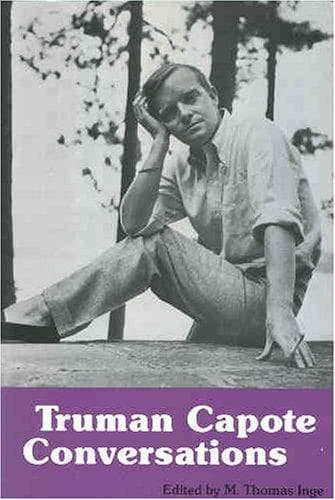
Conversations
Truman Capote once said, "The thing I like to do most in the whole world is talk ...," and talk he does in the more than two dozen interviews collected in this book. The topics are often gossip about the famous people Capote ran with, but always he provides revealing information about his writings—the authors who inspired him, his meticulous methods of research and composition, and his personal reverence for the craft of authorship. He was, as the editor notes, "fiercely devoted to his art, and keenly aware of his place in the world of letters." While his detractors, such as Ernest Hemingway and Gore Vidal, spoke out long and loud against the feisty and media-minded writer from Louisiana…
Read the full description
Truman Capote once said, "The thing I like to do most in the whole world is talk ...," and talk he does in the more than two dozen interviews collected in this book. The topics are often gossip about the famous people Capote ran with, but always he provides revealing information about his writings—the authors who inspired him, his meticulous methods of research and composition, and his personal reverence for the craft of authorship. He was, as the editor notes, "fiercely devoted to his art, and keenly aware of his place in the world of letters." While his detractors, such as Ernest Hemingway and Gore Vidal, spoke out long and loud against the feisty and media-minded writer from Louisiana…
Truman Capote once said, "The thing I like to do most in the whole world is talk ...," and talk he does in the more than two dozen interviews collected in this book. The topics are often gossip about the famous people Capote ran with, but always he provides revealing information about his writings—the authors who inspired him, his meticulous methods of research and composition, and his personal reverence for the craft of authorship. He was, as the editor notes, "fiercely devoted to his art, and keenly aware of his place in the world of letters." While his detractors, such as Ernest Hemingway and Gore Vidal, spoke out long and loud against the feisty and media-minded writer from Louisiana, Capote here has the last word. What emerges is a portrait of the author as pop cult figure—unabashed in his pursuit of fame and fortune but unstinting in his devotion to becoming one of America's major prose stylists. These interviews range from the first he granted after the publication of his first novel through his shockingly personal self-interview which appeared at the end of his last major work.
Your rating & review
Rate this book
Unrated
Ratings & reviews
No ratings here yet. Read it? Leave your mark in the margin.
Editions
Gathering editions from Open Library…
Something tucked inside your copy?
A pressed flower, a ticket stub, an inscription on the flyleaf. Photograph it for Found in Books.
Send your copy travelling
Print a numbered bookplate, pass the book on, and follow where it goes next.
About Conversations
A few practical answers before choosing a copy.
Bibliographic source: Open Library- Who wrote Conversations?
Conversations is by Truman Capote. The catalogue records its first publication in 1987. A later edition may have a different publication date on its copyright page.
- How long is Conversations?
The catalogue records 374 pages for a representative edition. Pagination varies with the publisher, format, type size and translation, so check the edition you intend to read.


