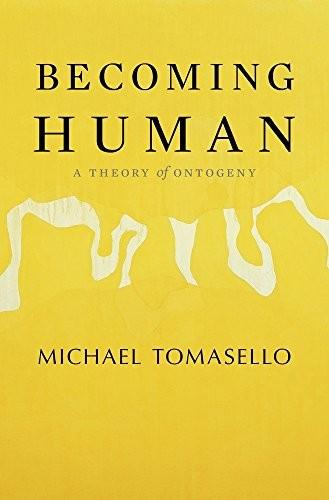
Becoming Human
Virtually all theories of how humans have become such a distinctive species focus on evolution. Here, Michael Tomasello proposes a complementary theory of human uniqueness, focused on ontogenetic processes. His data-driven model explains how those things that make us most human are constructed during the first years of a child's life. Tomasello assembles nearly three decades of experimental work with chimpanzees, bonobos, and human children to propose a new framework for psychological development between birth and seven years of age. He identifies eight pathways that starkly differentiate humans from their closest primate relatives: social cognition, communication, cultural learning…
Read the full description
Virtually all theories of how humans have become such a distinctive species focus on evolution. Here, Michael Tomasello proposes a complementary theory of human uniqueness, focused on ontogenetic processes. His data-driven model explains how those things that make us most human are constructed during the first years of a child's life. Tomasello assembles nearly three decades of experimental work with chimpanzees, bonobos, and human children to propose a new framework for psychological development between birth and seven years of age. He identifies eight pathways that starkly differentiate humans from their closest primate relatives: social cognition, communication, cultural learning…
Virtually all theories of how humans have become such a distinctive species focus on evolution. Here, Michael Tomasello proposes a complementary theory of human uniqueness, focused on ontogenetic processes. His data-driven model explains how those things that make us most human are constructed during the first years of a child's life. Tomasello assembles nearly three decades of experimental work with chimpanzees, bonobos, and human children to propose a new framework for psychological development between birth and seven years of age. He identifies eight pathways that starkly differentiate humans from their closest primate relatives: social cognition, communication, cultural learning, cooperative thinking, collaboration, prosociality, social norms, and moral identity. In each of these, great apes possess rudimentary abilities. But then, Tomasello argues, the maturation of humans' evolved capacities for shared intentionality transform these abilities into uniquely human cognition and sociality. The first step occurs around nine months, with the emergence of joint intentionality, exercised mostly with caregiving adults. The second step occurs around three years, with the emergence of collective intentionality involving both authoritative adults, who convey cultural knowledge, and coequal peers, who elicit collaboration and communication. Finally, by age six or seven, children become responsible for self-regulating their beliefs and actions so that they comport with cultural norms. Built on the essential ideas of Lev Vygotsky, Becoming Human places human sociocultural activity within the framework of modern evolutionary theory, and shows how biology creates the conditions under which culture does its work.--
Your rating & review
Rate this book
Unrated
Ratings & reviews
No ratings here yet. Read it? Leave your mark in the margin.
Editions
Gathering editions from Open Library…
Something tucked inside your copy?
A pressed flower, a ticket stub, an inscription on the flyleaf. Photograph it for Found in Books.
Send your copy travelling
Print a numbered bookplate, pass the book on, and follow where it goes next.
About Becoming Human
A few practical answers before choosing a copy.
Bibliographic source: Open Library- Who wrote Becoming Human?
Becoming Human is by Michael Tomasello. The catalogue records its first publication in 2018. A later edition may have a different publication date on its copyright page.
- How long is Becoming Human?
The catalogue records 392 pages for a representative edition. Pagination varies with the publisher, format, type size and translation, so check the edition you intend to read.
