
Author
Steven D. Levitt
Born 1967
"Steven David "Steve" Levitt is a prominent American economist best known for his work on crime, in particular on the link between legalized abortion and crime rates. Winner of the 2003 John Bates Clark Medal, he is currently the Alvin H. Baum Professor of Economics at the University of Chicago, director of the Becker Center on Chicago Price Theory at the University of Chicago Graduate School of Business, and co-editor of the Journal of Political Economy published by the University of Chicago Press." - Wikipedia
Wikipedia. Bibliographic data from Open Library.
Books by Steven D. Levitt
Most-read first
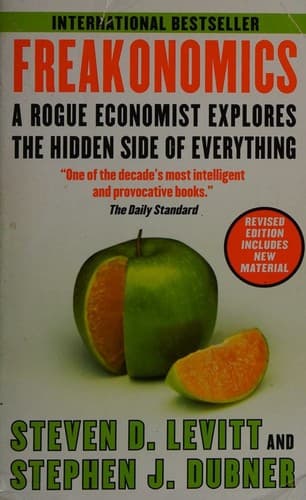
Freakonomics
Steven D. Levitt & Stephen J. Dubner, 2005
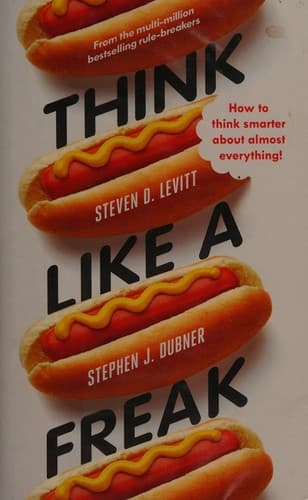
Think Like a Freak
Steven D. Levitt & Stephen J. Dubner, 2014
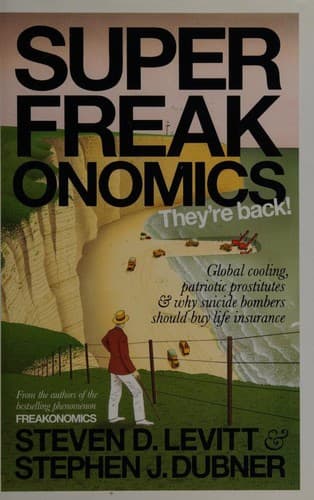
Superfreakonomics
Steven D. Levitt & Stephen J. Dubner, 2009

Microeconomics
Chad Syverson, Steven D. Levitt & others, 2012
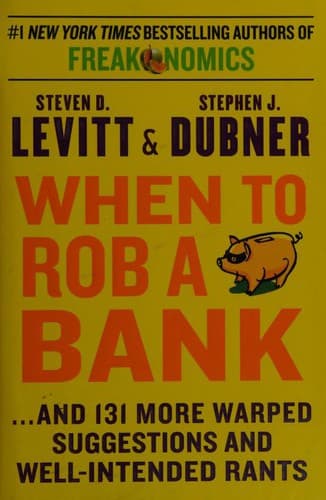
When to Rob a Bank
Steven D. Levitt & Stephen J. Dubner, 2015
- Online Course Pack : Essentials of Economics/Freakeconomics/Access Card : MyEconLab : SlomanJohn Sloman, Steven D. Levitt & others
Online Course Pack : Essentials of Economics/Freakeconomics/Access Card : MyEconLab : Sloman
John Sloman, Steven D. Levitt & others, 2008
- Valuepack : MicroeconomicsRobert S. Pindyck, Daniel L. Rubinfeld & others
Valuepack : Microeconomics
Robert S. Pindyck, Daniel L. Rubinfeld & others, 2007

Mo gui jing ji xue 3
Steven D. Levitt, 2016
- Freaks and FriendsSteven D. Levitt & Stephen J. Dubner
Freaks and Friends
Steven D. Levitt & Stephen J. Dubner, 2015
- Freakonomics-OmSteven D. Levitt
Freakonomics-Om
Steven D. Levitt
- Was There Really a Hawthorne Effect at the Hawthorne Plant?Steven D. Levitt
Was There Really a Hawthorne Effect at the Hawthorne Plant?
Steven D. Levitt, 2009
Mo gui jing ji xue
Steven D. Levitt, 2016
Gorunmeyen Ekonomi - Dunya Gercekte Nasil Isliyor?
Steven D. Levitt, 2006
Gorunmeyeni Dusunmek
Steven D. Levitt & Stephen J. Dubner, 2015
- An Economist Sells BagelsSteven D. Levitt
An Economist Sells Bagels
Steven D. Levitt, 2006
- Congressional Distributive Politics and State Economic PerformanceSteven D. Levitt
Congressional Distributive Politics and State Economic Performance
Steven D. Levitt, 1994
- The Determinants of Juvenile CrimeSteven D. Levitt
The Determinants of Juvenile Crime
Steven D. Levitt, 2000
- Evaluating the Effectiveness of Child Safety Seats and Seat Belts in Protecting Children from InjurySteven D. Levitt
Evaluating the Effectiveness of Child Safety Seats and Seat Belts in Protecting Children from Injury
Steven D. Levitt, 2006
- Evidence That Seat Belts Are as Effective as Child Safety Seats in Preventing Death for Children Aged Two and UpSteven D. Levitt
Evidence That Seat Belts Are as Effective as Child Safety Seats in Preventing Death for Children Aged Two and Up
Steven D. Levitt, 2005
- The Exaggerated Role of Changing Age Structure in Explaining Aggregate Crime ChangesSteven D. Levitt
The Exaggerated Role of Changing Age Structure in Explaining Aggregate Crime Changes
Steven D. Levitt, 1997
- The impact of federal spending on House election outcomesSteven D. Levitt
The impact of federal spending on House election outcomes
Steven D. Levitt, 1995
- Testing Theories of DiscriminationSteven D. Levitt
Testing Theories of Discrimination
Steven D. Levitt, 2003
- An Economic Analysis of a Drug-selling Gang's FinancesSteven D. Levitt
An Economic Analysis of a Drug-selling Gang's Finances
Steven D. Levitt, 1998
- Estimating the Effect of Alcohol on Driver Risk Using Only Fatal Accident StatisticsSteven D. Levitt
Estimating the Effect of Alcohol on Driver Risk Using Only Fatal Accident Statistics
Steven D. Levitt, 1997
- Juvenile Crime and PunishmentSteven D. Levitt
Juvenile Crime and Punishment
Steven D. Levitt, 1997
- Market Distortions When Agents Are Better InformedSteven D. Levitt
Market Distortions When Agents Are Better Informed
Steven D. Levitt, 2002
- פריקונומיקסSteven D. Levitt, Stephen J. Dubner & others
פריקונומיקס
Steven D. Levitt, Stephen J. Dubner & others, 2017
A Quelle Heure Braquer La Banque ?
Steven D. Levitt, 2016
- CUÁNDO ROBAR UN BANCOSteven D. Levitt
CUÁNDO ROBAR UN BANCO
Steven D. Levitt, 2016
- SuperFreakonomics, Illustrated EditionSteven D. Levitt & Stephen J. Dubner
SuperFreakonomics, Illustrated Edition
Steven D. Levitt & Stephen J. Dubner, 2010
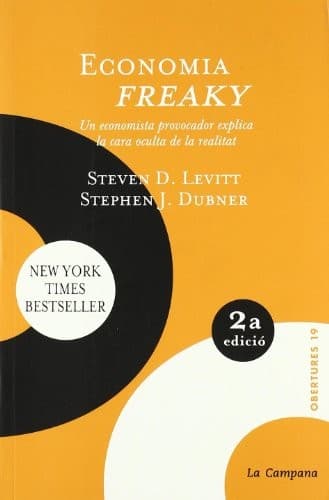
Economia freaky
Steven D. Levitt & Stephen J. Dubner, 2006
- CheckmateSteven D. Levitt
Checkmate
Steven D. Levitt, 2009
- What Happens in the Field Stays in the FieldSteven D. Levitt
What Happens in the Field Stays in the Field
Steven D. Levitt, 2009
- The Role of Skill Versus Luck in PokerSteven D. Levitt
The Role of Skill Versus Luck in Poker
Steven D. Levitt, 2011
- Super friḳonomiḳs mefareḳ et ha-ḥayim le-gormimSteven D. Levitt
Super friḳonomiḳs mefareḳ et ha-ḥayim le-gormim
Steven D. Levitt, 2011
- Incentive Compatibility Constraints as an Explanation for the Use of Prison Sentences Instead of FinesSteven D. Levitt
Incentive Compatibility Constraints as an Explanation for the Use of Prison Sentences Instead of Fines
Steven D. Levitt, 1996
- Why Do Increased Arrest Rates Appear to Reduce CrimeSteven D. Levitt
Why Do Increased Arrest Rates Appear to Reduce Crime
Steven D. Levitt, 1996
- Using Electoral Cycles in Police Hiring to Estimate the Effect of Police on CrimeSteven D. Levitt
Using Electoral Cycles in Police Hiring to Estimate the Effect of Police on Crime
Steven D. Levitt, 1995
- The Effect of Prison Population Size on Crime RatesSteven D. Levitt
The Effect of Prison Population Size on Crime Rates
Steven D. Levitt, 1995
- Freakonomics Twentieth Anniversary Edition: A Rogue Economist Explores the Hidden Side of Everything—A Groundbreaking Exploration of Hidden Incentives, Behavioral Economics, and Unconventional WisdomSteven D. Levitt
Freakonomics Twentieth Anniversary Edition: A Rogue Economist Explores the Hidden Side of Everything—A Groundbreaking Exploration of Hidden Incentives, Behavioral Economics, and Unconventional Wisdom
Steven D. Levitt, 2025
Reading Steven D. Levitt
- Which books by Steven D. Levitt can I find here?
This page currently brings together 40 catalogue works, including Freakonomics, Think Like a Freak, Superfreakonomics. This is a selection from our catalogue, not necessarily a complete bibliography. Open a work to compare editions and reviews.
Search this author- How are these books ordered?
The list uses catalogue reading-popularity data to put widely read works first. That is a discovery aid, not a claim that the first result is the author's best book or a recommended reading order.
- Where should I check a particular edition or translation?
Open the book's catalogue page and compare publisher, year, format, language and ISBN. Different editions of the same work can have different translators, introductions and page counts.