Author
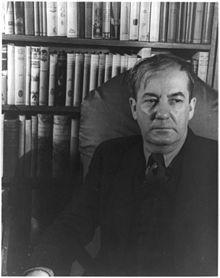
Sherwood Anderson
1876–1941
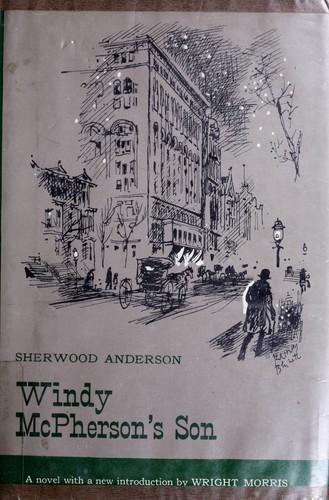
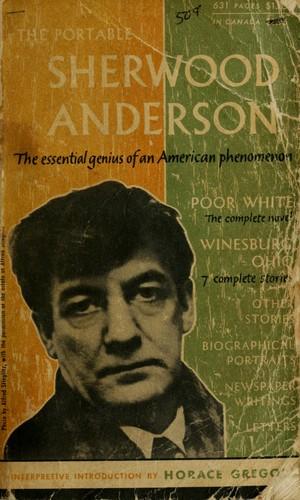
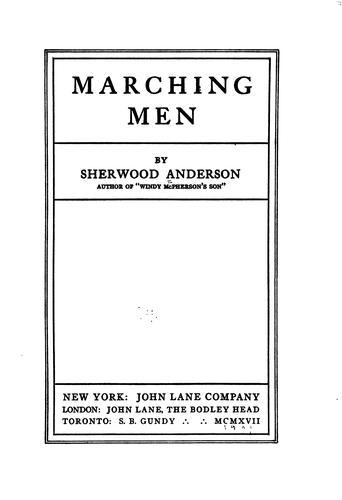
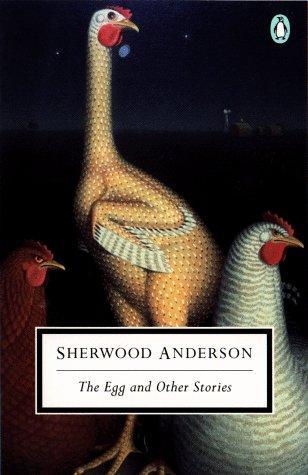
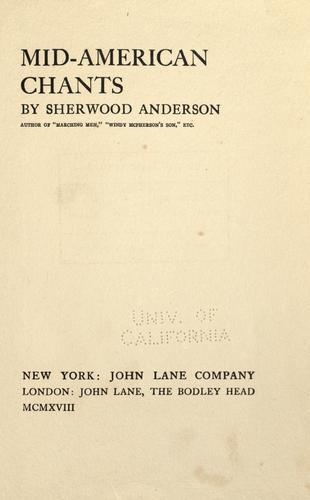
Sherwood Anderson was born in Camden, Ohio on the 13th of September, 1876. He attended school only intermittently, while helping to support his family by working as a newsboy, housepainter, stock handler, and stable groom. At the age of 17 he moved to Chicago where he worked as a warehouse laborer and attended business classes at night. During the Spanish-American war Anderson fought in Cuba and returned after the war to Ohio, for a final year of schooling at Wittenberg College, Springfield. Anderson's two first novels were Windy McPherson’s Son (1916) and Marching Men (1917), both containing the psychological themes of inner lives of Midwestern villages, the pursuit of success and disillusionment. His third novel, Winesburg, Ohio, was "half individual tales, half long novel form", as the author himself described it. It consisted of twenty-three thematically related sketches and stories. Written in a simple, realistic language illuminated by a muted lyricism, Anderson dramatized crucial episodes in the lives of his characters. In 1921 Anderson received the first Dial Award for his contribution to American literature. After traveling extensively in Europe, he returned back to the United States, settling in New Orleans, where he shared an apartment with William Faulkner. From New Orleans Anderson moved to New York for some time, and from there finally to Marion, Virginia, where he built a country house, and worked as a farmer and journalist. In 1927 he bought both of Marion's weekly newspapers, one Republican, one Democrat, and edited them for two years. To earn extra income he continued his series of lectures throughout the country. Commissioned by Today magazine, Anderson studied the labor conditions during the Depression and collected his articles in Puzzled America (1935). Anderson's newspaper pieces were collected in Hello Towns (1929), Return to Winesburg (1967) and The Buck Fever Papers (1971). Anderson's best works influenced almost every important American writer of the next generation. He also encouraged William Faulkner and Ernest Hemingway in their writing aspirations. Anderson died of peritonitis on an unofficial good-will tour to South America, at Christobal, Canal Zone, on March 8, in 1941.
--from thefreelibrary.com
Wikipedia. Bibliographic data from Open Library.
Books by Sherwood Anderson
Most-read first
Reading Sherwood Anderson
- Which books by Sherwood Anderson can I find here?
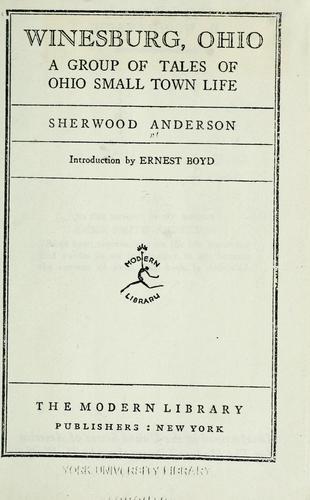
This page currently brings together 48 catalogue works, including Winesburg, Ohio, Fifty Best American Short Stories, The United States in Literature [with three long stories] -- Seventh Edition. This is a selection from our catalogue, not necessarily a complete bibliography. Open a work to compare editions and reviews.
Search this author- How are these books ordered?
The list uses catalogue reading-popularity data to put widely read works first. That is a discovery aid, not a claim that the first result is the author's best book or a recommended reading order.
- Where should I check a particular edition or translation?
Open the book's catalogue page and compare publisher, year, format, language and ISBN. Different editions of the same work can have different translators, introductions and page counts.