Author
Richard Lipsey
Born 1928
Richard George Lipsey, is a Canadian academic and economist. He is best known for his work on the economics of the second-best, a theory that demonstrated that piecemeal establishing of individual first best conditions would not necessarily raise welfare in a situation in which all first best conditions could not be satisfied, an article that he co-authored with Kelvin Lancaster. He is currently Professor Emeritus of Economics at Simon Fraser University.
Biography from Wikipedia (CC BY-SA). Bibliographic data from Open Library.
Books by Richard Lipsey
Most-read first
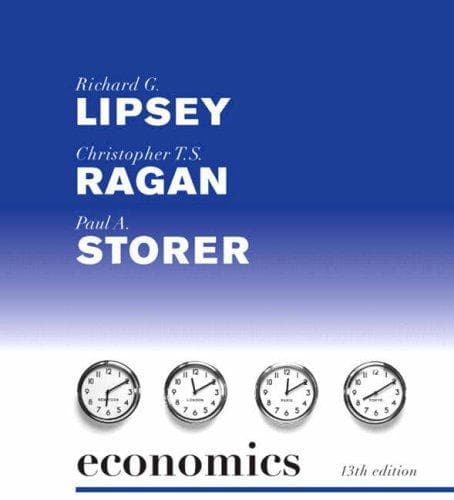
Economics
Richard G. Lipsey, Christopher Ragan & others, 1966
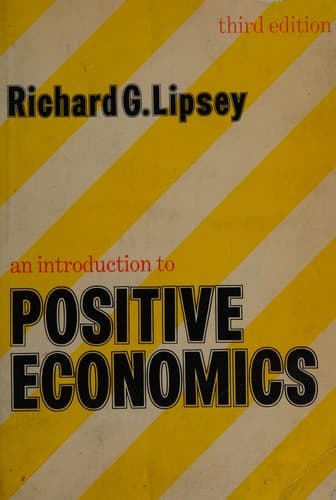
An Introduction to Positive Economics
Richard G. Lipsey & K. Alec Chrystal, 1963

Principles of Economics
Richard G. Lipsey, 1999
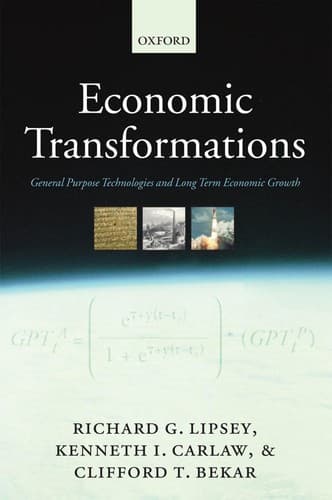
Economic transformations
Richard G. Lipsey, 2005
- Introduccion a la Economia PositivaRichard G. Lipsey
Introduccion a la Economia Positiva
Richard G. Lipsey, 1999
Economics Plus MyEconLab in CourseCompa
Richard G. Lipsey, Christopher Ragan & others, 2007
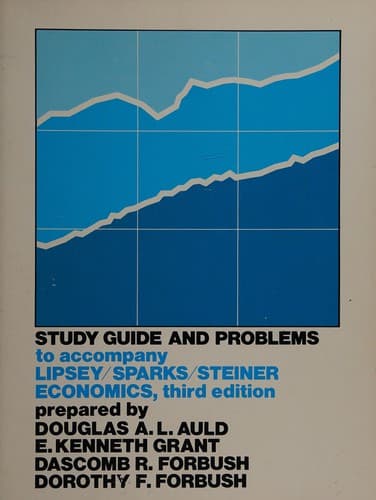
Study guide and problems to accompany Lipsey/Sparks/Steiner Economics, third edition
Richard G. Lipsey & D. A. L. Auld, 1979
- The General Theory of Second BestRichard G. Lipsey
The General Theory of Second Best
Richard G. Lipsey, 1957
- Workbook for the Seventh Edition of "an Introduction to Positive Economics"Richard G. Lipsey
Workbook for the Seventh Edition of "an Introduction to Positive Economics"
Richard G. Lipsey, 1993

First Principles of Economics
Richard G. Lipsey & C.D. Harbury, 1988
- Instructors Manual to accompany Economics - Eleventh EditionPaul N. Courant & Richard G. Lipsey
Instructors Manual to accompany Economics - Eleventh Edition
Paul N. Courant & Richard G. Lipsey, 1995
- Introduccion a la Economia Positiva - 13bAlec Chrystal & Richard G. Lipsey
Introduccion a la Economia Positiva - 13b
Alec Chrystal & Richard G. Lipsey, 2000
An Introduction to the UK Economy
Colin Harbury & Richard G. Lipsey, 1989
The NAFTA
Richard G. Lipsey, Daniel Schwanen & others, 1994
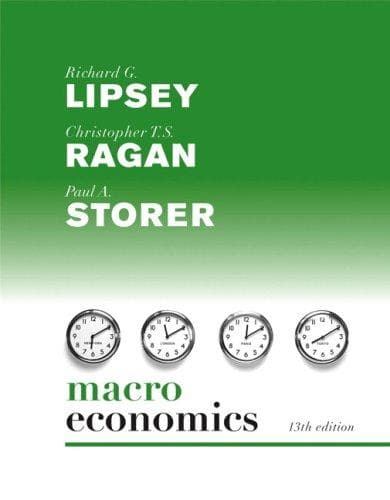
Macroeconomics
Richard G. Lipsey, 1993
- מבוא לכלכלה פוזיטיביתRichard G. Lipsey
מבוא לכלכלה פוזיטיבית
Richard G. Lipsey, 1970
- Inflation and UnemploymentRichard G. Lipsey
Inflation and Unemployment
Richard G. Lipsey, 2011
- Zero Inflation PBRichard G. Lipsey & C.D. Howe Institute
Zero Inflation PB
Richard G. Lipsey & C.D. Howe Institute, 1990
Macroéconomique
Richard G. Lipsey, 1986
Microeconomics
Richard G. Lipsey, Christopher T.S. Ragan & others, 2007
- A Structuralist Assessment of Technology PoliciesRichard G. Lipsey
A Structuralist Assessment of Technology Policies
Richard G. Lipsey, 1998
Trade, Technology and Economics
Richard G. Lipsey, Buford Curtis Eaton & others, 1997
The Theory of Customs Unions
Richard G. Lipsey, 1960
- Analyse e conomique =Richard G. Lipsey
Analyse e conomique =
Richard G. Lipsey, 1975
- Canada at the U.S.-Mexico free trade danceRichard G. Lipsey
Canada at the U.S.-Mexico free trade dance
Richard G. Lipsey, 1990
- The Canada-U.S. free trade agreement and the great free trade debateRichard G. Lipsey
The Canada-U.S. free trade agreement and the great free trade debate
Richard G. Lipsey, 1987
- The Canadian dollarRichard G. Lipsey
The Canadian dollar
Richard G. Lipsey, 1978
- A Canadian-U.S. dispute settlement mechanismRichard G. Lipsey
A Canadian-U.S. dispute settlement mechanism
Richard G. Lipsey, 1987
- Economic growth, technological change, and Canadian economic policyRichard G. Lipsey
Economic growth, technological change, and Canadian economic policy
Richard G. Lipsey, 1996
- The free trade deal and Canada's sovereigntyRichard G. Lipsey
The free trade deal and Canada's sovereignty
Richard G. Lipsey, 1988
- Globalisation, Technological Change and Economic GrowthRichard G. Lipsey
Globalisation, Technological Change and Economic Growth
Richard G. Lipsey, 1993
- Harry Johnson's contributions to the pure theory of international tradeRichard G. Lipsey
Harry Johnson's contributions to the pure theory of international trade
Richard G. Lipsey, 1978
- Instructor's Manual to Accompany EconomicsRichard G. Lipsey
Instructor's Manual to Accompany Economics
Richard G. Lipsey, 1982
- Instructor's manual to accompany Lipsey, Sparks, and Steiner's Economics, 2d edRichard G. Lipsey
Instructor's manual to accompany Lipsey, Sparks, and Steiner's Economics, 2d ed
Richard G. Lipsey, 1976
- Instructor's manual to accompany Lipsey & Steiner Economics:Richard G. Lipsey
Instructor's manual to accompany Lipsey & Steiner Economics:
Richard G. Lipsey, 1975

Macroeconomic Theory & Policy, Vol. 2
Richard G. Lipsey, 1997
- MicroéconomiqueRichard G. Lipsey
Microéconomique
Richard G. Lipsey, 1988
- Microeconomics, 10th Canadian EditionRichard G. Lipsey
Microeconomics, 10th Canadian Edition
Richard G. Lipsey, 2001
- Microeconomics, Growth and Political EconomyRichard G. Lipsey
Microeconomics, Growth and Political Economy
Richard G. Lipsey, 1997
- Microeconomics, Growth & Political Economy, Vol. 1. : b The Selected Essays of Richard G. LipseyRichard G. Lipsey
Microeconomics, Growth & Political Economy, Vol. 1. : b The Selected Essays of Richard G. Lipsey
Richard G. Lipsey, 1997
- The micro theory of the Phillips curve reconsideredRichard G. Lipsey
The micro theory of the Phillips curve reconsidered
Richard G. Lipsey, 1970
- The place of the Phillips curve in macro economic modelsRichard G. Lipsey
The place of the Phillips curve in macro economic models
Richard G. Lipsey, 1976
- The selected essays of Richard G. LipseyRichard G. Lipsey
The selected essays of Richard G. Lipsey
Richard G. Lipsey, 1997
- The Thory of Customs UnionsRichard G. Lipsey
The Thory of Customs Unions
Richard G. Lipsey, 1970
Evaluating the Free Trade Deal
Richard G. Lipsey, 1988
Global Imbalances and U.S. Policy Responses
Richard G. Lipsey, 1987
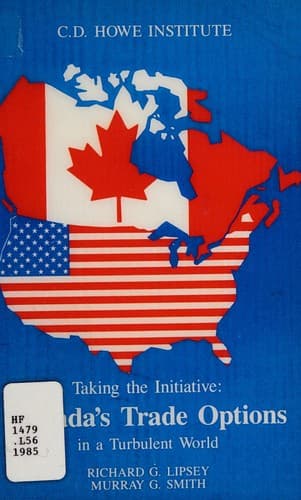
Taking the Initiative
Richard G. Lipsey
Which Way Ahead?
Thomas J. Courchene, Richard G. Lipsey & others, 1977
Reading Richard Lipsey
- Which books by Richard Lipsey can I find here?
This page currently brings together 48 catalogue works, including Economics, An Introduction to Positive Economics, Principles of Economics. This is a selection from our catalogue, not necessarily a complete bibliography. Open a work to compare editions and reviews.
Search this author- How are these books ordered?
The list uses catalogue reading-popularity data to put widely read works first. That is a discovery aid, not a claim that the first result is the author's best book or a recommended reading order.
- Where should I check a particular edition or translation?
Open the book's catalogue page and compare publisher, year, format, language and ISBN. Different editions of the same work can have different translators, introductions and page counts.