Author
Patrick Suppes
Born 1922
We don’t have a biography for Patrick Suppes yet. Their books are below, most-read first.
Bibliographic data from Open Library.
Books by Patrick Suppes
Most-read first
Axiomatic Set Theory
Patrick Suppes, 1960
Introduction to Logic
Patrick Suppes, 1957
First Course in Mathematical Logic
Patrick Suppes, 1964
Key to Geometry
Newton Hawley, Patrick Suppes & others, 1972
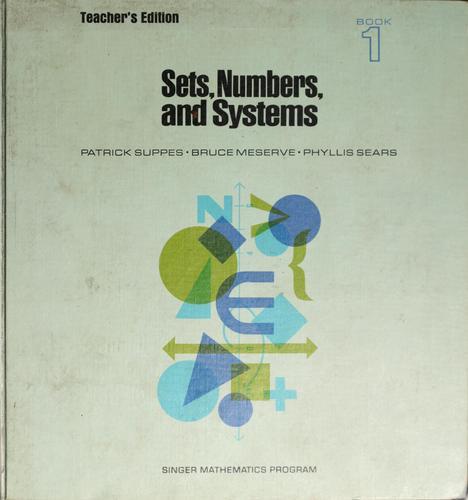
Sets, Numbers, and Systems
Patrick Suppes, 1969
Logique du probable
Patrick Suppes, 1981
Approaches to Natural Language
Jaakko Hintikka, Moravcsik & others, 1973
Philosophy, Science, and Method
Ernest Nagel, Sidney Morgenbesser & others, 1969
- Computer-assisted instruction: Stanford's 1965-66 arithmetic programPatrick Suppes
Computer-assisted instruction: Stanford's 1965-66 arithmetic program
Patrick Suppes, 1968
- Markov Learning Models for Multiperson InteractionsPatrick Suppes
Markov Learning Models for Multiperson Interactions
Patrick Suppes, 1960

Studies in the Methodology and Foundations of Science
Patrick Suppes, 1969
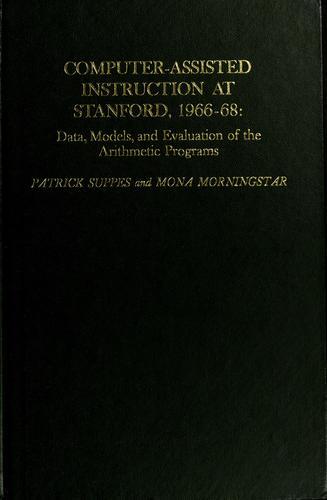
Computer-assisted instruction at Stanford, 1966-68
Patrick Suppes, 1972
- Facts and Fantasies of EducationPatrick Suppes
Facts and Fantasies of Education
Patrick Suppes, 1973
- Singer Mathematics Program Sets and Numbers Workbook, Revised Edition (Singer Company)Patrick Suppes
Singer Mathematics Program Sets and Numbers Workbook, Revised Edition (Singer Company)
Patrick Suppes, 1969
- Introduccion a la Logica MatematicaShirley Hill & Patrick Suppes
Introduccion a la Logica Matematica
Shirley Hill & Patrick Suppes, 2000
- Young Children's Comprehension of Logical ConnectivesPatrick Suppes
Young Children's Comprehension of Logical Connectives
Patrick Suppes, 1969
- On the Problems of Using Mathematics in the Development of the Social Sciences.Patrick Suppes
On the Problems of Using Mathematics in the Development of the Social Sciences.
Patrick Suppes, 1969
- Computer-assisted Instruction in the SchoolsPatrick Suppes
Computer-assisted Instruction in the Schools
Patrick Suppes, 1965
- University-level computer-assisted instruction at StanfordPatrick Suppes
University-level computer-assisted instruction at Stanford
Patrick Suppes, 1981
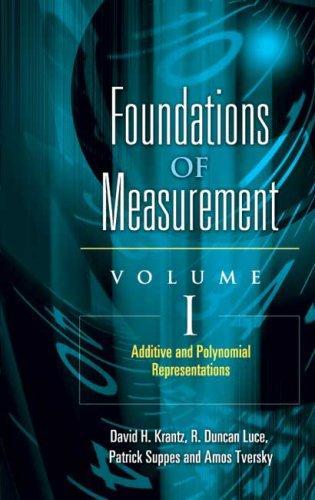
Additive and Polynomial Representations
David H. Krantz, R. Duncan Luce & others, 2006
- University-level, computer-assisted instruction at Stanford, 1968-1980Patrick Suppes
University-level, computer-assisted instruction at Stanford, 1968-1980
Patrick Suppes, 1981
- The Development of Mathematical Concepts in ChildrenPatrick Suppes
The Development of Mathematical Concepts in Children
Patrick Suppes, 1964
- The Problem of Action at a DistancePatrick Suppes
The Problem of Action at a Distance
Patrick Suppes, 1950
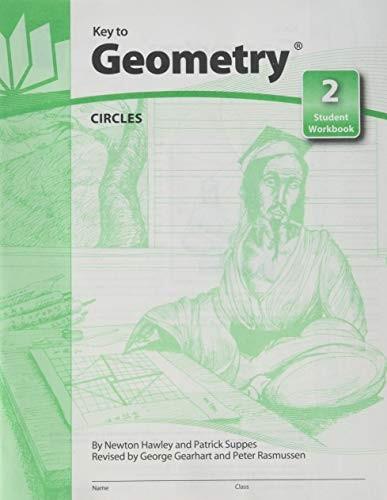
Key to Geometry, Book 2
Newton Hawley, Patrick Suppes & others, 1972
- Key to Geometry, Book 3Newton Hawley, Patrick Suppes & others
Key to Geometry, Book 3
Newton Hawley, Patrick Suppes & others, 1972
- Key to Geometry, Book 4Newton Hawley, Patrick Suppes & others
Key to Geometry, Book 4
Newton Hawley, Patrick Suppes & others, 1972
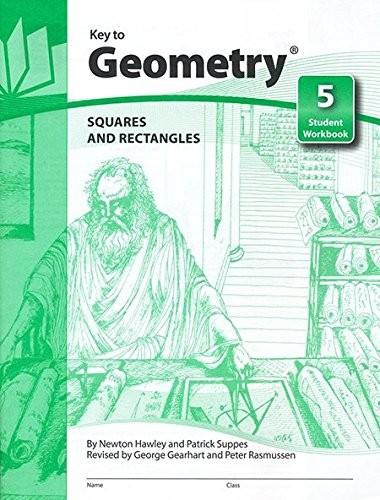
Key to Geometry, Book 5
Newton Hawley, Patrick Suppes & others, 1972
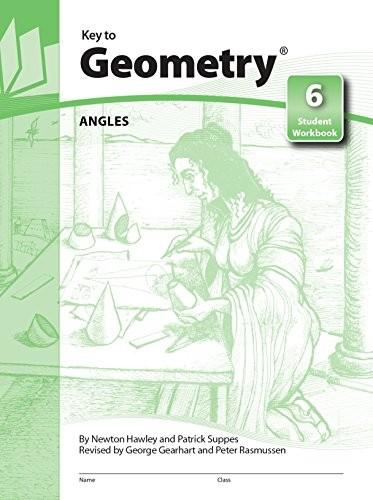
Key to Geometry, Book 6
Newton Hawley, Patrick Suppes & others, 1972
- Key to Geometry, Book 7Newton Hawley, Patrick Suppes & others
Key to Geometry, Book 7
Newton Hawley, Patrick Suppes & others, 1972
- Key to Geometry, Book 8Newton Hawley, Patrick Suppes & others
Key to Geometry, Book 8
Newton Hawley, Patrick Suppes & others, 1972
- Radio mathematics in NicaraguaBarbara Searle & Patrick Suppes
Radio mathematics in Nicaragua
Barbara Searle & Patrick Suppes, 1980
- The Random House mathematics programPatrick Suppes
The Random House mathematics program
Patrick Suppes, 1972
- Reasoning, Rationality, and ProbabilityMaria Carla Galavotti, Roberto Scazzieri & others
Reasoning, Rationality, and Probability
Maria Carla Galavotti, Roberto Scazzieri & others, 2008
Representation and Invariance of Scientific Structures
Patrick Suppes, 2002
Mathematics one-
Patrick Suppes, 1976
Foundations of Probability with Applications
Patrick Suppes, 1996
Stochastic causality
Maria Carla Galavotti, Patrick Suppes & others, 2001
Ancient & Medieval Traditions in the Exact Sciences
Patrick Suppes, 2000
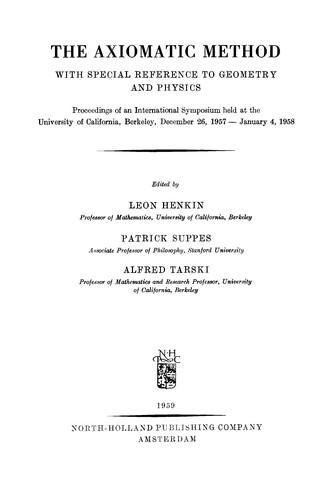
The Axiomatic Method
Leon Henkin, Patrick Suppes & others, 1959
Models and Methods in the Philosophy of Science
Patrick Suppes, 1993
Space, Time and Geometry
Patrick Suppes, 1973
A Probabilistic Theory of Causality
Patrick Suppes, 1970
Logic and Probability in Quantum Mechanics
Patrick Suppes, 1976
Patrick Suppes, scientific philosopher
Patrick Suppes & Paul Humphreys, 1994
Studies in the Foundations of Quantum Mechanics
Patrick Suppes, 1980
- Evaluation of Three Computer-assisted Instruction Programs. --.Patrick Suppes
Evaluation of Three Computer-assisted Instruction Programs. --.
Patrick Suppes, 1969
- Problem-solving on a Computer-based Teletype. --.Patrick Suppes
Problem-solving on a Computer-based Teletype. --.
Patrick Suppes, 1969

Probabilistic metaphysics
Patrick Suppes, 1974
Reading Patrick Suppes
- Which books by Patrick Suppes can I find here?
This page currently brings together 48 catalogue works, including Axiomatic Set Theory, Introduction to Logic, First Course in Mathematical Logic. This is a selection from our catalogue, not necessarily a complete bibliography. Open a work to compare editions and reviews.
Search this author- How are these books ordered?
The list uses catalogue reading-popularity data to put widely read works first. That is a discovery aid, not a claim that the first result is the author's best book or a recommended reading order.
- Where should I check a particular edition or translation?
Open the book's catalogue page and compare publisher, year, format, language and ISBN. Different editions of the same work can have different translators, introductions and page counts.