Author
Partha Dasgupta
Sir Partha Sarathi Dasgupta is an Indian-British economist who is Frank Ramsey Professor Emeritus of Economics at the University of Cambridge, United Kingdom, and a fellow of St John's College, Cambridge.
Biography from Wikipedia (CC BY-SA). Bibliographic data from Open Library.
Books by Partha Dasgupta
Most-read first
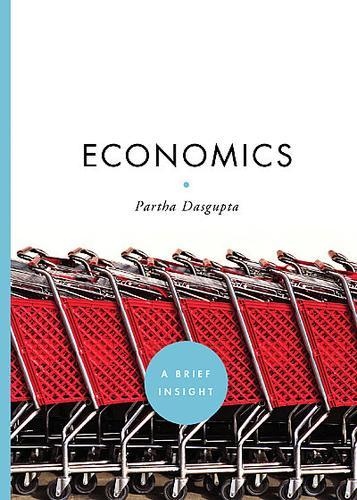
Economics
Partha Dasgupta, 2006
Economic Analysis of Markets and Games
Frank Hahn & Partha Dasgupta, 1992

Human Well-Being and the Natural Environment
Partha Dasgupta, 2001
Economía
Partha Dasgupta, 2016
Discounting For Time And Risk In Energy Policy
Robert C. Lind, Kenneth J. Arrow & others, 1982
The Control of Resources
Partha Dasgupta, 1982
Five Color Concurrency Control Protocol
Partha Dasgupta & Zvi Kedem, 2018
- Simulating Distributed Database Operating Systems and Evaluating Concurrency Control Protocol PerformanceYiu Leung, Zvi Kedem & others
Simulating Distributed Database Operating Systems and Evaluating Concurrency Control Protocol Performance
Yiu Leung, Zvi Kedem & others, 2018
- Pensions Advisory Service annual report and accounts fort the year ending 31 March 2010Pensions Advisory Service & Partha Dasgupta
Pensions Advisory Service annual report and accounts fort the year ending 31 March 2010
Pensions Advisory Service & Partha Dasgupta, 2010
- Pensions Advisory Service annual report and accounts fort the year ending 31 March 2011Pensions Advisory Service & Partha Dasgupta
Pensions Advisory Service annual report and accounts fort the year ending 31 March 2011
Pensions Advisory Service & Partha Dasgupta, 2011
- Pensions Advisory Service Annual Report and Accounts Fort the Year Ending 31 March 2012Pensions Advisory Service & Partha Dasgupta
Pensions Advisory Service Annual Report and Accounts Fort the Year Ending 31 March 2012
Pensions Advisory Service & Partha Dasgupta, 2012
- Pensions Advisory Service Annual Report and Accounts for the Year Ending 31 March 2013Pensions Advisory Service & Partha Dasgupta
Pensions Advisory Service Annual Report and Accounts for the Year Ending 31 March 2013
Pensions Advisory Service & Partha Dasgupta, 2013
- Creation and Transfer of KnowledgeGiorgio Barba Navaretti, Partha Dasgupta & others
Creation and Transfer of Knowledge
Giorgio Barba Navaretti, Partha Dasgupta & others, 2010
- Decentralization Schemes, Cost-benefit Analysis, and Net National Product as a Measure of Social Well-beingPartha Dasgupta
Decentralization Schemes, Cost-benefit Analysis, and Net National Product as a Measure of Social Well-being
Partha Dasgupta, 1998
- The Economics of DestitutionPartha Dasgupta
The Economics of Destitution
Partha Dasgupta, 1993
- The Economics of FoodPartha Dasgupta
The Economics of Food
Partha Dasgupta, 1997
- The Economics of Poverty in Poor CountriesPartha Dasgupta
The Economics of Poverty in Poor Countries
Partha Dasgupta, 1998
Environmental and Resource Economics in the World of the Poor
Partha Dasgupta, 1997
- The Environment as a CommodityPartha Dasgupta
The Environment as a Commodity
Partha Dasgupta, 1990
Environment and Emerging Development Issues
Partha Dasgupta & Karl-Göran Mäler, 1997
- The Existence of Economic EquilibriaPartha Dasgupta
The Existence of Economic Equilibria
Partha Dasgupta, 1977
- The Existence of Equilibrium in Discontinuous Economic GamesPartha Dasgupta
The Existence of Equilibrium in Discontinuous Economic Games
Partha Dasgupta, 1982
- Inequality, Malnutrition and UnemploymentPartha Dasgupta
Inequality, Malnutrition and Unemployment
Partha Dasgupta, 1984
- Learning-by-doing, Market Structure and Industrial and Trade PoliciesPartha Dasgupta
Learning-by-doing, Market Structure and Industrial and Trade Policies
Partha Dasgupta, 1985
- Lives and WelfarePartha Dasgupta
Lives and Welfare
Partha Dasgupta, 1983
- On Measurement of Well-beingPartha Dasgupta
On Measurement of Well-being
Partha Dasgupta, 1990
- Population, Consumption, and ResourcesPartha Dasgupta
Population, Consumption, and Resources
Partha Dasgupta, 1997
- Poverty, Resources and FertilityPartha Dasgupta
Poverty, Resources and Fertility
Partha Dasgupta, 1992
- The Simple Economics of Research PortfoliosPartha Dasgupta
The Simple Economics of Research Portfolios
Partha Dasgupta, 1986
- Strategic Considerations in Invention and InnovationPartha Dasgupta
Strategic Considerations in Invention and Innovation
Partha Dasgupta, 1982
- The Theory of Technological CompetitionPartha Dasgupta
The Theory of Technological Competition
Partha Dasgupta, 1982
- Trust as a CommodityPartha Dasgupta
Trust as a Commodity
Partha Dasgupta, 1986
- Uncertainty, Industrial Structure, and the Speed of R&DPartha Dasgupta
Uncertainty, Industrial Structure, and the Speed of R&D
Partha Dasgupta, 1980
- Well-beingPartha Dasgupta
Well-being
Partha Dasgupta, 1989
- Adapting to UndernourishmentPartha Dasgupta
Adapting to Undernourishment
Partha Dasgupta, 1986
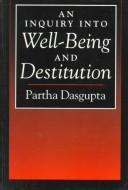
An Inquiry into Well-being and Destitution
Partha Dasgupta, 1993
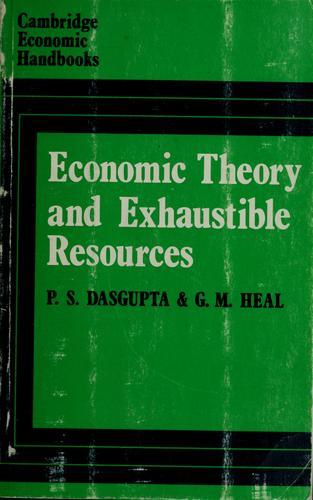
Economic Theory and Exhaustible Resources
Partha Dasgupta, 1979
Guidelines for Project Evaluation
Partha Dasgupta, 1972
Poverty, Institutions, and Theenvironmental-resource Base
Partha Dasgupta, 1994
- Issues in Contemporary Economics : Volume 3Partha Dasgupta
Issues in Contemporary Economics : Volume 3
Partha Dasgupta, 2016
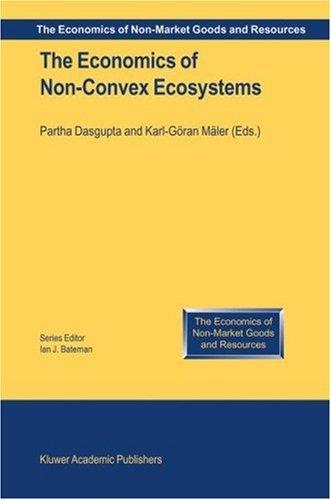
Economics of Non-Convex Ecosystems
Partha Dasgupta & Karl-Göran Mäler, 2004
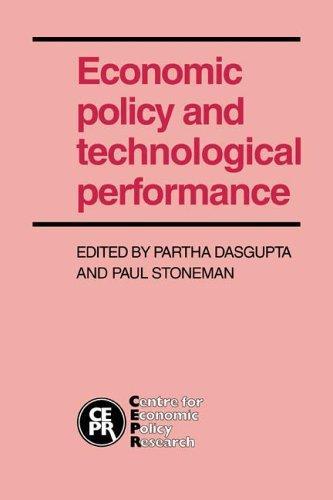
Economic Policy and Technological Performance
Partha Dasgupta & Paul Stoneman, 2005
- Major RecessionsPartha Dasgupta
Major Recessions
Partha Dasgupta, 1999
- Biological ExtinctionPartha Dasgupta, Peter H. Raven & others
Biological Extinction
Partha Dasgupta, Peter H. Raven & others, 2019
- Inclusive National AccountsPartha Dasgupta
Inclusive National Accounts
Partha Dasgupta, 2012
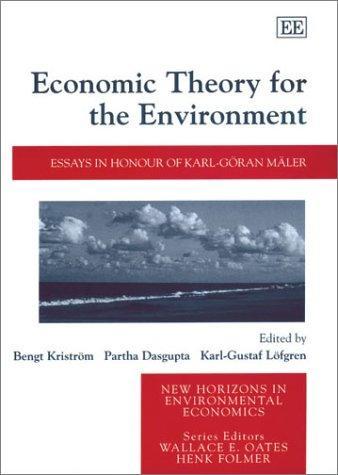
Economic Theory for the Environment
Karl-Göran Mäler, Bengt Kriström & others, 2002
- Desarrollo y medio ambienteJoaquín Vial & Partha Dasgupta
Desarrollo y medio ambiente
Joaquín Vial & Partha Dasgupta, 1991
- Economics of BiodiversityPartha Dasgupta
Economics of Biodiversity
Partha Dasgupta, 2024
Reading Partha Dasgupta
- Which books by Partha Dasgupta can I find here?
This page currently brings together 48 catalogue works, including Economics, Economic Analysis of Markets and Games, Human Well-Being and the Natural Environment. This is a selection from our catalogue, not necessarily a complete bibliography. Open a work to compare editions and reviews.
Search this author- How are these books ordered?
The list uses catalogue reading-popularity data to put widely read works first. That is a discovery aid, not a claim that the first result is the author's best book or a recommended reading order.
- Where should I check a particular edition or translation?
Open the book's catalogue page and compare publisher, year, format, language and ISBN. Different editions of the same work can have different translators, introductions and page counts.