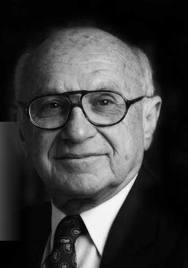
Author
Milton Friedman
1912–2006
Milton Friedman was an American economist and statistician who received the 1976 Nobel Memorial Prize in Economic Sciences for his research on consumption analysis, monetary history and theory and the complexity of stabilization policy. With George Stigler, Friedman was among the intellectual leaders of the Chicago school of economics, a neoclassical school of economic thought associated with the faculty at the University of Chicago that rejected Keynesianism in favor of monetarism before shifting their focus to new classical macroeconomics in the mid-1970s. Several students, young professors and academics who were recruited or mentored by Friedman at Chicago went on to become leading economists, including Nobel laureates Gary Becker (1992), Robert Fogel (1993), and Robert Lucas Jr. (1995).
Biography from Wikipedia (CC BY-SA). Bibliographic data from Open Library.
Books by Milton Friedman
Most-read first
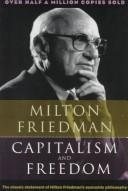
Capitalism and Freedom
Milton Friedman, 1962

Free to Choose
Milton Friedman & Rose D. Friedman, 1980
A monetary history of the United States, 1867-1960
Milton Friedman, 1963
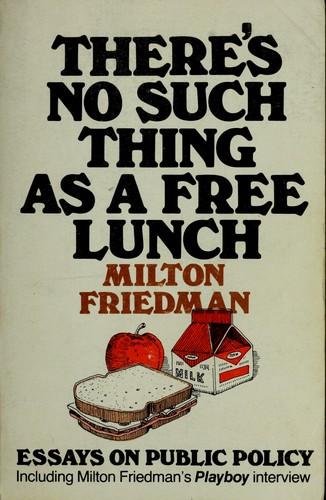
There's No Such Thing as a Free Lunch
Milton Friedman, 1975
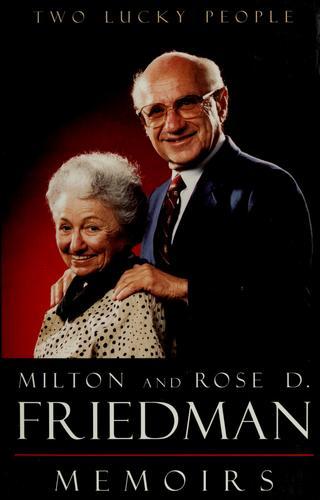
Two Lucky People
Milton Friedman, 1998
Dollars and Deficits
Milton Friedman, 1968
Money mischief
Milton Friedman, 1992

The Optimum Quantity of Money
Milton Friedman, 1969
Essays in Positive Economics
Milton Friedman, 1953
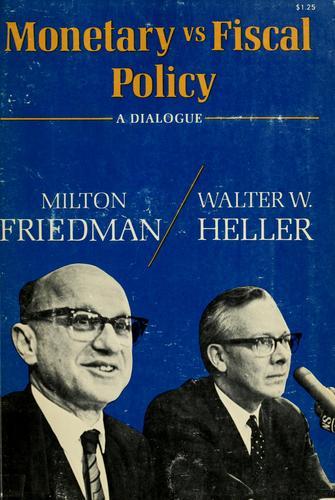
Monetary vs. Fiscal Policy
Milton Friedman, 1968
Price theory
Milton Friedman, 1962
- InflationMilton Friedman
Inflation
Milton Friedman, 1963
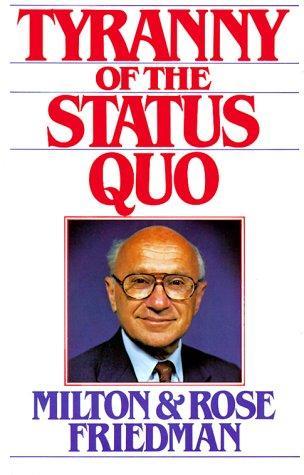
Tyranny of the Status Quo
Milton Friedman, 1984
A Program for Monetary Stability
Milton Friedman, 1959
Rent Control, Myths & Realities
Walter Block, Milton Friedman & others, 1981
The Great Contraction, 1929-1933
Milton Friedman, 1963
Tax Limitation, Inflation and the Role of Government
Milton Friedman, 1978
Why Government Is the Problem
Milton Friedman, 1993
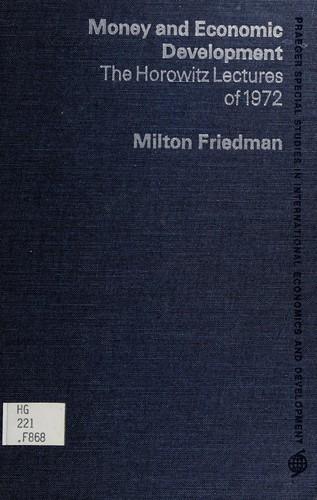
Money and Economic Development
Milton Friedman, 1973

Rent Control – a Popular Paradox
Friedrich A. von Hayek, Milton Friedman & others, 1975
Monetary statistics of the United States: estimates, sources, methods
Milton Friedman, 1970
- The Counter-revolution in Monetary TheoryMilton Friedman
The Counter-revolution in Monetary Theory
Milton Friedman, 1970
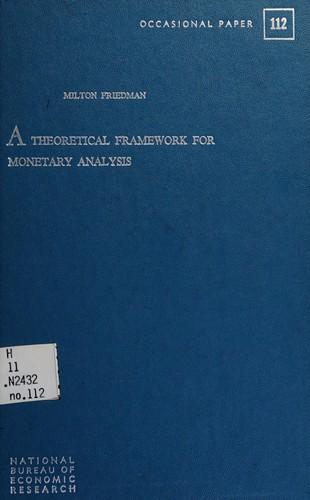
A Theoretical Framework for Monetary Analysis
Milton Friedman, 1971
- Capitalismo e liberdadeMilton Friedman
Capitalismo e liberdade
Milton Friedman, 1977
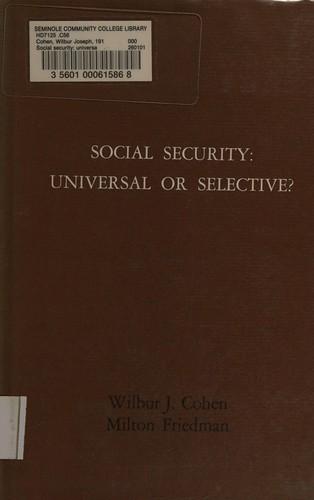
Social Security
Milton Friedman, 1972
Studies in the Quantity Theory of Money
Milton Friedman
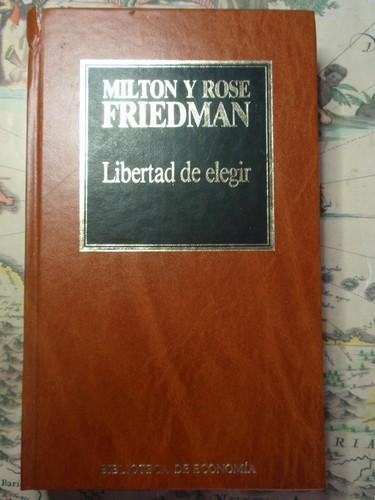
Libertad de elegir
Milton Friedman & Rose D. Friedman, 1983
Milton Friedman's monetary framework
Gordon, Robert J. & others, 1974

A Theory of the Consumption Function
Milton Friedman, 1970
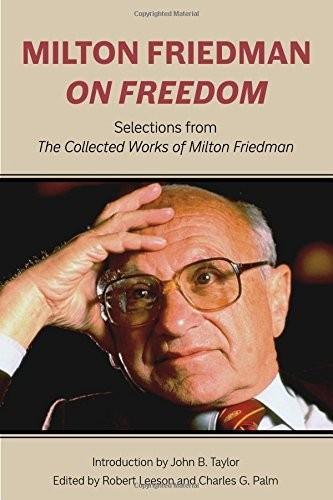
Milton Friedman on Freedom
Milton Friedman, 2017
Friedman & Szasz On liberty and drugs
Milton Friedman, 1992
- Milton FriedmanG. W. Boxley & Milton Friedman
Milton Friedman
G. W. Boxley & Milton Friedman, 2018

The Balance of Payments: Free Versus Fixed Exchange Rates
Milton Friedman, 1967
Capitalisme et liberté
Milton Friedman, 1971
- Economia Monetarista, LaMilton Friedman
Economia Monetarista, La
Milton Friedman, 1993
The Demand for Money
Milton Friedman, 1959
Kapitalizm Ve ÖZgürlük
Milton Friedman, 2017
- A monetary history of the United StatesMilton Friedman
A monetary history of the United States
Milton Friedman, 1963
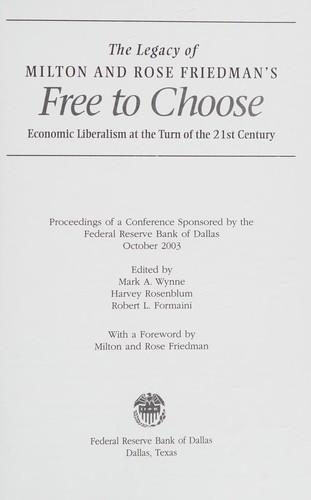
The legacy of Milton and Rose Friedman's Free to choose
Mark A. Wynne, Harvey Rosenblum & others, 2004
The Loeb collection of Arretine pottery
Milton Friedman, Friedrich A. von Hayek & others, 1981

Monetarist economics
Milton Friedman, 1991
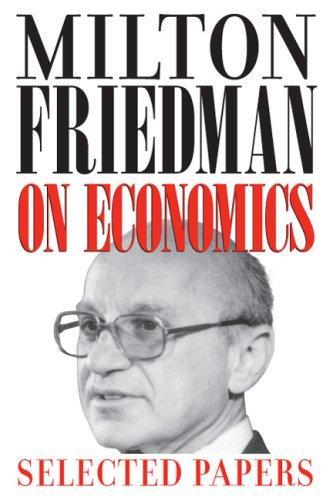
Milton Friedman on Economics
Milton Friedman & Gary S. Becker, 2008
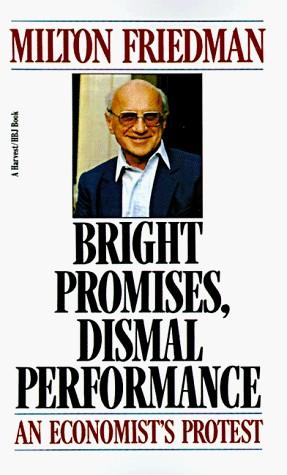
Bright Promises, Dismal Performance
Milton Friedman, 1983
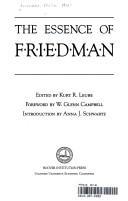
The essence of Friedman
Milton Friedman, 1987
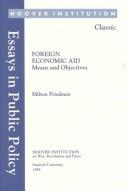
Foreign Economic Aid
Milton Friedman, 1995
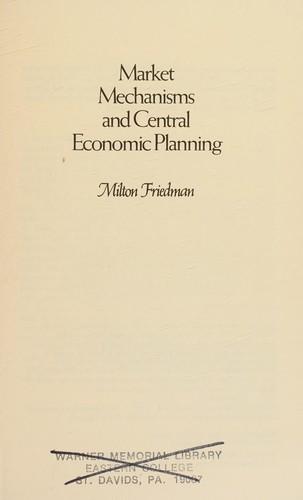
Market Mechanisms and Central Economic Planning
Milton Friedman, 1981
- Milton Friedman en ChileMilton Friedman
Milton Friedman en Chile
Milton Friedman, 1975
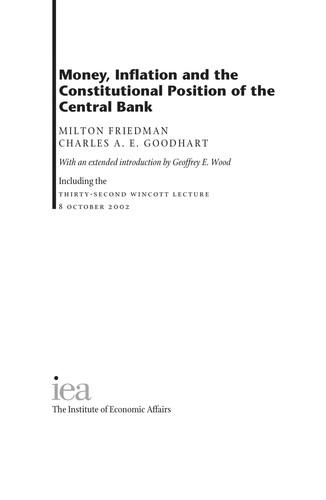
Money, Inflation and the Constitutional Position of the Central Bank
Milton Friedman, 2003
Reading Milton Friedman
- Which books by Milton Friedman can I find here?
This page currently brings together 48 catalogue works, including Capitalism and Freedom, Free to Choose, A monetary history of the United States, 1867-1960. This is a selection from our catalogue, not necessarily a complete bibliography. Open a work to compare editions and reviews.
Search this author- How are these books ordered?
The list uses catalogue reading-popularity data to put widely read works first. That is a discovery aid, not a claim that the first result is the author's best book or a recommended reading order.
- Where should I check a particular edition or translation?
Open the book's catalogue page and compare publisher, year, format, language and ISBN. Different editions of the same work can have different translators, introductions and page counts.