Author
Michael Shaara
1928–1988
Michael Shaara (June 23, 1928 – May 5, 1988) was an American author of science fiction, sports fiction, and historical fiction. He was born to an Italian immigrant father (the family name was originally spelled Sciarra, which in Italian is pronounced in a similar way) in Jersey City, New Jersey, graduated in 1951 from Rutgers University, where he joined Theta Chi, and served as a sergeant in the 82nd Airborne Division prior to the Korean War.
Before Shaara began selling science fiction stories to fiction magazines during the 1950s, he was an amateur boxer and police officer. He later taught literature at Florida State University while continuing to write fiction. The stress of this and his cigarette smoking caused him, at the early age of 36, to have a heart attack, from which he recovered completely. His novel about the Battle of Gettysburg, The Killer Angels, won the Pulitzer Prize for Fiction in 1975. Shaara died of a heart attack in 1988 aged fifty-nine.
Shaara's children, Jeffrey and Lila, are also novelists. In 1997, Jeffrey Shaara established the annual *Michael Shaara Award for Excellence in Civil War Fiction*, awarded at Gettysburg College.
**Source**: Michael Shaara on Wikipedia.
Wikipedia. Bibliographic data from Open Library.
Books by Michael Shaara
Most-read first
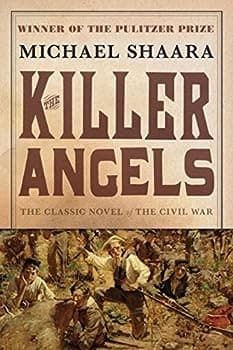
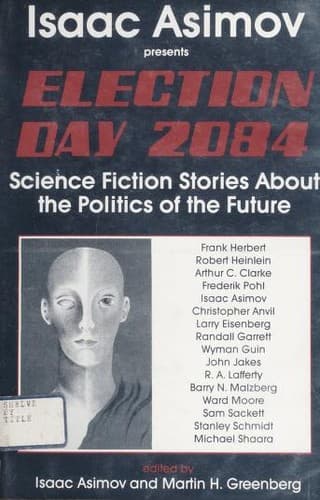
Reading Michael Shaara
- Which books by Michael Shaara can I find here?
This page currently brings together 26 catalogue works, including The Killer Angels, Machines That Think, Election day 2084. This is a selection from our catalogue, not necessarily a complete bibliography. Open a work to compare editions and reviews.
Search this author- How are these books ordered?
The list uses catalogue reading-popularity data to put widely read works first. That is a discovery aid, not a claim that the first result is the author's best book or a recommended reading order.
- Where should I check a particular edition or translation?
Open the book's catalogue page and compare publisher, year, format, language and ISBN. Different editions of the same work can have different translators, introductions and page counts.