
Author
Marty Golubitsky
Born 1945
Martin Aaron Golubitsky is an American Distinguished professor of mathematics at Ohio State University and the former director of the Mathematical Biosciences Institute. *—Wikipedia*
*Photo Attribution:* Wgehring91, CC BY-SA 4.0 , via Wikimedia Commons
Wikipedia. Bibliographic data from Open Library.
Books by Marty Golubitsky
Most-read first
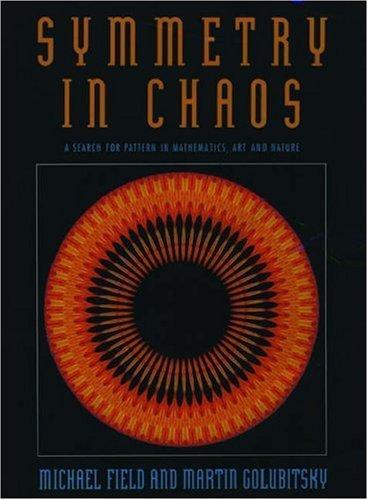
Symmetry in Chaos
Mike Field & Martin Golubitsky, 1992
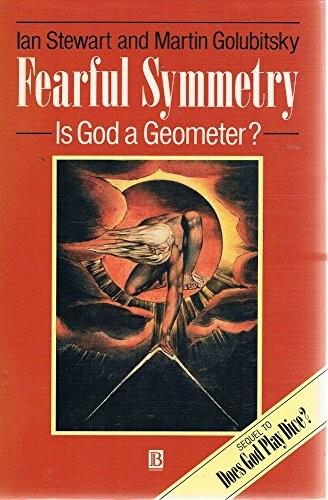
Fearful Symmetry
Ian Stewart & Martin Golubitsky, 1992
- Dynamics and Bifurcation in NetworksMartin Golubitsky & Ian Stewart
Dynamics and Bifurcation in Networks
Martin Golubitsky & Ian Stewart, 2022
Pattern Formation in Continuous and Coupled Systems
Martin Golubitsky, 1999
- Bifurcation and SymmetryK. Böhmer, Eugene L. Allgower & others
Bifurcation and Symmetry
K. Böhmer, Eugene L. Allgower & others, 2013
Stable Mappings and Their Singularities
Martin Golubitsky & V. Guillemin, 1974
- Bifurcations and Groups in Bifurcation TheoryMartin Golubitsky
Bifurcations and Groups in Bifurcation Theory
Martin Golubitsky, 1984

The Symmetry Perspective
Ian Stewart & Martin Golubitsky, 2002
- Simeṭriyah noraʾahIan Stewart, Marty Golubitsky & others
Simeṭriyah noraʾah
Ian Stewart, Marty Golubitsky & others, 2000
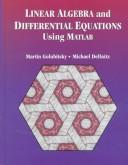
Linear algebra and differential equations using MATLAB
Martin Golubitsky & Michael Dellnitz, 1999
- On the Convergence of the Age StructureMartin Golubitsky
On the Convergence of the Age Structure
Martin Golubitsky, 1973
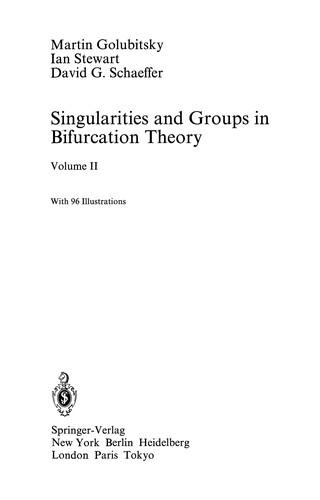
Singularities and Groups in Bifurcation Theory
Martin Golubitsky, David G. Schaeffer & others, 1984
Multiparameter Bifurcation Theory
Martin Golubitsky & John Guckenheimer, 1986
Student Solutions Manual for Golubitsky/Dellnitz's Linear Algebra and Differential Equations Using Matlab
Martin Golubitsky & Elizabeth Golubitsky, 1999
Reading Marty Golubitsky
- Which books by Marty Golubitsky can I find here?
This page currently brings together 14 catalogue works, including Symmetry in Chaos, Fearful Symmetry, Dynamics and Bifurcation in Networks. This is a selection from our catalogue, not necessarily a complete bibliography. Open a work to compare editions and reviews.
Search this author- How are these books ordered?
The list uses catalogue reading-popularity data to put widely read works first. That is a discovery aid, not a claim that the first result is the author's best book or a recommended reading order.
- Where should I check a particular edition or translation?
Open the book's catalogue page and compare publisher, year, format, language and ISBN. Different editions of the same work can have different translators, introductions and page counts.