Author
Joseph Rotblat
1908–2005
Sir Joseph Rotblat was a Polish and British physicist. During World War II he worked on Tube Alloys and the Manhattan Project, but left the Los Alamos Laboratory on grounds of conscience after it became clear to him in 1944 that Germany had ceased development of an atomic bomb.
Biography from Wikipedia (CC BY-SA). Bibliographic data from Open Library.
Books by Joseph Rotblat
Most-read first
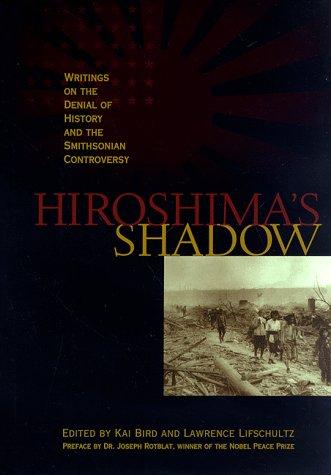
Hiroshima's shadow
Kai Bird, Lawrence Lifschultz & others, 1998
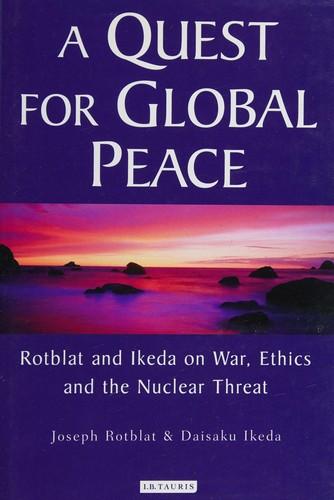
A Quest for Global Peace
Joseph Rotblat, 2007

Scientists in the Quest for Peace
Joseph Rotblat, 1972
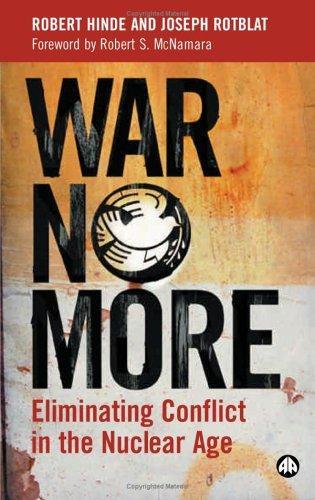
WAR NO MORE: ELIMINATING CONFLICT IN THE NUCLEAR AGE
ROBERT A. HINDE & Joseph Rotblat, 2003
Ending war
Joseph Rotblat, 1999
- Aspects of Medical PhysicsJoseph Rotblat
Aspects of Medical Physics
Joseph Rotblat, 1966
Global Problems and Common Security
Joseph Rotblat, 1989
- Science and World AffairsJoseph Rotblat
Science and World Affairs
Joseph Rotblat, 1962
Towards A Secure World in 21st
Joseph Rotblat, 1992
48th Pugwash Conference on Science & World Affairs
Joseph Rotblat, 2000

The Arms Race at a Time of Decision
Joseph Rotblat, 1984
- Atomic energyJoseph Rotblat
Atomic energy
Joseph Rotblat, 1954

Coexistence, Cooperation, and Common Security
Joseph Rotblat, 1988
Confronting the Challenges of the 21st Century
Joseph Rotblat, 2002
- Disarmament: 1996--Disarmament at a Critical JunctureJoseph Rotblat
Disarmament: 1996--Disarmament at a Critical Juncture
Joseph Rotblat, 1997
- History of the Pugwash conferencesJoseph Rotblat
History of the Pugwash conferences
Joseph Rotblat, 1962
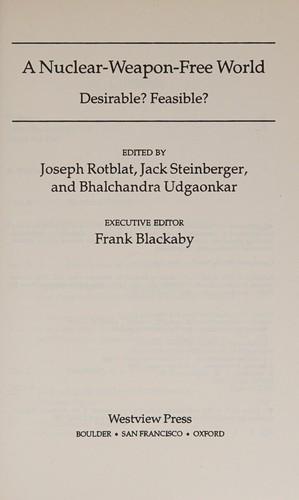
Nuclear-Weapon-free World
Joseph Rotblat, 2019
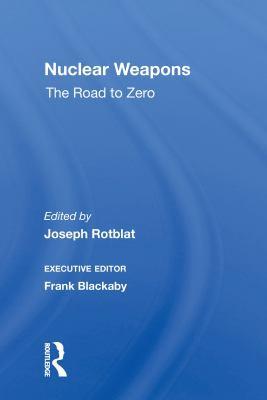
Nuclear Weapons
Joseph Rotblat, 2021
- PugwashJoseph Rotblat
Pugwash
Joseph Rotblat, 1967
- Pugwash - the First Ten YearsJoseph Rotblat
Pugwash - the First Ten Years
Joseph Rotblat, 1967
Remember Your Humanity
Joseph Rotblat, 1999
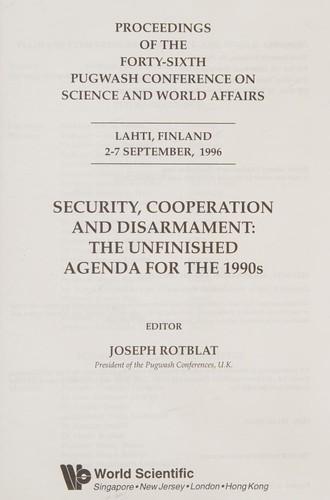
Security, Cooperation and Disarmament
Joseph Rotblat, 1998
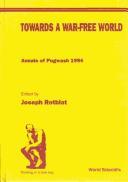
Towards a War-Free World
Joseph Rotblat, 1996
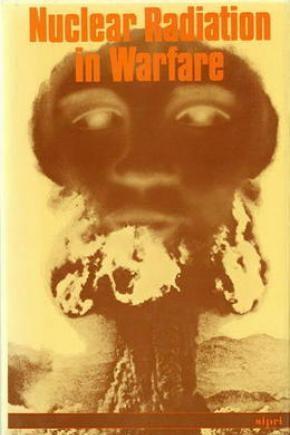
Nuclear Radiation in Warfare
Joseph Rotblat, 1981
World Citizenship
Joseph Rotblat, 1997
- World Peace and the Developing CountriesJoseph Rotblat & Ubiratan D'Ambrosio
World Peace and the Developing Countries
Joseph Rotblat & Ubiratan D'Ambrosio, 1986
- Strategic Defence and Future of the Arms RaceJohn P. Holdren & Joseph Rotblat
Strategic Defence and Future of the Arms Race
John P. Holdren & Joseph Rotblat, 1987
- Conversion of Military R&dJoseph Rotblat, Judith Reppy & others
Conversion of Military R&d
Joseph Rotblat, Judith Reppy & others, 2016
- Proceedings of the forty-first Pugwash Conference on Science and World Affairs, Beijing, China, 17-22 September 1991Joseph Rotblat & China) Pugwash Conference on Science and World Affairs (41st 1991 Beijing
Proceedings of the forty-first Pugwash Conference on Science and World Affairs, Beijing, China, 17-22 September 1991
Joseph Rotblat & China) Pugwash Conference on Science and World Affairs (41st 1991 Beijing, 1993
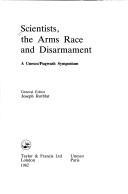
Scientists, the Arms Race and Disarmament
Joseph Rotblat, 1982
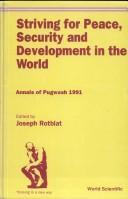
Striving for Peace, Security, and Development in the World
Pugwash Conference on Science and World Affairs (41st 1991 Beijing, China) & others, 1991
- Addressing the Nuclear Weapons ThreatJeffrey Boutwell & Joseph Rotblat
Addressing the Nuclear Weapons Threat
Jeffrey Boutwell & Joseph Rotblat, 2005
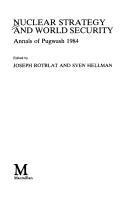
Nuclear Strategy and World Security
Pugwash Conferences on Science & World Affairs (1984 Björkliden, Sweden) & others, 1985
- Strategic Defences and the Future of the Arms RacePugwash Conference on Science and World Affairs (1985 London, England) & others
Strategic Defences and the Future of the Arms Race
Pugwash Conference on Science and World Affairs (1985 London, England) & others, 1987
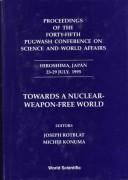
Towards a Nuclear Weapon-Free World
Joseph Rotblat, 1997
- Strahlungswirkungen beim Einsatz von KernwaffenJoseph Rotblat
Strahlungswirkungen beim Einsatz von Kernwaffen
Joseph Rotblat, 1986
- Proceedings of the Forty-Eighth Pugwash Conference on Science and World AffairsJoseph Rotblat
Proceedings of the Forty-Eighth Pugwash Conference on Science and World Affairs
Joseph Rotblat, 2001
- Proceedings of the Forty-Ninth Pugwash Conference on Science and World Affairs, Rustenburg, South Africa, 7-13 September 1999Joseph Rotblat
Proceedings of the Forty-Ninth Pugwash Conference on Science and World Affairs, Rustenburg, South Africa, 7-13 September 1999
Joseph Rotblat, 2001
- Long Roads to PeaceJoseph Rotblat
Long Roads to Peace
Joseph Rotblat, 2001
- World at the Crossroads - New Conflicts, New SolutionSven Hellman & Joseph Rotblat
World at the Crossroads - New Conflicts, New Solution
Sven Hellman & Joseph Rotblat, 1994
- Mir bez i︠a︡dernogo oruzhii︠a︡Joseph Rotblat & B. M. Udgaonkar
Mir bez i︠a︡dernogo oruzhii︠a︡
Joseph Rotblat & B. M. Udgaonkar, 1996
- Towards a Secure World in the Twenty-first CenturyJoseph Rotblat & England) Pugwash Conference on Science and World Affairs (40th 1990 Egham
Towards a Secure World in the Twenty-first Century
Joseph Rotblat & England) Pugwash Conference on Science and World Affairs (40th 1990 Egham, 1990
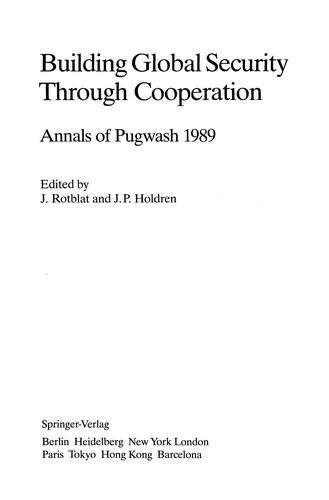
Building Global Security Through Cooperation
Joseph Rotblat & John P. Holdren, 1990
- Verification of Arms ReductionsJürgen Altmann & Joseph Rotblat
Verification of Arms Reductions
Jürgen Altmann & Joseph Rotblat, 1989
- Nuclear reactorsJoseph Rotblat
Nuclear reactors
Joseph Rotblat, 1977
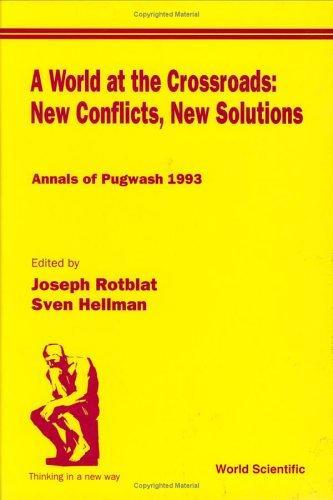
A World at the Crossroads
Joseph Rotblat & Sven Hellman, 1994
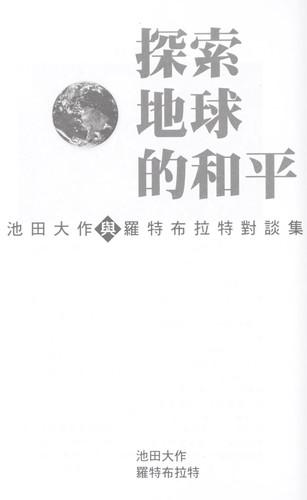
Tan suo di qiu de he ping
Joseph Rotblat, 2008
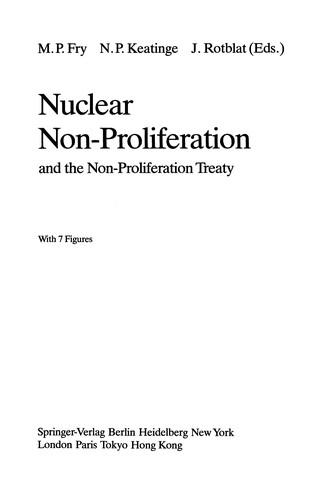
Nuclear Non-proliferation and the Non-proliferation Treaty
Patrick Keatinge, Joseph Rotblat & others, 1990
Reading Joseph Rotblat
- Which books by Joseph Rotblat can I find here?
This page currently brings together 48 catalogue works, including Hiroshima's shadow, A Quest for Global Peace, Scientists in the Quest for Peace. This is a selection from our catalogue, not necessarily a complete bibliography. Open a work to compare editions and reviews.
Search this author- How are these books ordered?
The list uses catalogue reading-popularity data to put widely read works first. That is a discovery aid, not a claim that the first result is the author's best book or a recommended reading order.
- Where should I check a particular edition or translation?
Open the book's catalogue page and compare publisher, year, format, language and ISBN. Different editions of the same work can have different translators, introductions and page counts.