Author
John Locke
1632–1704
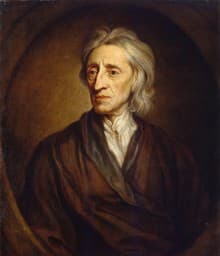
John Locke, widely known as the Father of Liberalism, was an English philosopher and physician regarded as one of the most influential of Enlightenment thinkers. Considered the first of the British empiricists, he is equally important to social contract theory. His work had a great impact upon the development of epistemology and political philosophy. His writings influenced Voltaire and Rousseau, many Scottish Enlightenment thinkers, as well as the American revolutionaries. His contributions to classical republicanism and liberal theory are reflected in the American Declaration of Independence.
Locke's theory of mind is often cited as the origin of modern conceptions of identity and the self, figuring prominently in the work of later philosophers such as Hume, Rousseau and Kant. Locke was the first to define the self through a continuity of consciousness. He postulated that the mind was a blank slate or tabula rasa. Contrary to pre-existing Cartesian philosophy, he maintained that we are born without innate ideas, and that knowledge is instead determined only by experience derived from sense perception.
Wikipedia. Bibliographic data from Open Library.
Books by John Locke
Most-read first
Reading John Locke
- Which books by John Locke can I find here?
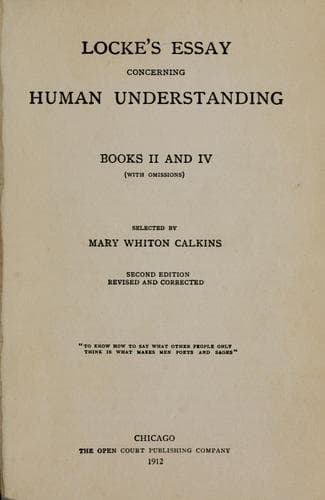
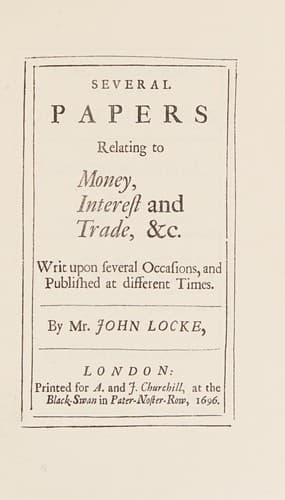
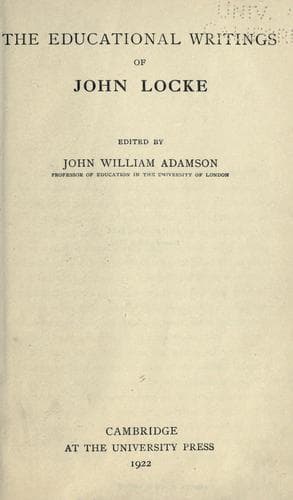
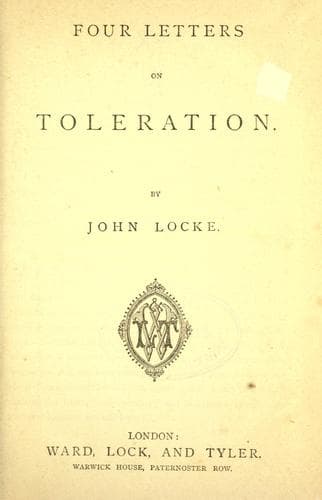
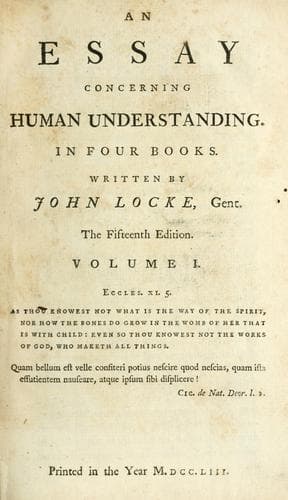
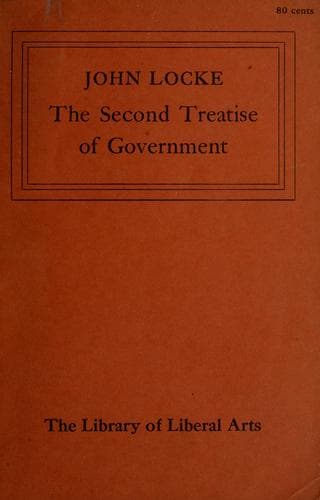
This page currently brings together 48 catalogue works, including Essay Concerning Human Understanding, Two Treatises on Government, Essay Concerning the True Original Extent and End of Civil Government. This is a selection from our catalogue, not necessarily a complete bibliography. Open a work to compare editions and reviews.
Search this author- How are these books ordered?
The list uses catalogue reading-popularity data to put widely read works first. That is a discovery aid, not a claim that the first result is the author's best book or a recommended reading order.
- Where should I check a particular edition or translation?
Open the book's catalogue page and compare publisher, year, format, language and ISBN. Different editions of the same work can have different translators, introductions and page counts.