Author
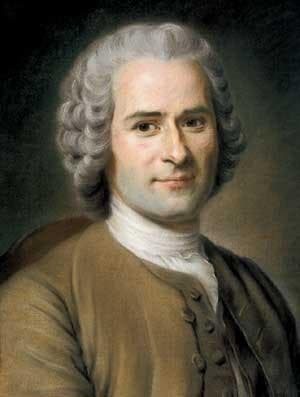
Jean-Jacques Rousseau
1712–1778
Jean-Jacques Rousseau was a major Genevois philosopher, writer, and composer of 18th-century Romanticism. His political philosophy influenced the French Revolution and the development of modern political, sociological and educational thought.
His novel, *Emile: or, On Education*, which he considered his most important work, is a seminal treatise on the education of the whole person for citizenship. His sentimental novel, Julie, ou la nouvelle Héloïse, was of great importance to the development of pre-Romanticism and romanticism in fiction. Rousseau's autobiographical writings: his *Confessions*, which initiated the modern autobiography, and his *Reveries of a Solitary Walker* were among the pre-eminent examples of the late 18th-century movement known as the "Age of Sensibility", featuring an increasing focus on subjectivity and introspection that has characterized the modern age.
Rousseau also made important contributions to music as a theorist. During the period of the French Revolution, Rousseau was the most popular of the philosophers among members of the Jacobin Club. He was interred as a national hero in the Panthéon in Paris, in 1794, 16 years after his death.
Wikipedia. Bibliographic data from Open Library.
Books by Jean-Jacques Rousseau
Most-read first
Reading Jean-Jacques Rousseau
- Which books by Jean-Jacques Rousseau can I find here?
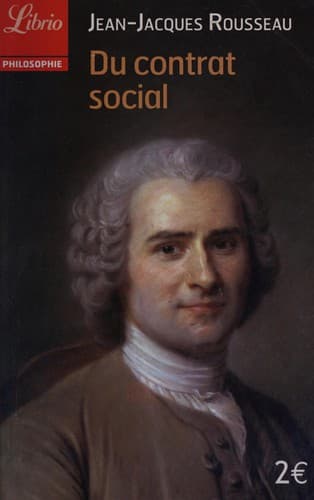
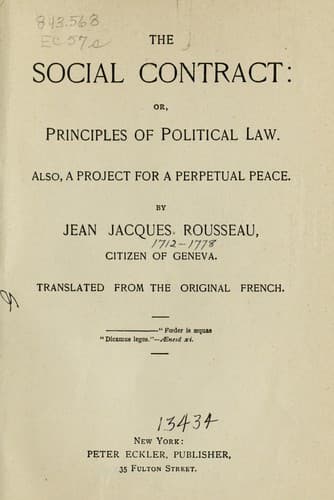
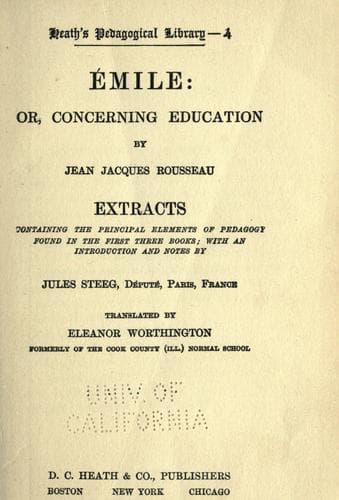
This page currently brings together 48 catalogue works, including The Social Contract, The Confessions of J. J. Rousseau, Emile or Education. This is a selection from our catalogue, not necessarily a complete bibliography. Open a work to compare editions and reviews.
Search this author- How are these books ordered?
The list uses catalogue reading-popularity data to put widely read works first. That is a discovery aid, not a claim that the first result is the author's best book or a recommended reading order.
- Where should I check a particular edition or translation?
Open the book's catalogue page and compare publisher, year, format, language and ISBN. Different editions of the same work can have different translators, introductions and page counts.