Author
Jaron Lanier
Born 1960
Jaron Zepel Lanier is an American computer scientist, futurist, and composer. Considered a founder of virtual reality, Lanier and Thomas G. Zimmerman left Atari in 1985 to found VPL Research, Inc., the first company to sell VR goggles and wired gloves. In the late 1990s, Lanier worked on applications for Internet2, and in the 2000s, he was a visiting scholar at Silicon Graphics and various universities. In 2006, he began to work at Microsoft, and since 2009 he has worked at Microsoft Research as an Interdisciplinary Scientist.
Biography from Wikipedia (CC BY-SA). Bibliographic data from Open Library.
Books by Jaron Lanier
Most-read first

Who Owns the Future?
Jaron Lanier, 2013

Ten Arguments for Deleting Your Social Media Accounts Right Now
Jaron Lanier, 2018
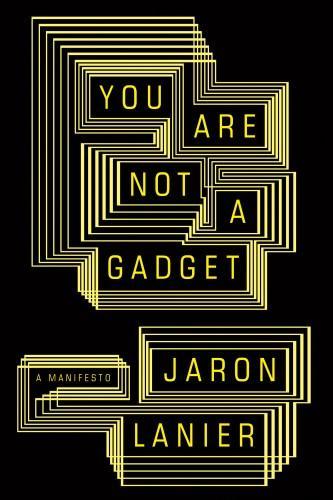
You Are Not a Gadget
Jaron Lanier, 2010
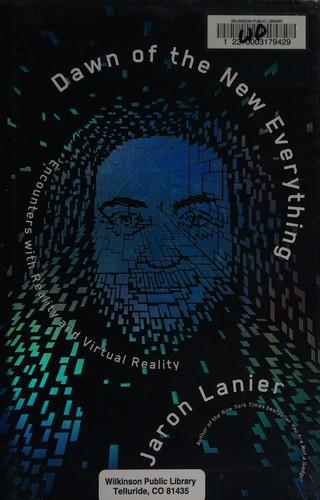
Dawn of the New Everything
Jaron Lanier, 2017

Dez Argumentos Para Você Deletar Agora Suas Redes Sociais
Jaron Lanier, 2018

Dieci Ragioni Per Cancellare Subito I Tuoi Account Social
Jaron Lanier, 2018

¿Quién controla el futuro?
Jaron Lanier & Marcos Pérez Sánchez, 2019

10 аргументов удалить все свои аккаунты в социальных сетях
Jaron Lanier, 2019
- Information Is An Alienated ExperienceJaron Lanier
Information Is An Alienated Experience
Jaron Lanier, 1999

Diez Razones Para Borrar Tus Redes Sociales De Inmediato
Jaron Lanier, 2018
Truth, Technology and the Visual/Virtual World
Jaron Lanier, 2005
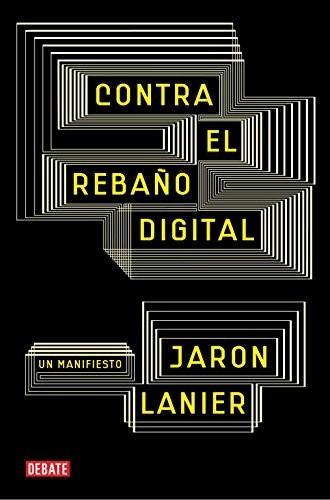
Contra el rebaño digital
Jaron Lanier & Ignacio Gómez Calvo, 2011

Futuro Es Ahora / Dawn of the New Everything
Jaron Lanier, 2019

The Future of Public Space
Michelle Nijhuis, Jaron Lanier & others, 2018
- Jaron LanierJaron Lanier & Börsenverein des Deutschen Buchhandels
Jaron Lanier
Jaron Lanier & Börsenverein des Deutschen Buchhandels, 2014
- Fate of Power and the Future of DignityJaron Lanier
Fate of Power and the Future of Dignity
Jaron Lanier, 2013
Reading Jaron Lanier
- Which books by Jaron Lanier can I find here?
This page currently brings together 16 catalogue works, including Who Owns the Future?, Ten Arguments for Deleting Your Social Media Accounts Right Now, You Are Not a Gadget. This is a selection from our catalogue, not necessarily a complete bibliography. Open a work to compare editions and reviews.
Search this author- How are these books ordered?
The list uses catalogue reading-popularity data to put widely read works first. That is a discovery aid, not a claim that the first result is the author's best book or a recommended reading order.
- Where should I check a particular edition or translation?
Open the book's catalogue page and compare publisher, year, format, language and ISBN. Different editions of the same work can have different translators, introductions and page counts.