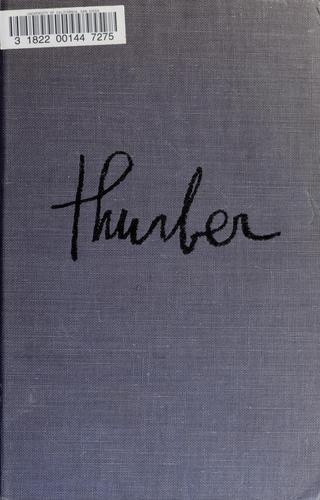
Author
James Thurber
1894–1961
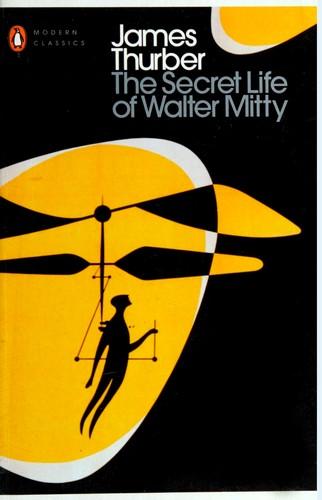
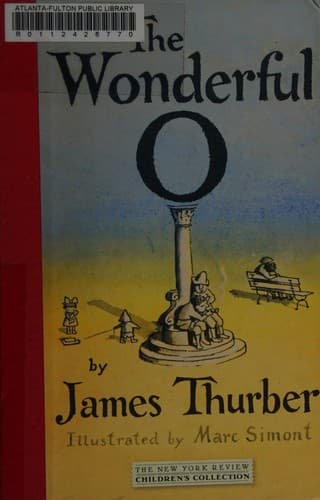
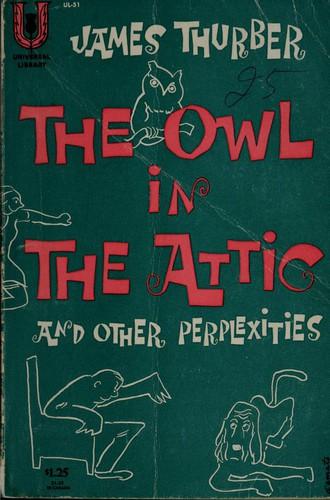
The author of The Secret Life of Walter Mitty and the creator of numerous New Yorker magazine cover cartoons, was born in Columbus, Ohio on December, 8, 1894. One of the foremost American humorists of the 20th century, his inimitable wit and pithy prose spanned a breadth of genres, including short stories, modern commentary, fiction, children's fantasy and letters.
Thurber's father, Charles, was a civil clerk, and his mother, Mame, was an eccentric woman who would influence many of her son's stories. Thurber had two brothers, William and Robert. One day while playing "William Tell" with them as youngsters, Thurber lost the sight in one eye when an arrow pierced it. Ultimately, he would go blind in both eyes, but that never stopped him from writing or drawing.
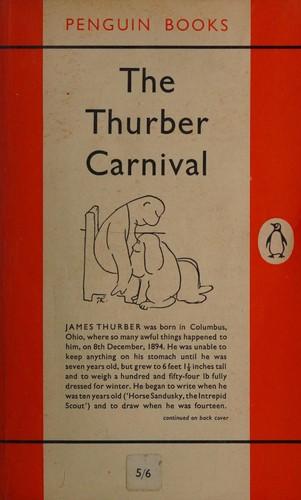
Thurber CarnivalFrom 1913-1917, Thurber attended the Ohio State University where he was a member of the Phi Kappa Psi fraternity. It was at this time that the Thurbers rented the house at 77 Jefferson Avenue, which became Thurber House in 1984. Due to his eye injury, Thurber was not able to complete a compulsory ROTC course so OSU would not let him graduate, although they did give him an honorary degree later.
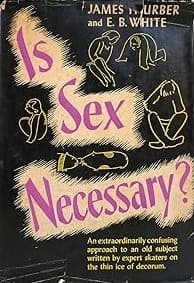
Thurber launched his professional writing career as a reporter for the Columbus Dispatch in 1920. He began writing for the New Yorker in 1927 after friend E.B. White (Charlotte's Web) got him a job at the magazine. Thurber started as an editor for the magazine but quickly became a writer. His career as a cartoonist began in 1930, when White dug some of Thurber's drawings out of the trash and submitted them to be published in the New Yorker.
Wikipedia. Bibliographic data from Open Library.
Books by James Thurber
Most-read first
Reading James Thurber
- Which books by James Thurber can I find here?
This page currently brings together 48 catalogue works, including Animal Farm with Connections, The Crucible and Related Readings, Fifty Best American Short Stories. This is a selection from our catalogue, not necessarily a complete bibliography. Open a work to compare editions and reviews.
Search this author- How are these books ordered?
The list uses catalogue reading-popularity data to put widely read works first. That is a discovery aid, not a claim that the first result is the author's best book or a recommended reading order.
- Where should I check a particular edition or translation?
Open the book's catalogue page and compare publisher, year, format, language and ISBN. Different editions of the same work can have different translators, introductions and page counts.