Author
James Moffett
We don’t have a biography for James Moffett yet. Their books are below, most-read first.
Bibliographic data from Open Library.
Books by James Moffett
Most-read first
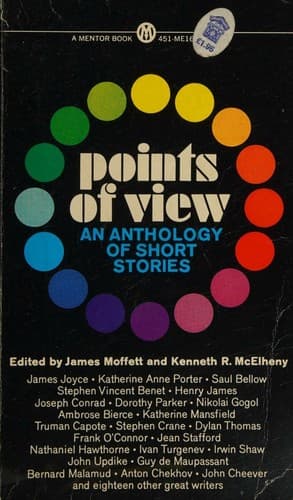
Points of View
James Moffett, Kenneth R. McElheny & others, 1960
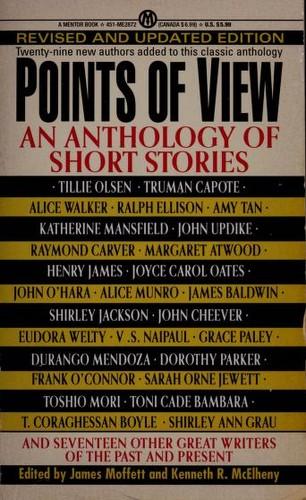
Points of view -- Revised Edition
James Moffett, Kenneth R. McElheny & others, 1995
Active voice
James Moffett, 1981
The Universal Schoolhouse
James Moffett, 1994
A student-centered language arts curriculum, grades K-13
James Moffett, 1968
- Active Voices Vol. IIIJames Moffett, Patricia Wixon & others
Active Voices Vol. III
James Moffett, Patricia Wixon & others, 1996
Transcripts 1
E. Graham Ward & James Moffett, 1973
- HæstingasJames Moffett & Sarah Zammit
Hæstingas
James Moffett & Sarah Zammit, 2019
A Student-centered Language Arts Curriculum, Grades K-6
James Moffett, 1968
Active Voices III
James Moffett, Patricia Wixon & others, 1987
Active Voices, II
James Moffett, 1987
- Just Another SeasonJames Moffett
Just Another Season
James Moffett, 2012
- Trials of Sherlock HolmesJames Moffett
Trials of Sherlock Holmes
James Moffett, 2017
- Carlos Came HomeJames Moffett
Carlos Came Home
James Moffett, 2012
- Element of DeceitJames Moffett
Element of Deceit
James Moffett, 2018
- A Student-centered Language Arts CurriculumJames Moffett
A Student-centered Language Arts Curriculum
James Moffett, 1968
Teaching the Universe of Discourse
James Moffett, 1968
Active Voices IV
James Moffett, Miriam Baker & others, 1986
- Coming on Center, English Education in EvolutionJames Moffett
Coming on Center, English Education in Evolution
James Moffett, 1988
Detecting Growth in Language
James Moffett, 1992
Harmonic learning
James Moffett, 1992
Student-centered language arts, K-12
James Moffett, 1991
Coming on Center
James Moffett, 1981
Points of Departure
James Moffett, 1985
Storm in the Mountains
James Moffett, 1988
Student-centered language arts and reading, K-13
James Moffett & B.J. Wagner, 1976
Active Voices I
James Moffett & Marie Carducci Bolchazy, 1987
Drama: What Is Happening
James Moffett, 1967
Reading James Moffett
- Which books by James Moffett can I find here?
This page currently brings together 28 catalogue works, including Points of View, Points of view -- Revised Edition, Active voice. This is a selection from our catalogue, not necessarily a complete bibliography. Open a work to compare editions and reviews.
Search this author- How are these books ordered?
The list uses catalogue reading-popularity data to put widely read works first. That is a discovery aid, not a claim that the first result is the author's best book or a recommended reading order.
- Where should I check a particular edition or translation?
Open the book's catalogue page and compare publisher, year, format, language and ISBN. Different editions of the same work can have different translators, introductions and page counts.