Author
Henry E. Jacobs
We don’t have a biography for Henry E. Jacobs yet. Their books are below, most-read first.
Bibliographic data from Open Library.
Books by Henry E. Jacobs
Most-read first
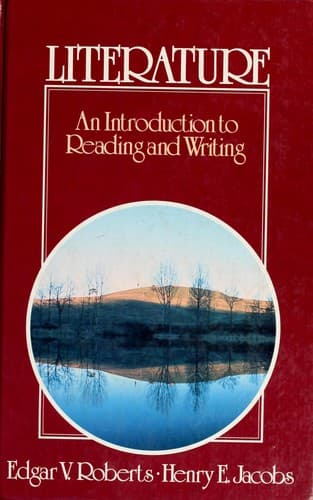
Literature
Edgar V. Roberts, Henry E. Jacobs & others, 1986
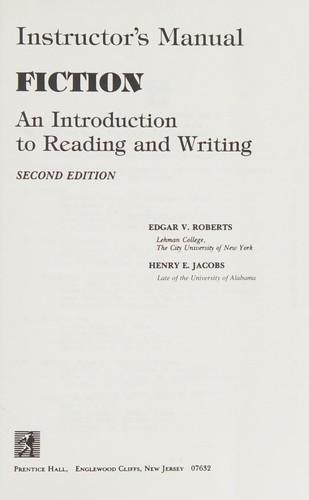
Fiction
Edgar V. Roberts & Henry E. Jacobs, 1987
Prentice Hall literature
Henry E. Jacobs, William J. Lederer & others
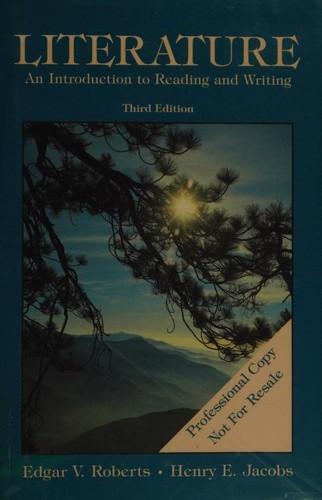
Literature--Third Edition
Edgar V. Roberts, Henry E. Jacobs & others, 1991
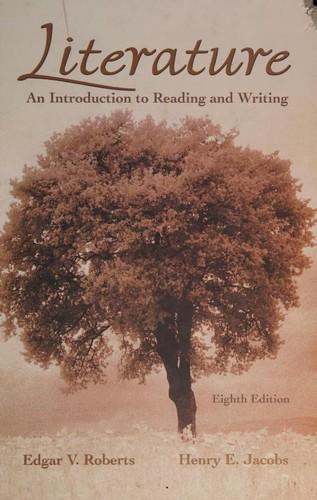
Literature--Eighth Edition
Edgar V. Roberts, Henry E. Jacobs & others, 2006
Timeless Voices, Timeless Themes
Henry E. Jacobs, 2000
- Literature and English on the Internet 1997 PackageEdgar V. Roberts & Henry E. Jacobs
Literature and English on the Internet 1997 Package
Edgar V. Roberts & Henry E. Jacobs, 1997
- Literature Student Access Kit for Use with WebCTEdgar V. Roberts & Henry E. Jacobs
Literature Student Access Kit for Use with WebCT
Edgar V. Roberts & Henry E. Jacobs, 2006
- Literature and MLA Documentation UpdateVictoria Roberts, Edgar V. Roberts & others
Literature and MLA Documentation Update
Victoria Roberts, Edgar V. Roberts & others, 1998
- Literature and English on the Internet and Spring 98 Next Writing and MLA Documentation Update 98 PackageVictoria Roberts, Edgar V. Roberts & others
Literature and English on the Internet and Spring 98 Next Writing and MLA Documentation Update 98 Package
Victoria Roberts, Edgar V. Roberts & others, 1998

An annotated bibliography of Shakespearean burlesques, parodies, and travesties
Henry E. Jacobs, 1976
Annotated Teacher's Edition
Henry E. Jacobs, 1999
- Aural theatre in Shakespearean dramaHenry E. Jacobs
Aural theatre in Shakespearean drama
Henry E. Jacobs, 1977
The Book Of Concord V1
Henry E. Jacobs, 2007
- The Constancy of ChangeHenry E. Jacobs
The Constancy of Change
Henry E. Jacobs, 1975
Cymbeline
Henry E. Jacobs, 1982
- Elements of ReligionHenry E. Jacobs
Elements of Religion
Henry E. Jacobs, 1997
- Doctrinal Theology of the Evangelical Lutheran ChurchHeinrich F. E. Schmid, Charles A. Hay & others
Doctrinal Theology of the Evangelical Lutheran Church
Heinrich F. E. Schmid, Charles A. Hay & others, 2008
- The Changeless Faith and Changing ConditionsHenry E. Jacobs
The Changeless Faith and Changing Conditions
Henry E. Jacobs
The Book of Concord
Henry E. Jacobs, 1911
- इसाई शिक्षाMartin Luther, Henry E. Jacobs & others
इसाई शिक्षा
Martin Luther, Henry E. Jacobs & others, 2022
Literature--Sixth Edition
Edgar V. Roberts, Henry E. Jacobs & others, 2000
Shakespeare's Romances Reconsidered
Henry E. Jacobs, 1978
Reading Henry E. Jacobs
- Which books by Henry E. Jacobs can I find here?
This page currently brings together 23 catalogue works, including Literature, Fiction, Prentice Hall literature. This is a selection from our catalogue, not necessarily a complete bibliography. Open a work to compare editions and reviews.
Search this author- How are these books ordered?
The list uses catalogue reading-popularity data to put widely read works first. That is a discovery aid, not a claim that the first result is the author's best book or a recommended reading order.
- Where should I check a particular edition or translation?
Open the book's catalogue page and compare publisher, year, format, language and ISBN. Different editions of the same work can have different translators, introductions and page counts.