Author
Harvey, Alexander
1811–1889
We don’t have a biography for Harvey, Alexander yet. Their books are below, most-read first.
Bibliographic data from Open Library.
Books by Harvey, Alexander
Most-read first
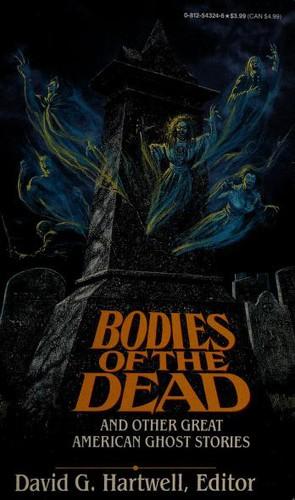
Bodies of the Dead and Other Great American Ghost Stories
David G. Hartwell, Edith Wharton & others, 1995
- The Testimony of Nature to the Identity Between the Bud and the SeedHarvey & Alexander
The Testimony of Nature to the Identity Between the Bud and the Seed
Harvey & Alexander, 1857
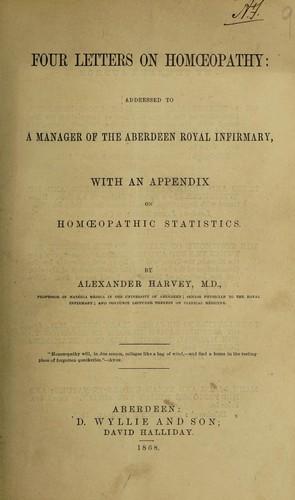
Four letters on homœopathy addressed to a Manager of the Aberdeen Royal Infirmary
Harvey & Alexander, 1868
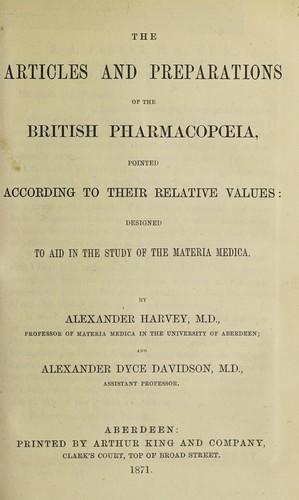
The articles and preparations of the British Pharmacopoeia, pointed according to their relative values
Harvey & Alexander, 1871
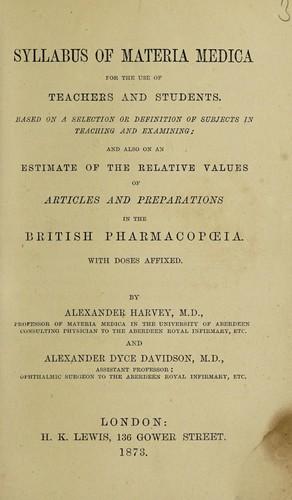
Syllabus of Materia Medical for the Use of Teachers and Students
Harvey & Alexander, 1873
William Pulteney Alison
Harvey & Alexander, 1877
Four letters to Sir James Clark, Bart., M.D., F.R.S., physician in ordinary to the Queen and to the Prince Consort, on administrative reform in relation to the medical schools and the examining boards
Harvey & Alexander, 1858
On the Comparative Value of Bloodletting and Purging in the Early Stage of the Acute Hydrocephalus and on the Extent to Which Each of Them Should Be Carried
Harvey & Alexander, 1859
On the Past Progress and the Present Aspects of Medicine, in Relation Chiefly to Therapeutics
Harvey & Alexander, 1874
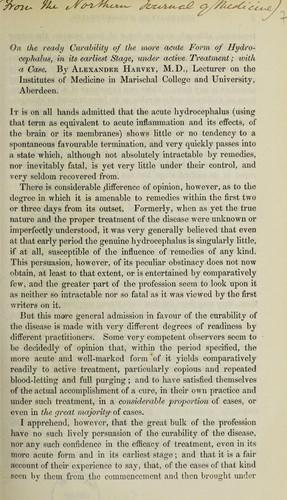
On the Ready Curabilty of the More Acute Form of Hydrocephalus in Its Earliest Stage Under Active Treatment
Harvey & Alexander, 1844
Chandos professorship of medicine in the University of St. Andrews. Testimonials in favour of Alexander Harvey, M.D
Harvey & Alexander, 1849
On the fœtus in utero as inoculating the maternal with the peculariarities of the paternal organism, and on mental stakes in either parent as influencing the nutrition and development of the offspring
Harvey & Alexander, 1850
On the Foetus in Utero, as Inoculating the Maternal with the Peculiarities of the Paternal Organism, and on Mental States in Either Parent, as Influencing the Nutrition and Development of the Offspring
Harvey & Alexander, 1850
On the fœtus in utero, as inoculating the maternal with the peculiarities of the paternal organism
Harvey & Alexander, 1849
On the Foetus in Utero
Harvey & Alexander, 1886
- First Lines of TherapeuticsHarvey & Alexander
First Lines of Therapeutics
Harvey & Alexander, 1879
- The Honey BeeHarvey & Alexander
The Honey Bee
Harvey & Alexander, 1868
In memoriam of the late William Williamson, A.M., M.D., Senior Physician to the Royal Infirmary of Aberdeen, etc
Harvey & Alexander, 1865
Four letters to Sir James Clark on administrative reform in relation to the medical schools and the examining boards
Harvey & Alexander, 1858
Syllabus of Materia Medica for the Use of Teachers and Students
Harvey & Alexander, 1873
Four letters on homoeopathy : addressed to a manager of the Aberdeen Royal Infirmary, with an appendix on homoeopathic statistics
Harvey & Alexander, 1868
On a Remarkable Effect of Cross-breeding
Harvey & Alexander, 1851
Notes Towards Outlines of Materia Medica and Therapeutics : Systematic and Practical
Harvey & Alexander, 1857
On the Relative Influence of the Male and Female Parents in the Reproduction of the Animal Species
Harvey & Alexander, 1854
Observations on the Nature, Longevity, and Size of Trees
Harvey & Alexander, 1846
Illustrations of the Interest and Importance of the Study of Cases of Sudden and Violent Death
Harvey & Alexander, 1846
Trees and Their Nature
Harvey & Alexander, 1856
Reading Harvey, Alexander
- Which books by Harvey, Alexander can I find here?
This page currently brings together 27 catalogue works, including Bodies of the Dead and Other Great American Ghost Stories, The Testimony of Nature to the Identity Between the Bud and the Seed, Four letters on homœopathy addressed to a Manager of the Aberdeen Royal Infirmary. This is a selection from our catalogue, not necessarily a complete bibliography. Open a work to compare editions and reviews.
Search this author- How are these books ordered?
The list uses catalogue reading-popularity data to put widely read works first. That is a discovery aid, not a claim that the first result is the author's best book or a recommended reading order.
- Where should I check a particular edition or translation?
Open the book's catalogue page and compare publisher, year, format, language and ISBN. Different editions of the same work can have different translators, introductions and page counts.