Author
Guillermo A. Calvo
We don’t have a biography for Guillermo A. Calvo yet. Their books are below, most-read first.
Bibliographic data from Open Library.
Books by Guillermo A. Calvo
Most-read first
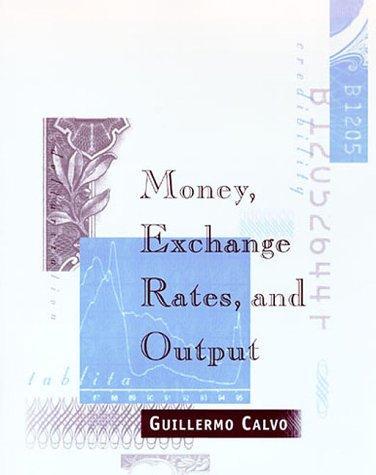
Money, Exchange Rates, and Output
Guillermo A. Calvo, 1996
- Debt, Stabilization, and DevelopmentCarlos Federico Díaz Alejandro, Guillermo A. Calvo & others
Debt, Stabilization, and Development
Carlos Federico Díaz Alejandro, Guillermo A. Calvo & others, 1989
- Phoenix Miracles in Emerging MarketsGuillermo A. Calvo
Phoenix Miracles in Emerging Markets
Guillermo A. Calvo, 2006
- Podrá sobrevivir la convertibilidad?Guillermo A. Calvo & Daniel Alfredo Naszewski
Podrá sobrevivir la convertibilidad?
Guillermo A. Calvo & Daniel Alfredo Naszewski, 1996
- Growth and external financing in Latin AmericaGuillermo A. Calvo
Growth and external financing in Latin America
Guillermo A. Calvo, 2001
- The growth-interest rate cycle in the United States and its consequences for emerging marketsGuillermo A. Calvo
The growth-interest rate cycle in the United States and its consequences for emerging markets
Guillermo A. Calvo, 2001
- The Capital Inflows ProblemGuillermo A. Calvo
The Capital Inflows Problem
Guillermo A. Calvo, 1994
- Capital inflows and real exchange rate appreciation in Latin AmericaGuillermo A. Calvo
Capital inflows and real exchange rate appreciation in Latin America
Guillermo A. Calvo, 1992
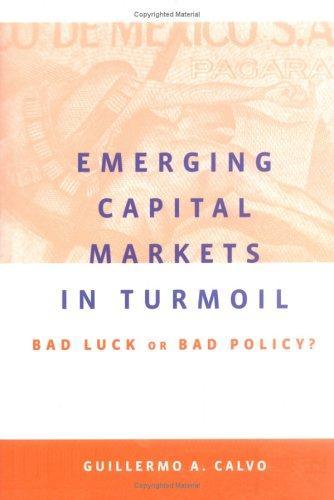
Emerging Capital Markets in Turmoil
Guillermo A. Calvo, 2005
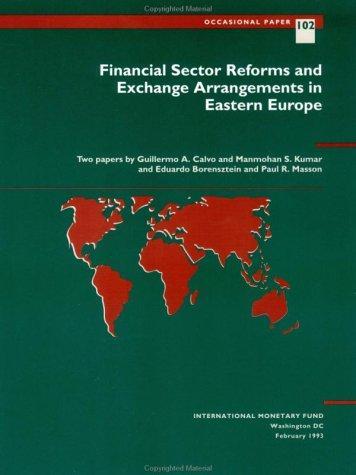
Financial Sector Reforms and Exchange Arrangements in Eastern Europe
Guillermo A. Calvo, 1993
- Inflation Inertia and Credible DisinflationGuillermo A. Calvo
Inflation Inertia and Credible Disinflation
Guillermo A. Calvo, 2003
- Inflation Stabilization and Nominal AnchorsGuillermo A. Calvo
Inflation Stabilization and Nominal Anchors
Guillermo A. Calvo, 1992
- Interest Rate Rules, Inflation Stabilization, and Imperfect CredibilityGuillermo A. Calvo
Interest Rate Rules, Inflation Stabilization, and Imperfect Credibility
Guillermo A. Calvo, 2007
- The Mirage of Exchange Rate Regimes for Emerging Market CountriesGuillermo A. Calvo
The Mirage of Exchange Rate Regimes for Emerging Market Countries
Guillermo A. Calvo, 2003
- Nominal Exchange Rate Anchoring Under Inflation InertiaGuillermo A. Calvo
Nominal Exchange Rate Anchoring Under Inflation Inertia
Guillermo A. Calvo, 2002
- Output collapse in Eastern EuropeGuillermo A. Calvo
Output collapse in Eastern Europe
Guillermo A. Calvo, 1992
- Política monetaria y cambiaria en economías en transiciónGuillermo A. Calvo
Política monetaria y cambiaria en economías en transición
Guillermo A. Calvo, 1994
- Rational Contagion and the Globalization of Securities MarketsGuillermo A. Calvo
Rational Contagion and the Globalization of Securities Markets
Guillermo A. Calvo, 1999
- Reflexiones teóricas sobre el problema de estabilización en ArgentinaGuillermo A. Calvo
Reflexiones teóricas sobre el problema de estabilización en Argentina
Guillermo A. Calvo, 1981
- Stabilization Dynamics and Backward-looking ContractsGuillermo A. Calvo
Stabilization Dynamics and Backward-looking Contracts
Guillermo A. Calvo, 1993
- Capital inflows to Latin AmericaGuillermo A. Calvo
Capital inflows to Latin America
Guillermo A. Calvo, 1992
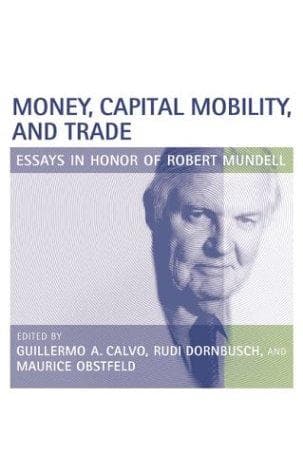
Money, Capital Mobility, and Trade
Guillermo A. Calvo, Maurice Obstfeld & others, 2004
- Staggered Contracts in a Utility-Maximizing FrameworkGuillermo A. Calvo
Staggered Contracts in a Utility-Maximizing Framework
Guillermo A. Calvo, 1981
- Trying to StabilizeGuillermo A. Calvo
Trying to Stabilize
Guillermo A. Calvo, 1981
- Staggered Contracts and Exchange Rate PolicyGuillermo A. Calvo
Staggered Contracts and Exchange Rate Policy
Guillermo A. Calvo, 1981
- Tax-financed Government Spending in a Neo-classical Model with Sticky Wages and Rational ExpectationsGuillermo A. Calvo
Tax-financed Government Spending in a Neo-classical Model with Sticky Wages and Rational Expectations
Guillermo A. Calvo, 1979
- TechnologyGuillermo A. Calvo
Technology
Guillermo A. Calvo, 1979
- Stabilization Rules and the Managed FloatGuillermo A. Calvo
Stabilization Rules and the Managed Float
Guillermo A. Calvo, 1979
- An Essay on the Managed Float --Guillermo A. Calvo
An Essay on the Managed Float --
Guillermo A. Calvo, 1979
- A General Equilibrium Theory of Urban Unemployment and Wage DeterminationGuillermo A. Calvo
A General Equilibrium Theory of Urban Unemployment and Wage Determination
Guillermo A. Calvo, 1973
- Optimal Growth in a Putty-clay ModelGuillermo A. Calvo
Optimal Growth in a Putty-clay Model
Guillermo A. Calvo, 1974
- Optimal "Maximin" Population and Capital Over TimeGuillermo A. Calvo
Optimal "Maximin" Population and Capital Over Time
Guillermo A. Calvo, 1974
- On Models of Money and Perfect ForesightGuillermo A. Calvo
On Models of Money and Perfect Foresight
Guillermo A. Calvo, 1975
- Maximin Accumulation of Risky CapitalGuillermo A. Calvo
Maximin Accumulation of Risky Capital
Guillermo A. Calvo, 1975
- Some notes on time-inconsistency and Rawls' maximum criterionGuillermo A. Calvo
Some notes on time-inconsistency and Rawls' maximum criterion
Guillermo A. Calvo, 1975
- Optimal Maximin Accumulation with Uncertain Future TechnologyGuillermo A. Calvo
Optimal Maximin Accumulation with Uncertain Future Technology
Guillermo A. Calvo, 1975
- Efficient Capacity Utilization with Differential Shift Welfare CostsGuillermo A. Calvo
Efficient Capacity Utilization with Differential Shift Welfare Costs
Guillermo A. Calvo, 1975
- Optimal Seigniorage from Money CreationGuillermo A. Calvo
Optimal Seigniorage from Money Creation
Guillermo A. Calvo, 1976
- On the Time Consistency of Optimal Policy in a Monetary EconomyGuillermo A. Calvo
On the Time Consistency of Optimal Policy in a Monetary Economy
Guillermo A. Calvo, 1976
- The Stability of Models of Money and Perfect ForesightGuillermo A. Calvo
The Stability of Models of Money and Perfect Foresight
Guillermo A. Calvo, 1976
- Optimal Population and Capital Over TimeGuillermo A. Calvo
Optimal Population and Capital Over Time
Guillermo A. Calvo, 1977
- SupervisionGuillermo A. Calvo
Supervision
Guillermo A. Calvo, 1977
- The Surprising Incidence of a Tax on Pure RentGuillermo A. Calvo
The Surprising Incidence of a Tax on Pure Rent
Guillermo A. Calvo, 1977
- On the Indeterminacy of Interest Rates and Wages with Perfect ForesightGuillermo A. Calvo
On the Indeterminacy of Interest Rates and Wages with Perfect Foresight
Guillermo A. Calvo, 1977
- HierarchyGuillermo A. Calvo
Hierarchy
Guillermo A. Calvo, 1978
- International Factor Mobility and National AdvantageGuillermo A. Calvo
International Factor Mobility and National Advantage
Guillermo A. Calvo, 1981
- Currency Substitution and the Real Exchange RateGuillermo A. Calvo
Currency Substitution and the Real Exchange Rate
Guillermo A. Calvo, 1982
- Real Exchange Rate Dynamics with Fixed Nominal ParitiesGuillermo A. Calvo
Real Exchange Rate Dynamics with Fixed Nominal Parities
Guillermo A. Calvo, 1982
Reading Guillermo A. Calvo
- Which books by Guillermo A. Calvo can I find here?
This page currently brings together 48 catalogue works, including Money, Exchange Rates, and Output, Debt, Stabilization, and Development, Phoenix Miracles in Emerging Markets. This is a selection from our catalogue, not necessarily a complete bibliography. Open a work to compare editions and reviews.
Search this author- How are these books ordered?
The list uses catalogue reading-popularity data to put widely read works first. That is a discovery aid, not a claim that the first result is the author's best book or a recommended reading order.
- Where should I check a particular edition or translation?
Open the book's catalogue page and compare publisher, year, format, language and ISBN. Different editions of the same work can have different translators, introductions and page counts.