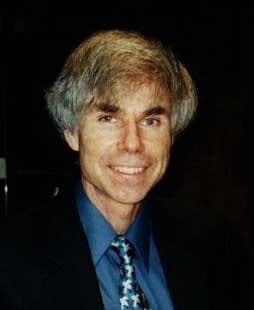
Author
Douglas Hofstadter
Born 1945
Douglas Hofstadter is an American scholar of cognitive science, physics, and comparative literature whose research includes concepts such as the sense of self in relation to the external world, consciousness, analogy-making, artistic creation, literary translation, and discovery in mathematics and physics. His 1979 book *Gödel, Escher, Bach: An Eternal Golden Braid* won both the Pulitzer Prize for general nonfiction and a National Book Award for Science. His 2007 book *I Am a Strange Loop* won the *Los Angeles Times* Book Prize for Science and Technology.—*Wikipedia* 2021-03-03
Wikipedia. Bibliographic data from Open Library.
Books by Douglas Hofstadter
Most-read first
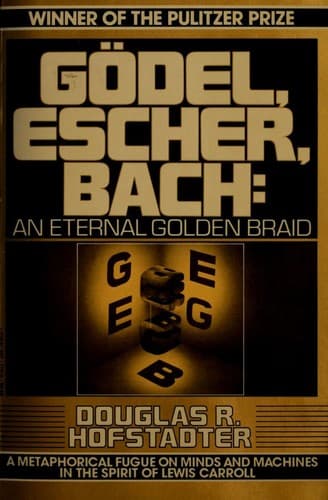
Gödel, Escher, Bach
Douglas R. Hofstadter, 1979
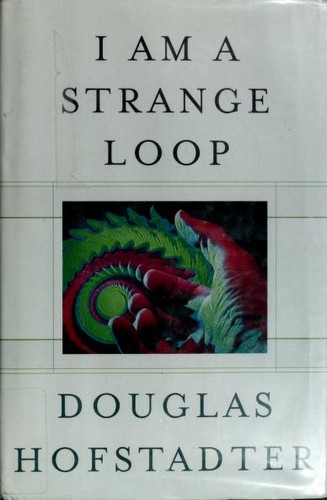
I Am a Strange Loop
Douglas R. Hofstadter, 2007
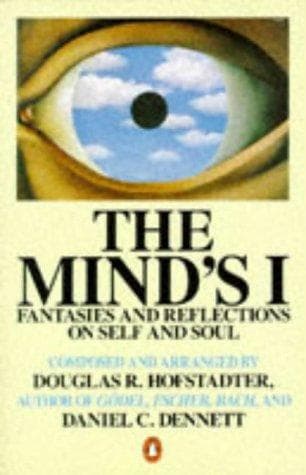
The Mind's I
Douglas R. Hofstadter & Daniel C. Dennett, 1962
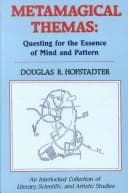
Metamagical Themas
Douglas R. Hofstadter, 1985
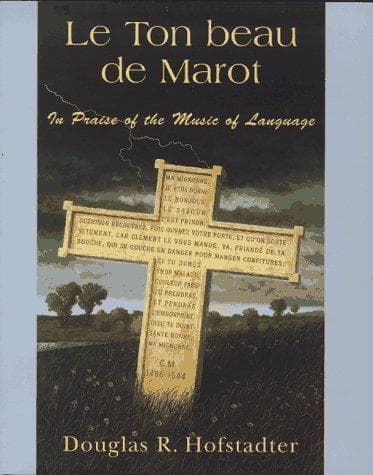
Le Ton beau de Marot
Douglas R. Hofstadter, 1997
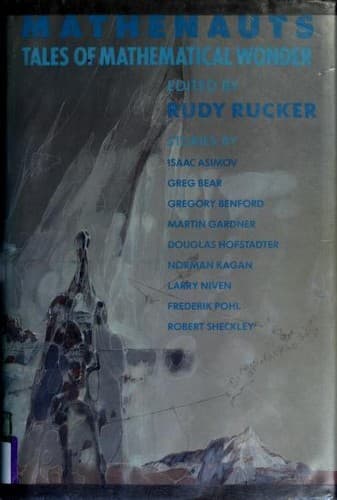
Mathenauts
Rudy Rucker, Isaac Asimov & others, 1987
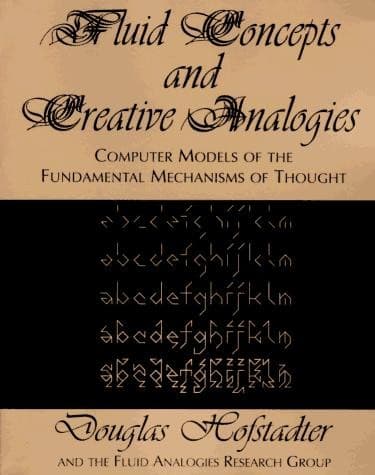
Fluid Concepts and Creative Analogies
Douglas R. Hofstadter & Fluid Analogies Research Group, 1995
- To Light the Flame of ReasonChrister Sturmark & Douglas R. Hofstadter
To Light the Flame of Reason
Christer Sturmark & Douglas R. Hofstadter, 2022
- Piano MusicDouglas R. Hofstadter
Piano Music
Douglas R. Hofstadter, 2000
- Rhapsody on a theme by Clément MarotDouglas R. Hofstadter
Rhapsody on a theme by Clément Marot
Douglas R. Hofstadter, 1995
Ambigrammi
Douglas R. Hofstadter, 1987
- גדל, אשר, באךDouglas R. Hofstadter
גדל, אשר, באך
Douglas R. Hofstadter, 2011
Butterfly in the Quantum World
Indubala I. Satija & Douglas R. Hofstadter, 2016
- Shakespeare's Plays Weren't Written by Him, but by Someone Else of the Same NameDouglas R. Hofstadter
Shakespeare's Plays Weren't Written by Him, but by Someone Else of the Same Name
Douglas R. Hofstadter, 1982
The Tumult of Inner Voices or What Is the Meaning of the Word 'I'? (Grace A. Tanner Lecture in Human Values, 1982)
Douglas R. Hofstadter, 1982
- GEBDouglas R. Hofstadter
GEB
Douglas R. Hofstadter, 1984
A Bouquet for the Gardener
Douglas R. Hofstadter, Martin Gardner & others, 2011
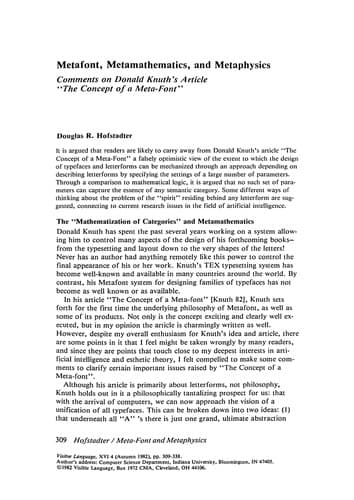
Metafont, Metamathematics, and Metaphysics
Douglas R. Hofstadter, 1982
Reading Douglas Hofstadter
- Which books by Douglas Hofstadter can I find here?
This page currently brings together 18 catalogue works, including Gödel, Escher, Bach, I Am a Strange Loop, The Mind's I. This is a selection from our catalogue, not necessarily a complete bibliography. Open a work to compare editions and reviews.
Search this author- How are these books ordered?
The list uses catalogue reading-popularity data to put widely read works first. That is a discovery aid, not a claim that the first result is the author's best book or a recommended reading order.
- Where should I check a particular edition or translation?
Open the book's catalogue page and compare publisher, year, format, language and ISBN. Different editions of the same work can have different translators, introductions and page counts.