Author
Daron Acemoğlu
Born 1967
Kamer Daron Acemoğlu (born September 3, 1967) is a Turkish-born American economist who has taught at the Massachusetts Institute of Technology (MIT) since 1993. He is currently the Elizabeth and James Killian Professor of Economics at MIT. He was named Institute Professor in 2019.
**Source**: Daron Acemoglu on Wikipedia.
Wikipedia. Bibliographic data from Open Library.
Books by Daron Acemoğlu
Most-read first

Why Nations Fail
Daron Acemoglu & James A. Robinson, 2012

Power and Progress
Daron Acemoglu & Simon Johnson, 2023
The Narrow Corridor
Daron Acemoglu & James A. Robinson, 2019
Economía : un primer curso inspirado en el mundo real
Daron Acemoglu, 2017
Introduction to Modern Economic Growth
Daron Acemoglu, 2009
- Microeconomics, Global EditionDaron Acemoglu, David Laibson & others
Microeconomics, Global Edition
Daron Acemoglu, David Laibson & others, 2015
Economics
Daron Acemoglu, David Laibson & others, 2014

Uluslarin Dususu
Daron Acemoglu, 2013

Democratization or Repression?
Daron Acemoglu, 1999
- Economics, Global EditionDaron Acemoglu, David Laibson & others
Economics, Global Edition
Daron Acemoglu, David Laibson & others, 2015
Macroeconomics
Daron Acemoglu, David Laibson & others, 2014
Economic Origins of Dictatorship and Democracy
Daron Acemoglu & James A. Robinson, 2005

Emergence and Persistence of Inefficient States
Daron Acemoglu, 2006
Competing Engines of Growth
Daron Acemoglu, 2010
- Introduction to Microeconomics and MacroeconomicsN. F. D. Huberts, C. Calderon & others
Introduction to Microeconomics and Macroeconomics
N. F. D. Huberts, C. Calderon & others, 2018

Microeconomics
Daron Acemoglu, David Laibson & others, 2014
- Microeconomics, Pearson EText, Global EditionDaron Acemoglu, David Laibson & others
Microeconomics, Pearson EText, Global Edition
Daron Acemoglu, David Laibson & others, 2015
- Microeconomics with Myeconlab, Global EditionDaron Acemoglu, David Laibson & others
Microeconomics with Myeconlab, Global Edition
Daron Acemoglu, David Laibson & others, 2015
- Acemoglu, Economics EURO PACKDaron Acemoglu, David Laibson & others
Acemoglu, Economics EURO PACK
Daron Acemoglu, David Laibson & others, 2019
- Kleptocracy and Divide-and-ruleDaron Acemoglu
Kleptocracy and Divide-and-rule
Daron Acemoglu, 2003
- Institutions as the Fundamental Cause of Long-run GrowthDaron Acemoglu
Institutions as the Fundamental Cause of Long-run Growth
Daron Acemoglu, 2004
- Minimum Wages and On-the-job TrainingDaron Acemoglu
Minimum Wages and On-the-job Training
Daron Acemoglu, 1999
- Productivity differencesDaron Acemoglu
Productivity differences
Daron Acemoglu, 1998
- Economics Plus Pearson Mylab Economics with Pearson EText, Global EditionDaron Acemoglu, David Laibson & others
Economics Plus Pearson Mylab Economics with Pearson EText, Global Edition
Daron Acemoglu, David Laibson & others, 2018

A Theory of Military Dictatorship
Daron Acemoglu, 2008

Property Rights, Corruption and the Allocation of Talent
Daron Acemoglu, 1996

Corporate Control and Balance of Powers
Daron Acemoglu, 1994
The Consequences of Radical Reform
Daron Acemoglu, 2009
Theory, General Equilibrium and Political Economy in Development Economics
Daron Acemoglu, 2010

The Form of Property Rights
Daron Acemoglu, 2003

The World Income Distribution
Daron Acemoglu, 2000
Macroeconomics, Global Edition
Daron Acemoglu, David Laibson & others, 2015

Balance of Power
Daron Acemoglu & James A. Robinson, 2019
- Dynamics of Information Exchange in Endogenous Social NetworksDaron Acemoglu
Dynamics of Information Exchange in Endogenous Social Networks
Daron Acemoglu, 2010

Prospérité, puissance et pauvreté (French Edition)
Daron Acemoglu & James A. Robinson, 2015
NBER Macroeconomics Annual 2006
Daron Acemoglu, Kenneth S. Rogoff & others, 2007
Macroeconomics, Student Value Edition
Daron Acemoglu, David Laibson & others, 2014
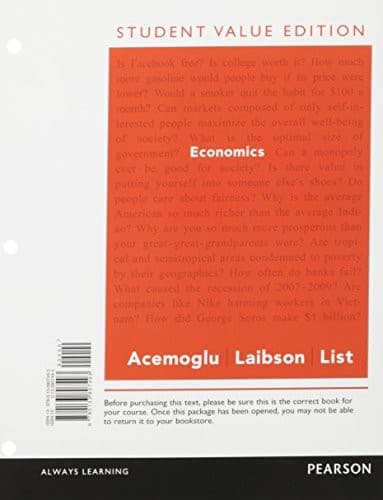
Economics, Student Value Edition Plus NEW MyLab Economics with Pearson eText -- Access Card Package
Daron Acemoglu, David Laibson & others, 2014
- Access Card -- Pearson Mylab Management with EText -- for Microeconomics, Global EditionDaron Acemoglu, David Laibson & others
Access Card -- Pearson Mylab Management with EText -- for Microeconomics, Global Edition
Daron Acemoglu, David Laibson & others, 2021
- Economics with MyEconLab, Global EditionDaron Acemoglu, David Laibson & others
Economics with MyEconLab, Global Edition
Daron Acemoglu, David Laibson & others, 2015
- Macroeconomics with MyEconLab, Global EditionJohn List, David Laibson & others
Macroeconomics with MyEconLab, Global Edition
John List, David Laibson & others, 2015
- Pasillo EstrechoDaron Acemoglu & James A. Robinson
Pasillo Estrecho
Daron Acemoglu & James A. Robinson, 2020
- Agency Costs in the Process of DevelopmentDaron Acemoglu
Agency Costs in the Process of Development
Daron Acemoglu, 1995
- Beyond BeckerDaron Acemoglu
Beyond Becker
Daron Acemoglu, 1998
- Capital Deepening and Non-balanced Economic GrowthDaron Acemoglu
Capital Deepening and Non-balanced Economic Growth
Daron Acemoglu, 2006
- Changes in the Wage Structure, Family Income, and Children's EducationDaron Acemoglu
Changes in the Wage Structure, Family Income, and Children's Education
Daron Acemoglu, 2000
- Coalition Formation in Political GamesDaron Acemoglu
Coalition Formation in Political Games
Daron Acemoglu, 2006
- The Colonial Origins of Comparative DevelopmentDaron Acemoglu
The Colonial Origins of Comparative Development
Daron Acemoglu, 2000
Reading Daron Acemoğlu
- Which books by Daron Acemoğlu can I find here?
This page currently brings together 48 catalogue works, including Why Nations Fail, Power and Progress, The Narrow Corridor. This is a selection from our catalogue, not necessarily a complete bibliography. Open a work to compare editions and reviews.
Search this author- How are these books ordered?
The list uses catalogue reading-popularity data to put widely read works first. That is a discovery aid, not a claim that the first result is the author's best book or a recommended reading order.
- Where should I check a particular edition or translation?
Open the book's catalogue page and compare publisher, year, format, language and ISBN. Different editions of the same work can have different translators, introductions and page counts.