Author
Dani Rodrik
Dani Rodrik is a Turkish economist and Ford Foundation Professor of International Political Economy at the John F. Kennedy School of Government at Harvard University. He was formerly the Albert O. Hirschman Professor of the Social Sciences at the Institute for Advanced Study in Princeton, New Jersey. He has published widely in the areas of international economics, economic development, and political economy. The question of what constitutes good economic policy and why some governments are more successful than others at adopting it is at the center of his research. His works include Economics Rules: The Rights and Wrongs of the Dismal Science and The Globalization Paradox: Democracy and the Future of the World Economy.
Biography from Wikipedia (CC BY-SA). Bibliographic data from Open Library.
Books by Dani Rodrik
Most-read first
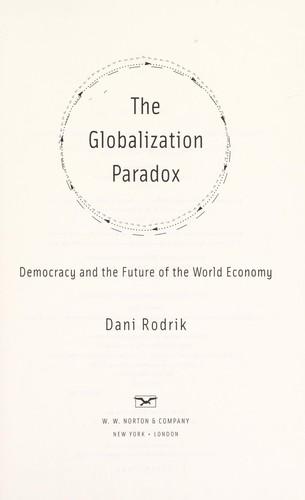
The Globalization Paradox
Dani Rodrik, 2011
Economic Rules
Dani Rodrik, 2015
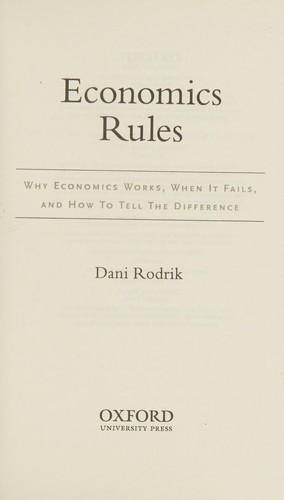
Economics Rules
Dani Rodrik, 2015
Has Globalization Gone Too Far?
Dani Rodrik, 1997
- Straight Talk on TradeDani Rodrik
Straight Talk on Trade
Dani Rodrik, 2017

La paradoja de la globalización
Dani Rodrik, 2012
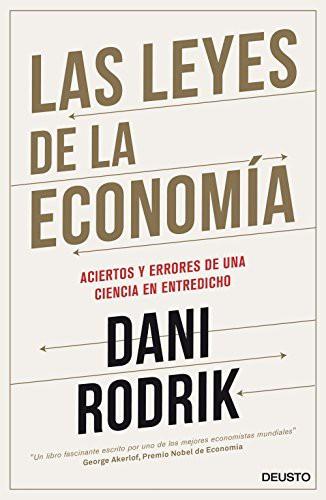
Las leyes de la economía
Dani Rodrik & Iván Barbeitos, 2016
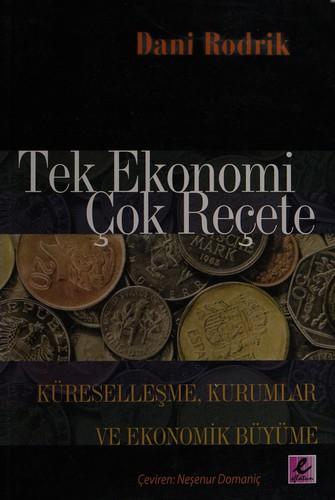
Tek ekonomi çok reçete
Dani Rodrik, 2009
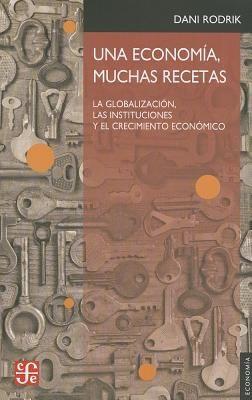
Una Economia Muchas Recetas One Economic Many Recepies
Dani Rodrik, 2011
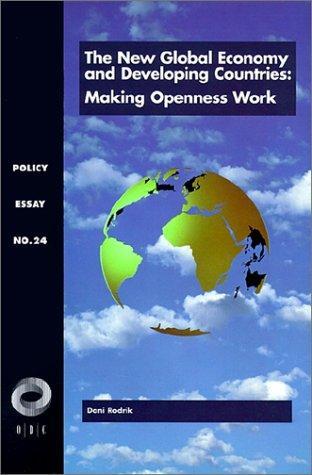
The New Global Economy and Developing Countries
Dani Rodrik, 1999
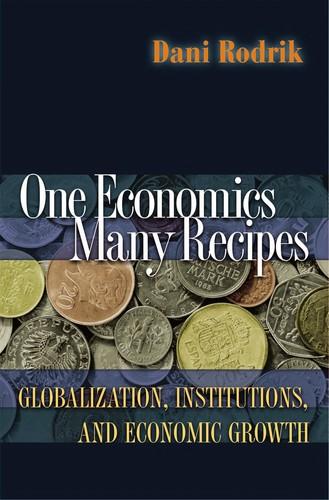
One Economics, Many Recipes
Dani Rodrik, 2007
- When Things Don't Fall ApartIlene Grabel & Dani Rodrik
When Things Don't Fall Apart
Ilene Grabel & Dani Rodrik, 2018
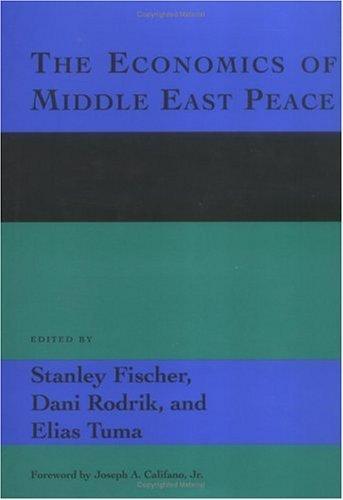
The Economics of Middle East peace
Stanley Fischer & Dani Rodrik, 1993
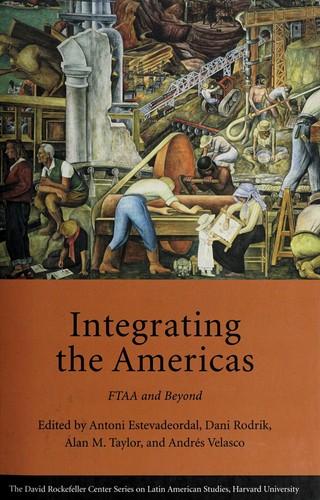
Integrating the Americas
Antoni Estevadeordal, Dani Rodrik & others, 2004
- Growth strategiesDani Rodrik
Growth strategies
Dani Rodrik, 2003
- From "Hindu growth" to productivity surgeDani Rodrik
From "Hindu growth" to productivity surge
Dani Rodrik, 2004
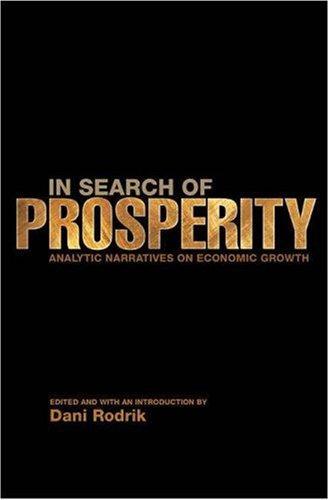
In Search of Prosperity
Dani Rodrik, 2003
- Why Is Trade Reform So Unpopular? on Status Quo Bias in Policy Reforms J/Working Paper, No 3269Raquel Fernandez & Dani Rodrik
Why Is Trade Reform So Unpopular? on Status Quo Bias in Policy Reforms J/Working Paper, No 3269
Raquel Fernandez & Dani Rodrik, 1990
- Institutions RuleArvind Subramanian, Francesco Trebbi & others
Institutions Rule
Arvind Subramanian, Francesco Trebbi & others, 2002
- Why India Can Grow at 7 Percent a Year or MoreDani Rodrik & Arvind Subramanian
Why India Can Grow at 7 Percent a Year or More
Dani Rodrik & Arvind Subramanian, 2004
- Brookings Trade Forum 2001Susan M. Collins & Dani Rodrik
Brookings Trade Forum 2001
Susan M. Collins & Dani Rodrik, 2010
Trade Forum
Susan M. Collins & Dani Rodrik, 2004
- Some policy dilemmas in Turkish macroeconomic managementDani Rodrik
Some policy dilemmas in Turkish macroeconomic management
Dani Rodrik, 1988
Tan suo jing ji fan rong
Dani Rodrik & Yu Zhang, 2009

Iktisadi Anlamak
Dani Rodrik, 2016

Akilli Kuresellesme
Dani Rodrik, 2011
Daha Adil, Daha Makul
Dani Rodrik, 2019
- Handbook of Development EconomicsDani Rodrik & M. R. Rosenzweig
Handbook of Development Economics
Dani Rodrik & M. R. Rosenzweig, 2009
Brookings Trade Forum
Susan Margaret Collins & Dani Rodrik, 2003
- After the FallJeffry Frieden, Michael Pettis & others
After the Fall
Jeffry Frieden, Michael Pettis & others, 2015

Das Globalisierungs-Paradox
Dani Rodrik, 2011
- How to Save Globalization from Its CheerleadersDani Rodrik
How to Save Globalization from Its Cheerleaders
Dani Rodrik, 2007
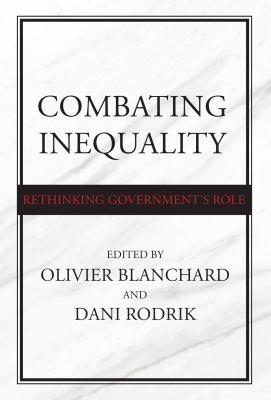
Combating Inequality
Olivier Blanchard & Dani Rodrik, 2021

Los determinantes del desarrollo económica
Dani Rodrik, Arvind Subramanian & others, 2008
- Macroeconomic policy and debt in Turkey during the 1970sDani Rodrik
Macroeconomic policy and debt in Turkey during the 1970s
Dani Rodrik, 1986
- The Economics of Export-performance RequirementsDani Rodrik
The Economics of Export-performance Requirements
Dani Rodrik, 1986
- The New Development EconomicsDani Rodrik
The New Development Economics
Dani Rodrik, 2008
- International Trade and Big GovernmentDani Rodrik
International Trade and Big Government
Dani Rodrik, 1996
- Unconditional convergenceDani Rodrik
Unconditional convergence
Dani Rodrik, 2011
- The Future of Economic ConvergenceDani Rodrik
The Future of Economic Convergence
Dani Rodrik, 2011
- Feasible globalizationsDani Rodrik
Feasible globalizations
Dani Rodrik, 2002
- The Dilemma of Government ResponsivenessDani Rodrik
The Dilemma of Government Responsiveness
Dani Rodrik, 1987
- What's so special about China's exports?Dani Rodrik
What's so special about China's exports?
Dani Rodrik, 2006
- Trade Policies and DevelopmentDani Rodrik
Trade Policies and Development
Dani Rodrik, 1990
- Trade and capital-account liberalization in a Keynesian economyDani Rodrik
Trade and capital-account liberalization in a Keynesian economy
Dani Rodrik, 1985
- The Welfare Economics of Debt ServiceDani Rodrik
The Welfare Economics of Debt Service
Dani Rodrik, 1988
- Industrial Policy for the Twenty-first CenturyDani Rodrik
Industrial Policy for the Twenty-first Century
Dani Rodrik, 2004
- Closing the Technology GapDani Rodrik
Closing the Technology Gap
Dani Rodrik, 1988
Reading Dani Rodrik
- Which books by Dani Rodrik can I find here?
This page currently brings together 48 catalogue works, including The Globalization Paradox, Economic Rules, Economics Rules. This is a selection from our catalogue, not necessarily a complete bibliography. Open a work to compare editions and reviews.
Search this author- How are these books ordered?
The list uses catalogue reading-popularity data to put widely read works first. That is a discovery aid, not a claim that the first result is the author's best book or a recommended reading order.
- Where should I check a particular edition or translation?
Open the book's catalogue page and compare publisher, year, format, language and ISBN. Different editions of the same work can have different translators, introductions and page counts.