Author
Charles Van Doren
1926–2019
Charles Lincoln Van Doren was an American writer and editor who was involved in a television quiz show scandal in the 1950s. In 1959, he testified before the United States Congress that he had been given the correct answers by the producers of the NBC quiz show Twenty-One. Terminated by NBC, he joined Encyclopædia Britannica, Inc. in 1959, becoming a vice-president and writing and editing many books before retiring in 1982.
Biography from Wikipedia (CC BY-SA). Bibliographic data from Open Library.
Books by Charles Van Doren
Most-read first
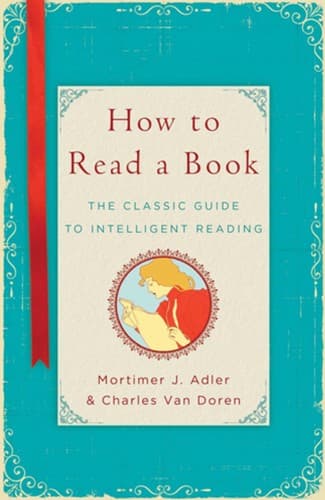
How to Read a Book
Mortimer J. Adler & Charles Lincoln Van Doren, 2008

A History of Knowledge
Charles Lincoln Van Doren, 1992
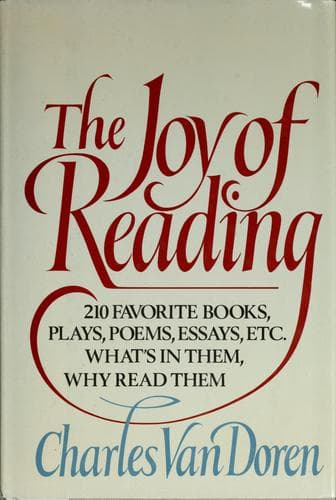
The Joy of Reading
Charles Lincoln Van Doren, 2008
Great treasury of Western thought
Mortimer J. Adler & Charles Lincoln Van Doren, 1977
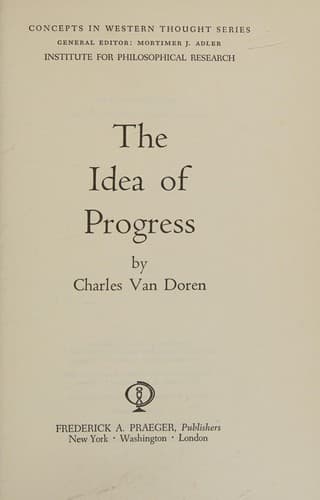
The Idea of Progress
Charles Lincoln Van Doren, 1967

Great documents in American Indian history
Wayne Moquin & Charles Lincoln Van Doren, 1995
- The American Treasury 1455-1955Charles Lincoln Van Doren & Clifton Fadiman
The American Treasury 1455-1955
Charles Lincoln Van Doren & Clifton Fadiman, 1955

Geschichte des Wissens
Charles Lincoln Van Doren, 2000
Letters to Mother
Charles Lincoln Van Doren, 1959
Webster's American biographies
Charles Lincoln Van Doren, 1974

Webster's guide to American history
Charles Lincoln Van Doren & Robert McHenry, 1971

Growing up in the Wild West
Charles Lincoln Van Doren, 1961
- Storia della conoscenzaCharles Lincoln Van Doren
Storia della conoscenza
Charles Lincoln Van Doren, 2006
Growing up in Colonial America
Charles Lincoln Van Doren, 1962
- Growing Up in the Great DepressionCharles Lincoln Van Doren
Growing Up in the Great Depression
Charles Lincoln Van Doren, 1963
Growing Up on a Clipper Ship
Charles Lincoln Van Doren, 1964
- Shakespeare: Reading and talking (Dialogue : a continuing series of notable presentations from Spring Hill Center)Charles Lincoln Van Doren
Shakespeare: Reading and talking (Dialogue : a continuing series of notable presentations from Spring Hill Center)
Charles Lincoln Van Doren, 1980
The American way of crime
Wayne Moquin & Charles Lincoln Van Doren, 1976
- The Trans/vision book of healthCharles Lincoln Van Doren
The Trans/vision book of health
Charles Lincoln Van Doren, 1974
Reading Charles Van Doren
- Which books by Charles Van Doren can I find here?
This page currently brings together 19 catalogue works, including How to Read a Book, A History of Knowledge, The Joy of Reading. This is a selection from our catalogue, not necessarily a complete bibliography. Open a work to compare editions and reviews.
Search this author- How are these books ordered?
The list uses catalogue reading-popularity data to put widely read works first. That is a discovery aid, not a claim that the first result is the author's best book or a recommended reading order.
- Where should I check a particular edition or translation?
Open the book's catalogue page and compare publisher, year, format, language and ISBN. Different editions of the same work can have different translators, introductions and page counts.