
Author
Brian Skyrms
Born 1938
Brian Skyrms is an American philosopher, Distinguished Professor of Logic and Philosophy of Science and Economics at the University of California, Irvine, and a professor of philosophy at Stanford University. He has worked on problems in the philosophy of science, causation, decision theory, game theory, and the foundations of probability. *—Wikipedia*
*Photo Attribution:* See page for author, CC BY-SA 3.0 , via Wikimedia Commons
Wikipedia. Bibliographic data from Open Library.
Books by Brian Skyrms
Most-read first
- Why We CooperateMichael Tomasello, Brian Skyrms & others
Why We Cooperate
Michael Tomasello, Brian Skyrms & others, 2009
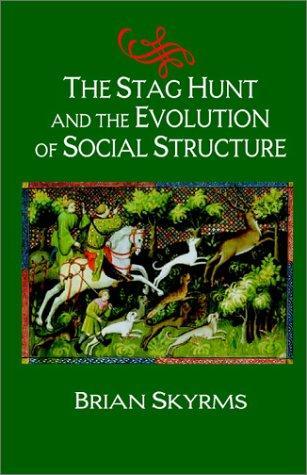
The Stag Hunt and the Evolution of Social Structure
Brian Skyrms, 2003
Ten Great Ideas About Chance
Persi Diaconis & Brian Skyrms, 2017
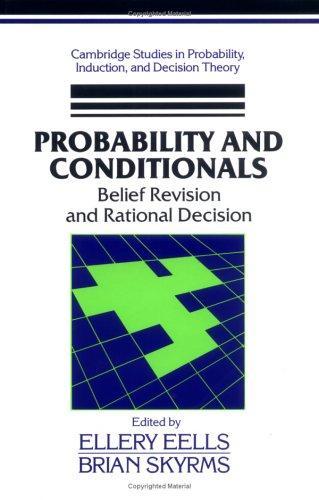
Probability and Conditionals
Ernest W. Adams, Ellery Eells & others, 1994
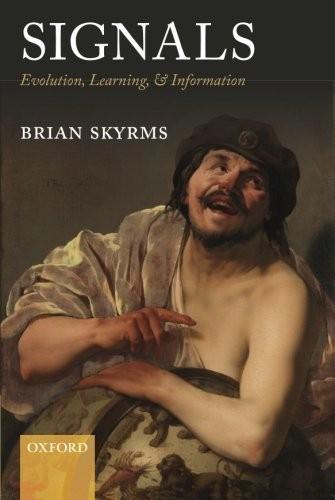
Signals
Brian Skyrms, 2010
Choice and Chance
Brian Skyrms, 1966
Social Dynamics
Brian Skyrms, 2014
Evolution of the Social Contract
Brian Skyrms, 2012
Dynamics of Norms
Cristina Bicchieri, Richard Jeffrey & others, 2009
Causal necessity
Brian Skyrms, 1980
Pragmatics and Empiricism
Brian Skyrms, 1984
Existence and Explanation
Karel Lambert, Wolfgang Spohn & others, 1991
Pursuit of Happiness
Louis Narens & Brian Skyrms, 2020
The Logic of Strategy
Cristina Bicchieri, Richard C. Jeffrey & others, 1999
The Dynamics of Rational Deliberation
Brian Skyrms, 1990
From Zeno to Arbitrage
Brian Skyrms, 2012
Reading Brian Skyrms
- Which books by Brian Skyrms can I find here?
This page currently brings together 16 catalogue works, including Why We Cooperate, The Stag Hunt and the Evolution of Social Structure, Ten Great Ideas About Chance. This is a selection from our catalogue, not necessarily a complete bibliography. Open a work to compare editions and reviews.
Search this author- How are these books ordered?
The list uses catalogue reading-popularity data to put widely read works first. That is a discovery aid, not a claim that the first result is the author's best book or a recommended reading order.
- Where should I check a particular edition or translation?
Open the book's catalogue page and compare publisher, year, format, language and ISBN. Different editions of the same work can have different translators, introductions and page counts.