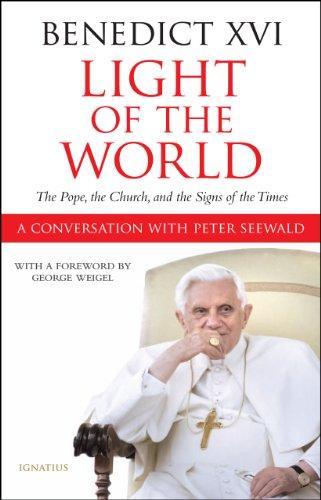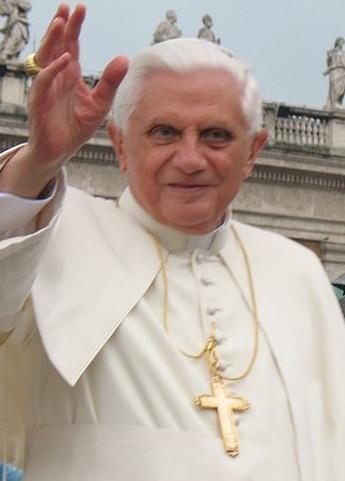
Author
Benedict XVI
1927–2022
Joseph Alois Ratzinger was born in Marktl, Bavaria, Germany, the son of a police officer. At the age of five, he declared that he wanted to be a cardinal. In 1941, he was conscripted into the Hitler Youth, which was mandatory, although his father believe that Nazism conflicted with the Catholic faith. In 1943, while in seminary, he was drafted into the German anti-aircraft corps, although he deserted in 1945. When he returned home he was imprisoned in a POW camp, and returned to the seminary when he was released after a few months. He was ordained in 1951.
In 1958 Ratzinger became a professor of Freising College. He moved to the University of Bonn in 1959, the University of Münster in 1963, and the University of Tübingen in 1966, where he was appointed to a chair in dogmatic theology. While he was at Tübingen he witnessed the student movements of the 1960s, which culminated in disturbances and riots in spring of 1968. Although he was seen as a dogmatic reformist, he believed that the radicalization of the student body was a result of a departure from traditional Catholic teachings.
In 1969, Ratzinger was moved to the University of Regensburg in Bavaria. In 1972 he co-founded the theological journal Communio.
In 1977, Ratzinger was appointed Archbishop of Munich and Freising. That same year he was named Cardinal-Priest of Santa Maria Consolatrice al Tiburtino by Pope Paul VI. In 1981, Pope John Paul II named Ratzinger Prefect of the Sacred Congregation for the Doctrine of the Faith, and he resigned his post at Munich. In 1993 he became Cardinal Bishop of Velletri-Segni. In 2005, he was elected as the next Pope. He chose for himself the name Pope Benedict XVI.
Wikipedia. Bibliographic data from Open Library.
Books by Benedict XVI
Most-read first
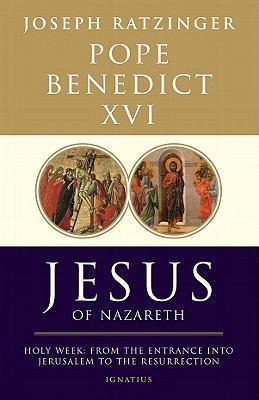
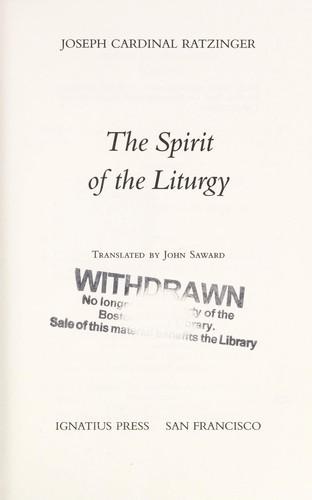
Reading Benedict XVI
- Which books by Benedict XVI can I find here?
This page currently brings together 48 catalogue works, including Jesus of Nazareth, Introduction to Christianity., The Spirit of the Liturgy. This is a selection from our catalogue, not necessarily a complete bibliography. Open a work to compare editions and reviews.
Search this author- How are these books ordered?
The list uses catalogue reading-popularity data to put widely read works first. That is a discovery aid, not a claim that the first result is the author's best book or a recommended reading order.
- Where should I check a particular edition or translation?
Open the book's catalogue page and compare publisher, year, format, language and ISBN. Different editions of the same work can have different translators, introductions and page counts.